
FAQ's
What Does Hydrogen Therapy Feel Like ?
The research may spark curiosity. Yet the experiences is what keeps people coming back to Hydrogen Therapy.
For many people, Hydrogen Therapy isn’t about a dramatic moment — it’s about subtle but meaningful changes that seem to build over time. People often describe feeling, better mentally clarity, more rested after sleep, less drained after physical activity, calmer and more balanced day to day. Some say the background “noise” in their body feels quieter — as if recovery becomes easier and energy feels steadier.
Of course, these are personal experiences, not medical claims. Everyone responds differently. We share these observations because similar themes come up again and again, and because emerging research into oxidative stress, inflammation, and cellular energy (mitochondrial support) aligns with many of the experiences people describe.
It’s also helpful to explain what hydrogen therapy doesn’t feel like. There’s no buzz. No stimulant effect. No sudden high or heavy sedation.
Most people describe it as: A gentle sense of restoration — more like feeling refreshed after deep rest than taking something artificial.
A typical session is simple and easy. Many people spend 30–60 minutes relaxing with a nasal cannula inhaling molecular hydrogen, while reading, answering emails, watching TV, or simply taking a moment to slow down, or drinking a glass of Hydrogen Water.
Sometimes the most meaningful wellness habits are also the simplest.
Hydrogen therapy may feel quiet — but for many people, that quiet shift is exactly the point.
If you do have any questions about hydrogen therapy in the pdfs below, we have aimed to answer those questions. Please click on the title of the pdf you are interested in to find out the answers.

Hydrogen Inhalation & Hydrogen Water: Your Top 10 Questions Answered


1. What is hydrogen therapy?
Hydrogen therapy involves taking in molecular hydrogen gas (H₂), usually by inhaling it or drinking water containing dissolved hydrogen. Researchers are studying its potential effects on oxidative stress, inflammation and other aspects of health.
2. What is hydrogen water, and how is it different from normal water?
Hydrogen water is drinking water with extra molecular hydrogen gas dissolved in it. Ordinary water’s hydrogen atoms are bound to oxygen as H₂O; the additional dissolved H₂ is a separate molecule.
3. What are the potential benefits of hydrogen therapy?
Studies have explored effects on oxidative stress, inflammation, exercise fatigue and metabolic health. Some human trials have reported encouraging results, but benefits vary by condition and protocol. Larger studies are needed before these effects can be considered established.
4. Does hydrogen therapy actually work—is there scientific evidence?
Yes, there are laboratory studies and human clinical trials, including randomised controlled trials. However, evidence of a benefit in one study does not prove that every hydrogen product will produce the same result. The device, hydrogen concentration, method of delivery and condition being studied all matter.
5. What is the difference between hydrogen inhalation and hydrogen water?
Inhalation delivers hydrogen through the lungs during a session, while hydrogen water delivers dissolved hydrogen through the digestive tract. Both have been studied, but their doses and exposure patterns differ.
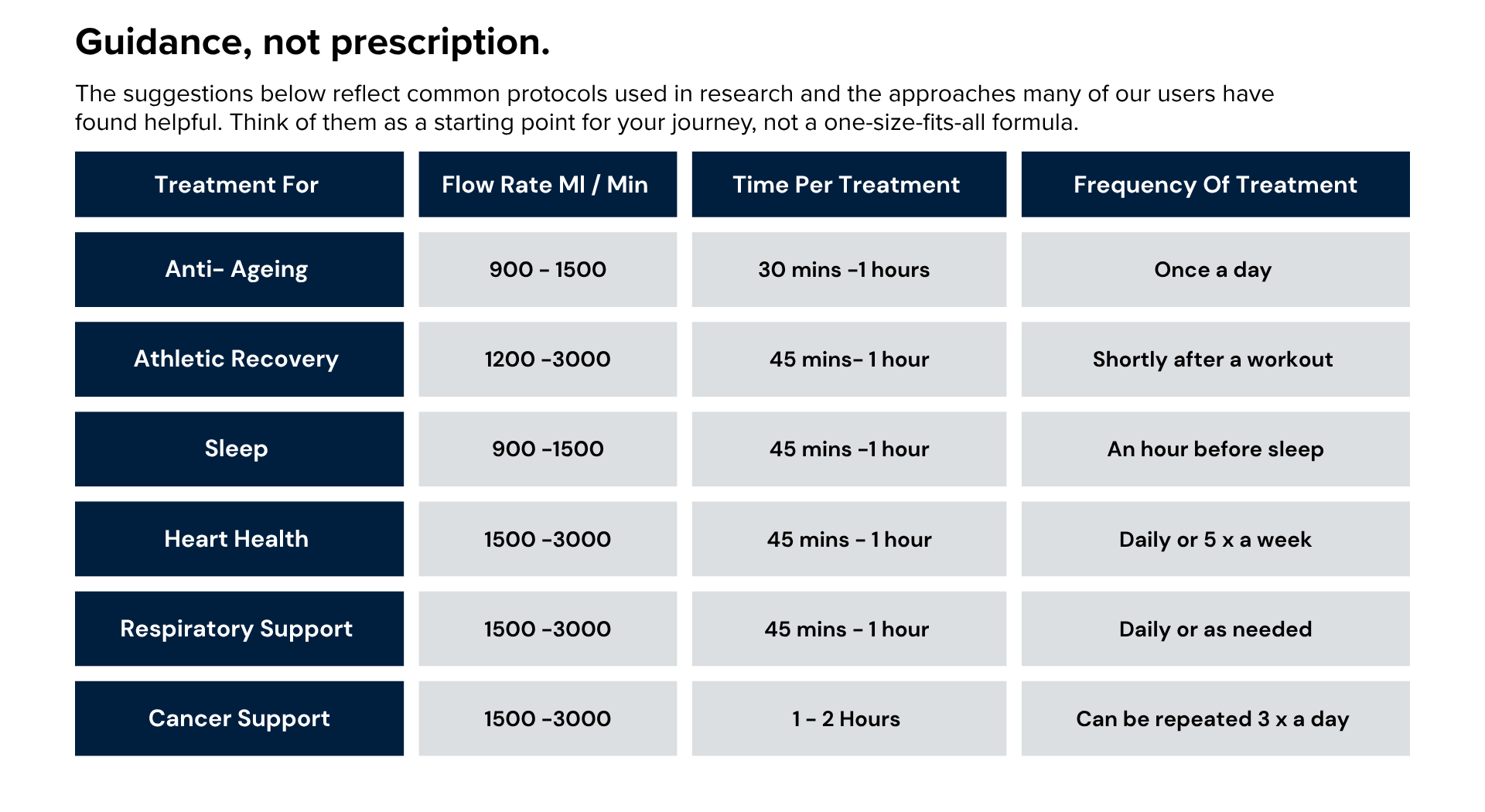
6. How long and how often should I use hydrogen inhalation?
There is no universally established session length or frequency. Research protocols differ considerably, and a machine’s output alone does not tell you the concentration you actually inhale. Follow the device’s instructions and seek clinical guidance when using it alongside treatment for a health condition.
7. Is hydrogen inhalation safe, and are there side effects?
Hydrogen inhalation has generally been well tolerated in controlled studies. However, this does not establish the safety of every home device or gas mixture. Hydrogen is flammable, so suitable equipment, ventilation and strict avoidance of smoking, flames and ignition sources are essential.
8. How much hydrogen water should I drink each day?
There is no established daily therapeutic dose. Studies use different water volumes and hydrogen concentrations, so litres alone do not describe the hydrogen dose. Keep within your normal fluid needs and follow any fluid restriction your clinician has prescribed.
9. How long does hydrogen stay in the water?
Dissolved hydrogen can escape over time. How quickly this happens depends on the container, temperature, initial concentration and exposure to air. Drinking it soon after preparation helps preserve its hydrogen content.
10. How quickly will I notice results from hydrogen therapy?
There is no reliable timeframe, and some people may notice no change. Studies range from testing effects after a single drink to assessing outcomes over several months. Feeling different does not necessarily demonstrate a medical benefit, and hydrogen should not replace prescribed treatment.
72 Hour Safety Study
Hydrogen Inhalation has been studied under a wide range of conditions, including a formal Pub Med safety study in which healthy adults inhaled hydrogen continuously for seventy-two hours under medical supervision. The published findings reported no adverse events, no clinically significant ECG changes, and no meaningful laboratory abnormalities.
By comparison, H2=E sessions are considerably shorter, typically lasting between 45 minutes and two hours. If You would like to read the study, please click here.
The guidance on this page is intended as a starting point only and should not be considered medical advice. Hydrogen inhalation is a wellness practice designed to support general wellbeing, not a treatment for any medical condition. Individual experiences vary, but many users describe feeling more refreshed, focused, or balanced as part of their regular routine.
Because every individual is different, we recommend speaking with your GP or healthcare professional before introducing any new wellness practice, especially if you take medication, are pregnant, or have an existing health condition. The most valuable guidance will always come from someone who understands your personal health history.
Why Choose H2=E Hydrogen Therapy?
We want you using your hydrogen therapy machine to be as easy as pressing a button —
A therapy that becomes part of your routine without complicated
steps. That becomes you go to, to reduce oxidative stress and feel better from the inside out.

Quality Machines
Solid Polymer Electrolyte Electrolyzer made in the USA. Machines made to a high standard

CE Certified
Complies with European Union EU safety, health and environmental protection regulations

Satisfied Customers
Verified customer reviews

UK Support
9 Years Experience with UK Customer Support

UK Delivery
Full inspection before dispatch. Free next day delivery via Parcel Force within the UK
With us, it’s simple: add DISTILLED water,
connect your machine, and enjoy
watching TV, a film, reading, or even sleeping… it’s that practical.
Hydrogen Water or Hydrogen Inhalation?
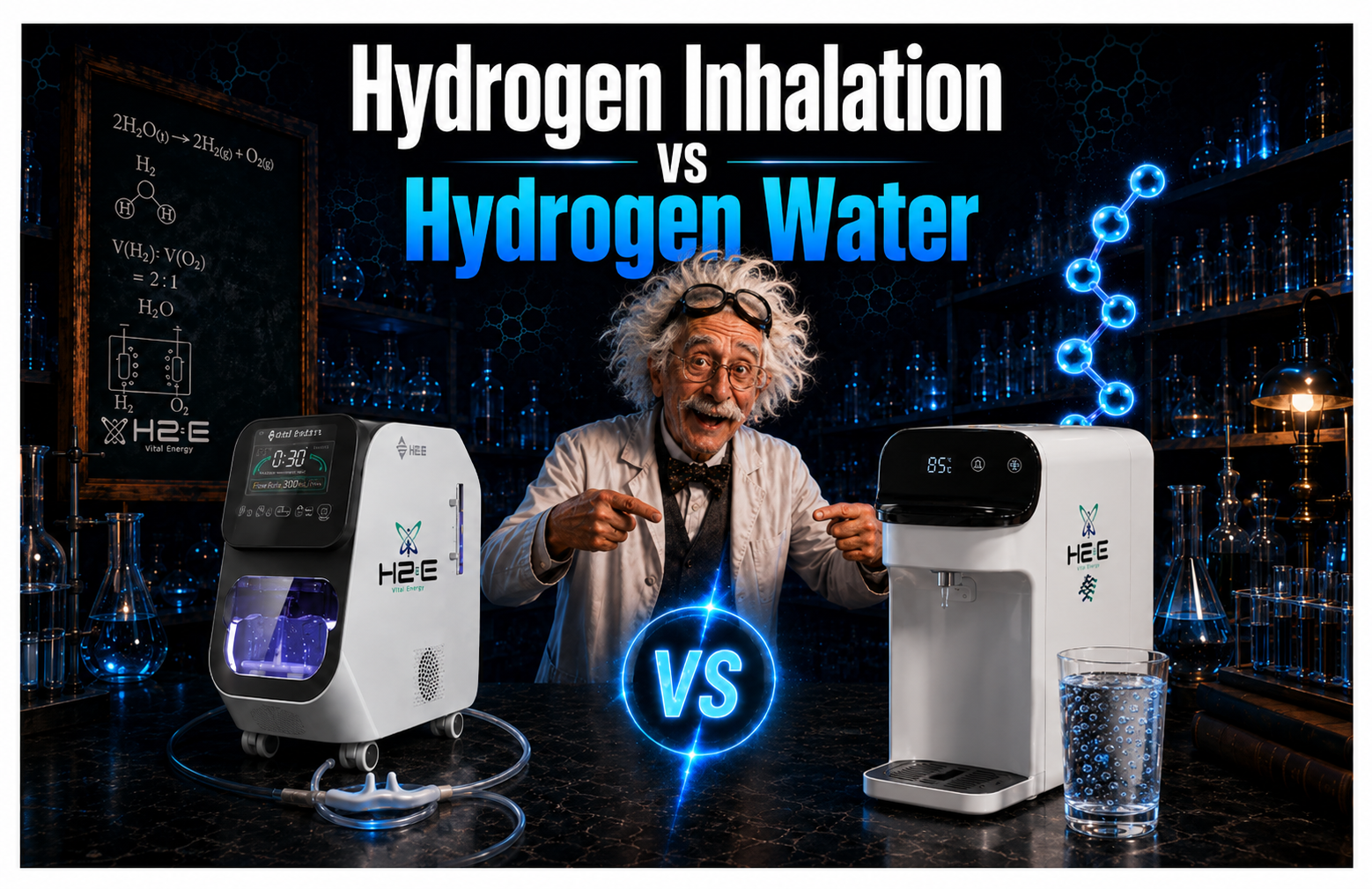
Hydrogen inhalation delivers a much higher concentration of molecular hydrogen through the lungs. For example, a 60-minute session on our 1500 ml/min machine produces approximately 90 litres of hydrogen/oxygen gas. Based purely on molecular hydrogen content, this contains roughly as much hydrogen as more than 3,000 litres of fully saturated hydrogen water—an amount no one could realistically drink.Yet hydrogen water contains a smaller amount but may be particularly useful for delivering hydrogen directly to the digestive tract, that has it own potential benefits
The two methods work differently and should not be viewed as equivalent doses. Both have been studied for their potential health benefits and can be used as complementary ways to introduce molecular hydrogen into the body.


Why Are Some Hydrogen Machines Cheaper In Price ?
Most people do shop around to get the best price, and in this video, Tony shares the added costs of importing a hydrogen machine from abroad.
Real Questions From A Customer
In this video Lynne asks Tony questions about hydrogen therapy?