
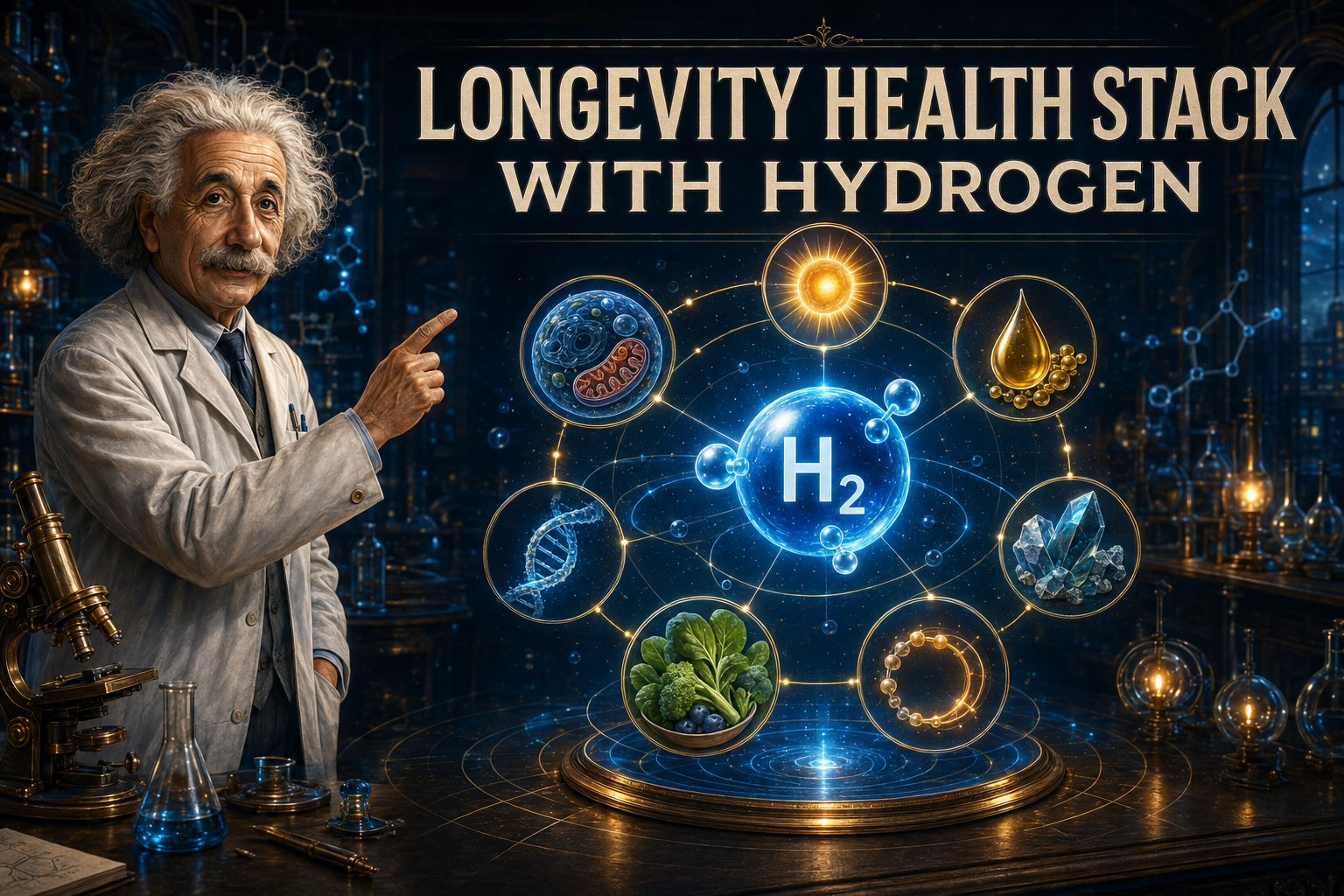
A practical, science-aligned approach for healthy ageing after 50
Interest in longevity has grown rapidly, along with an overwhelming number of supplements, protocols and promises. But healthy ageing is not about taking the largest possible collection of capsules. In many cases, more is not better.
The most useful approach is usually to begin with the fundamentals, identify genuine gaps and add only what has a clear purpose. A supplement may be helpful at one dose and unnecessary—or even harmful—at another. Some products can also interact with medicines, duplicate nutrients already present in a multivitamin or build up in the body over time.
That is why every longevity plan should begin with one principle:
Use the smallest, simplest and most personalised strategy that meets your needs.
Taking a supplement every other day may be appropriate in some circumstances, but it is not a universal safety rule. The right dose and frequency depend on the nutrient, the formulation, your diet, blood-test results, health conditions and medicines.
The real foundations of longevity
Before building a supplement stack, focus on the interventions with the broadest evidence for maintaining health and independence:
-
Regular resistance training and aerobic activity
-
Adequate protein and a varied, minimally processed diet
-
Consistent, restorative sleep
-
Healthy blood pressure, blood glucose and cholesterol
-
Not smoking and limiting alcohol
-
Maintaining social connection and a sense of purpose
Supplements—and emerging options such as molecular hydrogen—should sit alongside these foundations, not replace them.
Part 1: A Foundational Longevity Stack
Ageing is associated with changes in muscle mass, mitochondrial function, recovery and the regulation of oxidative stress. A carefully selected stack may support specific aspects of health, but no supplement has been shown to stop ageing or guarantee a longer life.

1. Molecular Hydrogen (H₂)
Molecular hydrogen is a small gas that can diffuse rapidly across biological membranes. Researchers are investigating whether it may influence redox signalling, antioxidant defences, inflammatory pathways, mitochondrial function and recovery.
Early human studies are encouraging in some areas, but the evidence is still developing. Results vary according to the population, delivery method, concentration and outcome measured. For example, a 2024 systematic review of exercise studies found a small improvement in antioxidant capacity but no significant reduction in one commonly measured marker of exercise-induced oxidative stress.
For that reason, hydrogen should be described as an emerging wellness and research intervention, not a proven treatment for disease or a replacement for medical care.
Hydrogen-inhalation protocols also vary considerably between studies and machines. A universal “30–60 minutes daily” prescription cannot be drawn from the current evidence. Users should follow the manufacturer’s safety instructions and obtain clinical advice when they have a medical condition, are pregnant or are receiving treatment.
2. Vitamin D3—with K2 only when appropriate
Vitamin D supports normal bone, muscle and immune function. In the UK, limited sunlight during autumn and winter makes vitamin D particularly relevant. The NHS advises most adults to consider 10 micrograms (400 IU) of vitamin D daily during autumn and winter, while some people at higher risk may need it throughout the year.
Higher doses should be guided by a clinician or blood test because excessive vitamin D can raise calcium levels and damage the kidneys and heart.
Vitamin K contributes to normal blood clotting and bone health, but the claim that K2 reliably “protects the arteries” when taking vitamin D is stronger than current clinical evidence allows. K2 is not automatically required with every vitamin D supplement, and it can interact seriously with warfarin and other vitamin-K antagonist medicines.
3. Coenzyme Q10 (CoQ10)
CoQ10 is involved in mitochondrial energy production and also functions as an antioxidant within cell membranes. Natural levels may decline with age, and statin medicines can reduce circulating CoQ10, although studies of supplementation for statin-associated symptoms have produced mixed results.
CoQ10 may be reasonable for selected people, but claims that it reliably eliminates fatigue or prevents cardiovascular disease are not established. It can interact with warfarin and may affect blood pressure or blood glucose, so medication review matters.
What about NMN?
Nicotinamide mononucleotide (NMN) is a precursor used by the body to produce NAD⁺, a molecule involved in cellular energy metabolism. Small, short-term human trials suggest that oral NMN can increase NAD-related metabolites and may affect certain metabolic or physical-performance measures.
However, we do not yet know whether NMN extends human lifespan, prevents age-related disease or remains safe when taken at high doses for many years. It belongs in the emerging or optional category—not in a universal foundational stack.
4. Omega-3 Fatty Acids (EPA and DHA)
EPA and DHA contribute to normal cardiovascular and brain function and can be obtained from oily fish. Supplements can lower triglycerides at clinically appropriate doses, but they are not a universal solution for inflammation or cognitive decline.
Food first is sensible: aim to include oily fish as part of a balanced diet when appropriate. Anyone considering a concentrated fish-oil product should check the combined EPA and DHA content rather than relying on the headline amount of “fish oil.” People using anticoagulants, those with an increased bleeding risk or those preparing for surgery should seek professional advice.
5. Magnesium
Magnesium is required for hundreds of enzyme reactions and contributes to normal muscle, nerve and energy-related functions. It is found naturally in leafy greens, legumes, nuts, seeds and whole grains.
Supplemental magnesium is most defensible when dietary intake is inadequate or there is a specific clinical reason. Glycinate is often chosen for gastrointestinal tolerability. Magnesium L-threonate is marketed for brain health, but evidence for meaningful cognitive benefits remains limited.
Too much supplemental magnesium can cause diarrhoea and cramping. It can also interfere with the absorption of medicines including some antibiotics, bisphosphonates and levothyroxine. People with impaired kidney function require particular caution.
6. Trace Minerals—only where there is a demonstrated need
Zinc, selenium, copper, iodine, chromium and other trace elements are necessary in small amounts. The words “in small amounts” matter: these nutrients can become harmful when several products are combined or high doses are taken long term.
For example, excessive zinc can contribute to copper deficiency, while too much selenium can cause hair and nail changes and neurological symptoms. Iodine can aggravate some thyroid conditions. A broad trace-mineral product should therefore not be treated as automatic insurance.
Review the labels of every product you use, including multivitamins and electrolyte powders, and avoid unnecessary duplication.
What the foundational approach may support
When matched to an individual need, the components above may contribute to:
-
Normal energy metabolism
-
Bone, muscle and immune function
-
Cardiovascular and brain health
-
Sleep and recovery when an underlying deficiency is corrected
-
A more structured approach to healthy ageing
These are supportive goals, not guaranteed outcomes.
Part 2: An Advanced, Clinician-Guided Cellular Support Plan
Persistent fatigue, poor recovery, metabolic problems and unexplained changes in health are reasons for assessment—not simply reasons to add more supplements. Symptoms can be related to anaemia, thyroid dysfunction, sleep apnoea, nutrient deficiencies, diabetes, medication effects, depression, infection and many other conditions.
A clinician may consider medical history, diet and tests such as a full blood count, ferritin, vitamin B12, folate, vitamin D, thyroid function, kidney and liver function, HbA1c and lipids before recommending additional products.
Only after that assessment should emerging options such as GlyNAC or spermidine be considered.
GlyNAC: Glycine plus N-acetylcysteine
Glycine and N-acetylcysteine (NAC) are precursors the body can use to synthesise glutathione, an important intracellular antioxidant. Small trials in older adults have reported improvements in glutathione-related measures and several metabolic or functional outcomes. These results are promising, but the studies have generally been small and relatively short.
GlyNAC should not be described as “detoxifying the body” in a broad or guaranteed sense. The liver, kidneys, lungs and gastrointestinal system continuously process and eliminate substances; supplements do not replace these systems.
NAC can cause gastrointestinal effects and can interact with some medicines, including nitroglycerin. It may not be suitable for everyone.
Spermidine
Spermidine is a naturally occurring polyamine found in foods such as wheat germ, mushrooms, legumes and some mature cheeses. It is being studied for its relationship with autophagy—the cell’s recycling and quality-control processes.
Observational research and early trials have generated interest, but supplemental spermidine has not been proven to extend human life. A 12-month randomised trial in older adults with subjective cognitive decline did not demonstrate a significant improvement in its primary cognitive outcome. It is therefore best presented as an experimental longevity supplement, not an established cellular-renewal therapy.
A sensible advanced framework
An advanced plan might retain only the foundational components that are individually appropriate and then consider:
-
Glycine plus NAC, under professional guidance
-
Spermidine, with a clear understanding that human evidence is limited
-
NMN, as an optional experimental intervention rather than an essential nutrient
The objective is not to combine everything. It is to make one carefully considered change at a time, define the outcome you hope to improve and reassess whether the product is helping.
How to fine-tune any supplement plan
Before adding something new, ask:
-
What specific problem or deficiency am I addressing?
-
Can food, sleep, movement or medical treatment address it more directly?
-
What evidence supports this product for someone like me?
-
Does it duplicate anything I already take?
-
Could it interact with my medicines or conditions?
-
How will I measure whether it is helping?
-
When will I review, reduce or stop it?
Introduce only one change at a time whenever possible. Keep a record of the brand, formulation, dose, frequency, reason for taking it and any effects. Periodically review the entire stack with a pharmacist, dietitian or doctor.
The takeaway
A longevity strategy should not begin with a crowded supplement cupboard. It should begin with nutrition, movement, sleep, risk-factor management and appropriate healthcare.
Molecular hydrogen is an interesting and evolving field of research that may complement this foundation. Vitamin D, omega-3, magnesium, CoQ10 and trace minerals each have legitimate biological roles, but whether they belong in your personal stack depends on your diet, health and medication profile. NMN, GlyNAC and spermidine are promising research areas, yet none has been proven to reverse ageing or extend human lifespan.
Less is often better. Personalisation is better still.
The best stack is not the longest one—it is the one in which every element has a clear reason, an appropriate dose and a plan for review.
Disclaimer
This article is for general education only. It is not medical advice and is not intended to diagnose, treat, cure or prevent any disease. Molecular hydrogen and dietary supplements should not replace prescribed medication, medical assessment or a balanced diet. Speak with a qualified healthcare professional before starting or changing a supplement or hydrogen-inhalation protocol, particularly if you have a medical condition, take medication, are pregnant or breastfeeding, have impaired kidney or liver function, or are preparing for surgery.