
Interest in hydrogen therapy has grown rapidly among people looking for new ways to support recovery, energy, healthy ageing and everyday wellbeing. Athletes use it as part of their recovery routines. Wellness clinics offer hydrogen inhalation sessions. Researchers are investigating molecular hydrogen in relation to oxidative stress, inflammation, metabolism, brain health and cardiovascular function.
But what are the real benefits of hydrogen therapy—and which of them are actually supported by scientific research?
The honest answer is more interesting than a simple list of promises.
Molecular hydrogen, written as H₂, has produced encouraging findings in laboratory studies, animal research and a growing number of human clinical trials. Some of the most consistent human signals involve fatigue and selected aspects of exercise recovery. Other areas, including metabolic markers, inflammatory regulation, vascular function, mood and healthy ageing, show potential but need larger and more independent trials.
At the same time, hydrogen therapy is not a miracle cure. A biological mechanism is not the same as a proven clinical benefit, a change in a blood marker is not automatically a meaningful health outcome, and a small positive trial does not establish that everyone will respond.
This guide examines the main potential benefits of hydrogen therapy, explains the science in accessible language and separates stronger evidence from early-stage possibilities.
What Is Hydrogen Therapy?
Hydrogen therapy is the controlled use of molecular hydrogen gas (H₂) as a wellness or research intervention.
The most common methods are:
- hydrogen inhalation, in which H₂-containing gas is breathed through a nasal cannula or suitable mask;
- hydrogen-rich water, in which dissolved molecular hydrogen is consumed in drinking water.
Other methods used in research include hydrogen-rich saline, baths and topical applications. However, inhalation and hydrogen-rich water are the most relevant to most consumers.
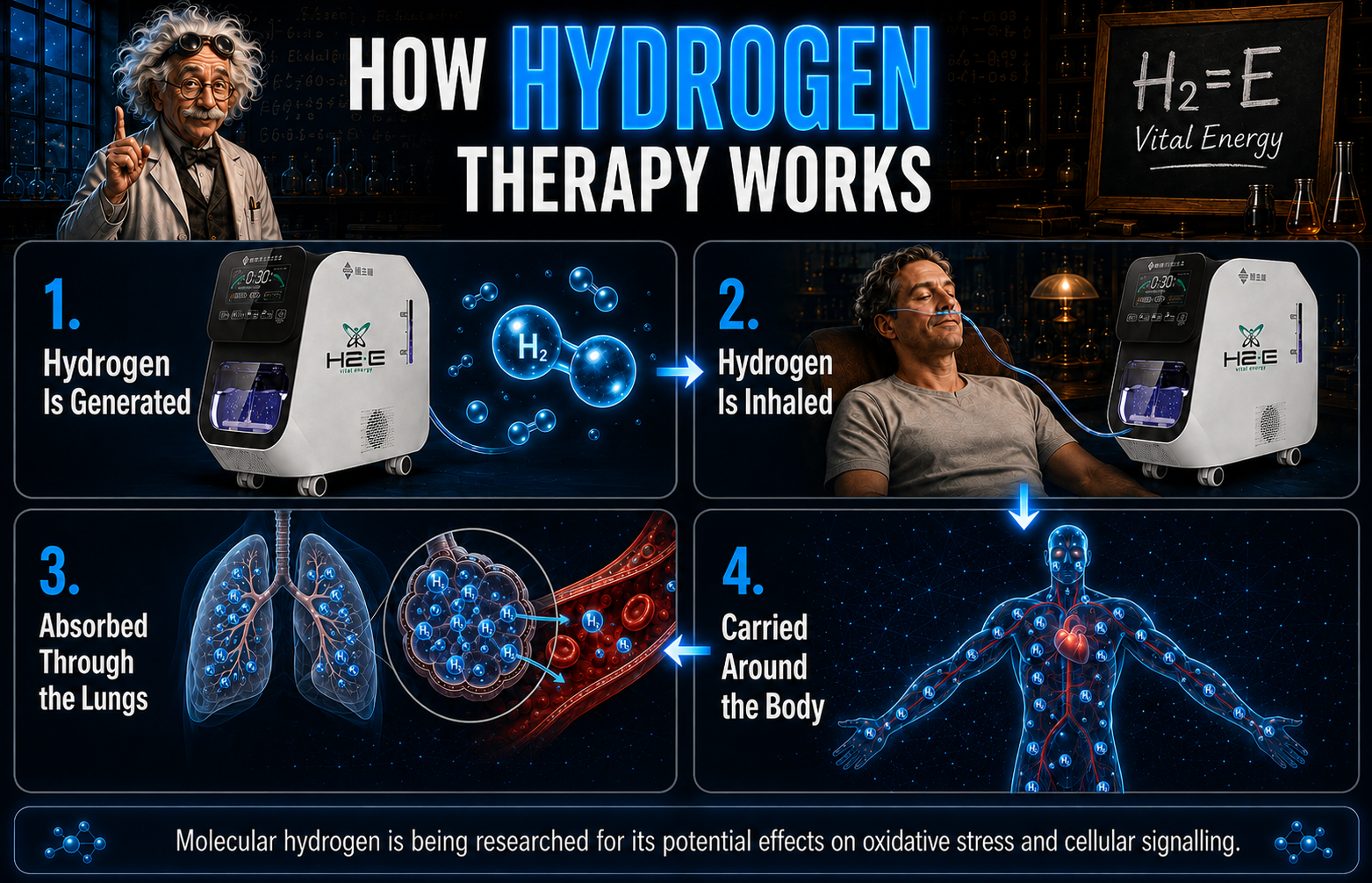
Molecular hydrogen is colourless, odourless and exceptionally small. It can diffuse rapidly through biological membranes and reach tissues and cellular compartments. Researchers are studying whether it can influence oxidative stress, inflammatory signalling, mitochondrial function and the body’s own protective responses.
Hydrogen therapy is not hydrogen peroxide, alkaline water or medical oxygen therapy. To understand the delivery methods and essential terminology in more detail, read our guide What Is Hydrogen Therapy?.
A Quick Evidence Summary
Not all claimed benefits have equal scientific support. This evidence snapshot provides a more responsible way to understand the field.
| Potential benefit | Current human evidence | Responsible conclusion |
|---|---|---|
| Reduced perceived fatigue | Several trials and meta-analyses | One of the more encouraging areas, although responses and protocols vary |
| Exercise recovery and performance | Multiple small randomised trials; mixed results | May support selected recovery or performance measures, but does not improve every outcome |
| Oxidative-stress regulation | Human biomarker studies plus strong preclinical rationale | H₂ appears to influence redox balance, but biomarkers do not prove disease prevention |
| Inflammatory regulation | Some controlled human studies | Promising for selected markers; clinical significance requires more study |
| Metabolic markers | Small trials in metabolic syndrome, diabetes risk and fatty liver | Encouraging changes reported in some populations, but not a replacement for medical care |
| Vascular and cardiovascular wellbeing | Early human studies and extensive preclinical research | Interesting but not yet conclusive for major cardiovascular outcomes |
| Mood and quality of life | Limited small trials | Early positive signals; insufficient evidence to treat anxiety, depression or sleep disorders |
| Brain and neurological health | Mixed small trials and substantial preclinical research | Scientifically promising, but not proven as a neurological treatment |
| Healthy ageing and longevity | Pilot studies and mechanistic research | May support aspects of healthspan; no proof that H₂ extends human lifespan |
| Support during conventional treatment | Early adjunctive studies | Potential supportive role only; never a substitute for established treatment |
How Could Molecular Hydrogen Produce Benefits?
Scientists initially described molecular hydrogen as a selective antioxidant. A widely discussed 2007 study reported that H₂ could reduce particularly reactive oxygen species in an experimental model while appearing less likely to interfere with useful redox signalling.
Research has since suggested a more complex picture. Molecular hydrogen may not work simply by neutralising free radicals one at a time. It may also influence signalling pathways that help cells regulate stress, inflammation, energy production and survival.
Proposed mechanisms include:
- modulation of oxidative stress and redox balance;
- regulation of inflammatory pathways;
- support for mitochondrial function;
- activation of endogenous antioxidant systems;
- influence on gene expression and cell signalling;
- modulation of programmed cell death;
- possible effects on the gut microbiome and metabolic communication.
These mechanisms can help explain why H₂ is being investigated in many fields. However, they do not prove that it treats every condition associated with oxidation or inflammation.
Oxidative stress and inflammation occur in numerous diseases, but they are rarely the only cause. Health problems usually involve multiple genes, pathways, environmental influences and lifestyle factors. Supporting one mechanism may be helpful without being curative.
Benefit 1: Supporting the Body’s Response to Oxidative Stress
Oxidative stress is one of the central themes in molecular hydrogen research.
The body continuously produces reactive oxygen species during normal energy production, exercise, immune activity and exposure to environmental stress. These molecules are not automatically harmful. At controlled levels, they participate in cell signalling, immunity and adaptation.
Oxidative stress develops when reactive species and the body’s regulatory systems become imbalanced. Excessive oxidation can affect cellular membranes, proteins and DNA. It has been studied in relation to ageing, metabolic dysfunction, cardiovascular disease, neurodegeneration and physical fatigue.
Conventional antioxidants can sometimes react broadly. Molecular hydrogen attracted scientific attention because it appeared to behave differently. Early research proposed that H₂ may preferentially interact with highly damaging species such as the hydroxyl radical while preserving useful signalling molecules.
More recent work suggests H₂ may also stimulate the body’s own protective systems. These may include pathways involved in antioxidant enzymes, stress resilience and mitochondrial regulation.
Human studies have reported changes in markers associated with oxidative stress after hydrogen-rich water or inhalation. For example, controlled trials in healthy adults and people with metabolic risk have found changes in oxidative-stress biomarkers alongside selected functional or metabolic outcomes.
This evidence supports the idea that H₂ is biologically active in humans. It does not establish that taking hydrogen prevents every disease connected with oxidative stress.
The most responsible benefit statement is:
Molecular hydrogen may support the body’s ability to manage oxidative stress and maintain cellular balance.
That is meaningful without overstating the research.
Benefit 2: Helping Regulate Inflammatory Responses
Inflammation protects the body during injury and infection. It helps recruit immune cells, remove damaged tissue and begin repair. Without inflammation, healing would be impossible.
Problems may develop when inflammatory activity becomes excessive, prolonged or poorly regulated. Chronic low-grade inflammation is associated with many metabolic, cardiovascular and ageing-related processes.
Laboratory and animal studies indicate that molecular hydrogen can influence pathways involved in inflammatory signalling. These include the production of cytokines and the activation of transcription factors that help control immune responses.
Human evidence is emerging. A randomised, double-blind, placebo-controlled trial in healthy adults reported that hydrogen-rich water altered several markers related to inflammation, antioxidant capacity and peripheral blood-cell survival. Other clinical studies have reported changes in markers such as C-reactive protein and selected cytokines, although results vary by population and protocol.
It is important to distinguish three levels of evidence:
- H₂ changes an inflammatory pathway in cells.
- H₂ changes a blood biomarker in people.
- H₂ produces a meaningful improvement in symptoms, function or disease outcomes.
Each level is valuable, but they are not interchangeable. Much of the current evidence is strongest at the first two levels.
Molecular hydrogen should therefore not be described as a cure for arthritis, autoimmune disease or any other inflammatory condition. A more accurate description is that it may help support balanced inflammatory signalling.
For a deeper explanation, see our article Inflammation: The Silent Driver of Poor Health.
Benefit 3: Reducing Fatigue
Fatigue is one of the more promising areas of human hydrogen research.
It is also a complicated symptom. Fatigue can result from strenuous exercise, inadequate sleep, psychological stress, infection, anaemia, thyroid dysfunction, nutritional deficiencies, medication, chronic illness and many other causes.
Researchers have studied whether H₂ can influence fatigue associated with physical effort and everyday stress. Proposed explanations include the modulation of oxidative stress, inflammatory signalling and cellular energy systems.
A 2023 systematic review and meta-analysis concluded that molecular hydrogen supplementation provided moderate evidence for alleviating fatigue in healthy adults, although it did not significantly improve aerobic capacity overall.
A later 2024 systematic review and meta-analysis of healthy adults reported favourable effects on fatigue and lower-limb explosive power, but the authors also noted variation between studies. This variability matters because trials differ in H₂ dose, water concentration, exercise protocol, timing and participant fitness.
A randomised, double-blind, placebo-controlled study involving healthy trained and untrained participants found improvements in subjective fatigue measures, with some benefits in exercise endurance. Yet one study cannot establish that every user will experience more energy.
The current evidence suggests that molecular hydrogen may:
- reduce perceived fatigue in some people;
- support recovery from physically demanding activity;
- help maintain performance in selected exercise settings;
- influence stress-related biological markers.
It does not prove that H₂ corrects every cause of tiredness.
Anyone with persistent, severe or unexplained fatigue should seek medical assessment. Wellness therapies must not delay the diagnosis of conditions such as anaemia, sleep apnoea, thyroid disease, infection or heart problems.
Benefit 4: Supporting Exercise Performance and Recovery
Exercise temporarily increases reactive oxygen species and inflammatory activity. This is a normal stimulus for adaptation. Muscles need some stress to become stronger and more efficient.
However, strenuous or repeated training can also contribute to soreness, temporary loss of power, fatigue and increased recovery demands. Molecular hydrogen has been investigated as a possible way to support recovery without completely blocking useful exercise signals.
Human trials have examined:
- blood lactate;
- delayed-onset muscle soreness;
- repeated-sprint ability;
- peak power;
- muscular strength;
- perceived exertion;
- creatine kinase and other muscle-stress markers;
- heart-rate recovery;
- aerobic capacity.
Several small randomised trials have produced encouraging findings.
One crossover study in resistance-trained participants reported that hydrogen-rich water was associated with lower lactate levels, reduced soreness after 24 hours and improvement in selected exercise measures.
Another trial found that two weeks of hydrogen-rich water helped maintain peak power during later stages of repeated sprints, although it did not improve every performance variable.
Research on inhaled hydrogen has also reported changes in oxidative-damage markers and subsequent exercise performance in selected settings.
However, neutral results are part of the evidence too. A 2024 investigation of eight days of hydrogen-rich water around high-intensity training concluded that the intervention alone might not be enough to accelerate recovery from muscle soreness or fatigue.
Overall, research suggests the benefit is more nuanced than “hydrogen improves performance.” It may help particular people with particular recovery or fatigue outcomes under particular protocols.
Hydrogen therapy cannot compensate for:
- insufficient sleep;
- inadequate calories or protein;
- dehydration;
- excessive training load;
- injury;
- poor technique;
- untreated medical problems.
It is best viewed as a potential addition to a well-designed recovery plan.
Benefit 5: Supporting Cellular Energy and Mitochondrial Function
Mitochondria are often described as the power stations of cells. They convert energy from food into adenosine triphosphate, or ATP, which cells use to perform work.
Mitochondria also regulate oxidative signals, inflammation, calcium balance and cell survival. When they are under excessive stress, energy production and cellular resilience can be affected.
Because molecular hydrogen is so small, it can diffuse into cellular compartments associated with energy metabolism. Preclinical studies suggest H₂ may influence mitochondrial membranes, antioxidant defences and stress-response pathways.
This has led to claims that hydrogen “boosts ATP” or “recharges every cell.” Those phrases may be attractive, but they are too absolute for the current human evidence.
The science supports a more measured explanation:
- H₂ reaches tissues rapidly;
- it may influence pathways involved in mitochondrial stress;
- some human trials report reduced fatigue or improved functional measures;
- direct, lasting improvement in mitochondrial function has not been established for every user or health condition.
Supporting mitochondrial health also requires the basics: movement, sleep, adequate nutrition, stable blood glucose, avoiding smoking and managing underlying illness.
Hydrogen therapy may complement those foundations. It cannot replace them.
Benefit 6: Supporting Metabolic Health
Metabolic health describes how effectively the body regulates glucose, insulin, fats, blood pressure and energy storage. Poor metabolic health can increase the risk of type 2 diabetes, fatty liver disease and cardiovascular problems.
Oxidative stress and chronic low-grade inflammation are involved in metabolic dysfunction, making this an important field for hydrogen research.
An early pilot study in people with type 2 diabetes or impaired glucose tolerance found that hydrogen-rich water was associated with improvements in selected lipid and glucose markers.
A double-blind, randomised trial in people with hypercholesterolaemia reported changes in aspects of HDL function, LDL-related measures and oxidative or inflammatory indicators after ten weeks of hydrogen-rich water.
A 24-week randomised, double-blind, placebo-controlled trial in people with metabolic syndrome reported improvements in several outcomes, including total cholesterol, glucose and HbA1c. The study was encouraging, although its size and population mean the findings need wider replication.
Researchers have also studied hydrogen-rich water in people with non-alcoholic fatty liver disease. A small eight-week randomised trial reported changes in liver fat and selected biological measures, but larger studies are required.
These findings suggest molecular hydrogen may support metabolic regulation in some populations. They do not show that it can replace:
- prescribed diabetes medication;
- cholesterol treatment;
- blood-pressure medication;
- dietary changes;
- physical activity;
- weight-management support;
- regular blood testing and medical review.
Metabolic outcomes also depend heavily on baseline health. A change seen in people with metabolic syndrome may not occur in a healthy person whose glucose and cholesterol are already within normal ranges.
The responsible conclusion is that hydrogen therapy has shown promising effects on selected metabolic markers, but it remains an adjunct—not a primary treatment.
Benefit 7: Cardiovascular and Vascular Wellbeing
The cardiovascular system depends on healthy blood vessels, controlled blood pressure, balanced lipids and efficient circulation.
Researchers are interested in molecular hydrogen because oxidative stress and inflammation can impair the endothelium—the inner lining of blood vessels. Endothelial function helps regulate blood flow, clotting and vascular tone.
A small human study found that drinking water containing a high concentration of dissolved hydrogen was associated with improved endothelial function. Trials involving cholesterol have also reported changes in lipoprotein function and oxidation-related markers.
In preclinical research, hydrogen has been studied extensively in relation to ischaemia-reperfusion injury—the damage that can occur when blood supply returns to tissue after a period of restriction. This mechanism is relevant to heart attacks, stroke and surgery, but positive animal findings are not proof of benefit in routine human use.
Current evidence does not justify claims that hydrogen therapy:
- prevents heart attacks;
- clears blocked arteries;
- replaces statins;
- controls high blood pressure for everyone;
- reverses cardiovascular disease.
It may support selected vascular or metabolic processes, but major cardiovascular outcomes require larger and longer clinical trials.
Anyone with chest pain, fainting, severe breathlessness or possible heart-attack symptoms needs urgent medical help—not a hydrogen session.
Benefit 8: Brain Health, Focus and Mental Clarity
The brain uses a large amount of oxygen and energy. It is particularly sensitive to disrupted blood flow, mitochondrial stress and oxidative damage.
Molecular hydrogen can diffuse rapidly and is being investigated for possible neuroprotective effects. Laboratory and animal research has explored its influence on neuroinflammation, oxidative stress and cell survival.
Human research remains limited and mixed.
An early small pilot study of hydrogen-rich water in Parkinson’s disease reported encouraging results. However, a later randomised multicentre trial did not reproduce a clear benefit, and a 2021 placebo-controlled trial found that hydrogen inhalation was safe but did not improve Parkinson’s disease outcomes.
This is a valuable example of how science develops. An exciting pilot study can provide a reason for larger trials, but early results sometimes weaken when tested more rigorously.
Small studies have also explored cognitive function, mood and mental fatigue in healthy adults. Some participants reported improvement in quality-of-life or mood measures, but the evidence is not sufficient to claim that H₂ treats dementia, Parkinson’s disease, depression or anxiety.
For general wellness, people sometimes describe feeling clearer or calmer after a hydrogen session. Personal experiences matter to the individual, but they cannot prove a neurological effect.
The evidence-based position is:
Molecular hydrogen has interesting neurobiological mechanisms and early human signals, but neurological benefits remain investigational.
New weakness, facial drooping, speech difficulty, severe confusion or sudden loss of balance may indicate a stroke and require emergency care.
Benefit 9: Mood, Stress and Quality of Life
Wellbeing is not determined by laboratory markers alone. Mood, sleep, stress, physical comfort and the ability to carry out daily activities all contribute to quality of life.
A small randomised, double-blind, placebo-controlled study investigated hydrogen-rich water in healthy adults and reported improvements in some mood, anxiety and autonomic-nerve measures. Other trials in different populations have used quality-of-life scores and reported selected benefits.
Several explanations are possible:
- reduced perceived fatigue;
- changes in stress-related signalling;
- influence on inflammatory or oxidative pathways;
- the relaxing routine of a seated session;
- expectations and placebo effects;
- unrelated lifestyle changes.
These factors are difficult to separate, especially in small studies.
Hydrogen therapy can be a calming part of a wellness routine. A person may sit quietly, breathe through a cannula, read, meditate or simply take time away from daily demands. That experience may have value even while researchers continue to study the biological effects.
However, hydrogen therapy is not an established treatment for depression, anxiety, insomnia or trauma. Persistent low mood, suicidal thoughts, severe anxiety or chronic sleep problems require appropriate professional support.
Benefit 10: Healthy Ageing and Healthspan
Healthy ageing is one of the most popular reasons people explore hydrogen therapy.
Ageing involves multiple interacting processes:
- mitochondrial changes;
- accumulation of cellular damage;
- altered nutrient sensing;
- reduced repair capacity;
- chronic low-grade inflammation;
- changes in immune function;
- loss of muscle mass;
- vascular and metabolic decline.
Molecular hydrogen research touches several of these mechanisms, particularly oxidative stress, inflammatory signalling and mitochondrial regulation.
A six-month randomised pilot trial in adults over 70 examined hydrogen-rich water in relation to biological ageing markers and physical or cognitive measures. The study reported improvement in several selected outcomes, but pilot research is designed to generate evidence—not settle the question.
No clinical trial has demonstrated that hydrogen therapy extends human lifespan.
It is more accurate to discuss healthspan: the years of life spent in relatively good function and health. Hydrogen may eventually prove useful as one tool for supporting resilience or recovery with age. At present, evidence is too limited to promise slower ageing or longer life.
The strongest foundations for healthy ageing remain:
- regular resistance and aerobic exercise;
- adequate protein and a varied diet;
- healthy blood pressure, glucose and cholesterol;
- good sleep;
- social connection;
- avoiding smoking;
- appropriate vaccination and screening;
- treatment of medical problems.
Hydrogen therapy may sit alongside these foundations. It should not distract from them.
Benefit 11: Supporting Recovery During Times of Physical Stress
The body experiences physical stress during intense training, illness, surgery and medical treatment. Oxidative and inflammatory responses may increase while energy demands and recovery needs change.
This has led researchers to investigate molecular hydrogen as an adjunctive, or additional, supportive intervention.
Studies have explored H₂ in rehabilitation, post-exercise recovery and quality of life during some conventional treatments. Early findings sometimes show improvements in symptoms or biomarkers, but methods and patient groups vary considerably.
The crucial word is supportive.
A supportive therapy may help comfort, fatigue, appetite, recovery or quality of life without treating the underlying cause of illness. Hydrogen research must not be used to advise anyone to refuse surgery, chemotherapy, radiotherapy, medication or rehabilitation.
Serious diseases often involve multiple root causes and interacting biological pathways. Helping the body recover frequently requires more than one source of support. Molecular hydrogen may be a helpful component for some people, but it is not a magic cure on its own.
Anyone considering hydrogen during medical treatment should speak with the relevant healthcare team. Safe coordination is more important than treating conventional and complementary approaches as opponents.
Does Hydrogen Inhalation Provide Different Benefits From Hydrogen-Rich Water?
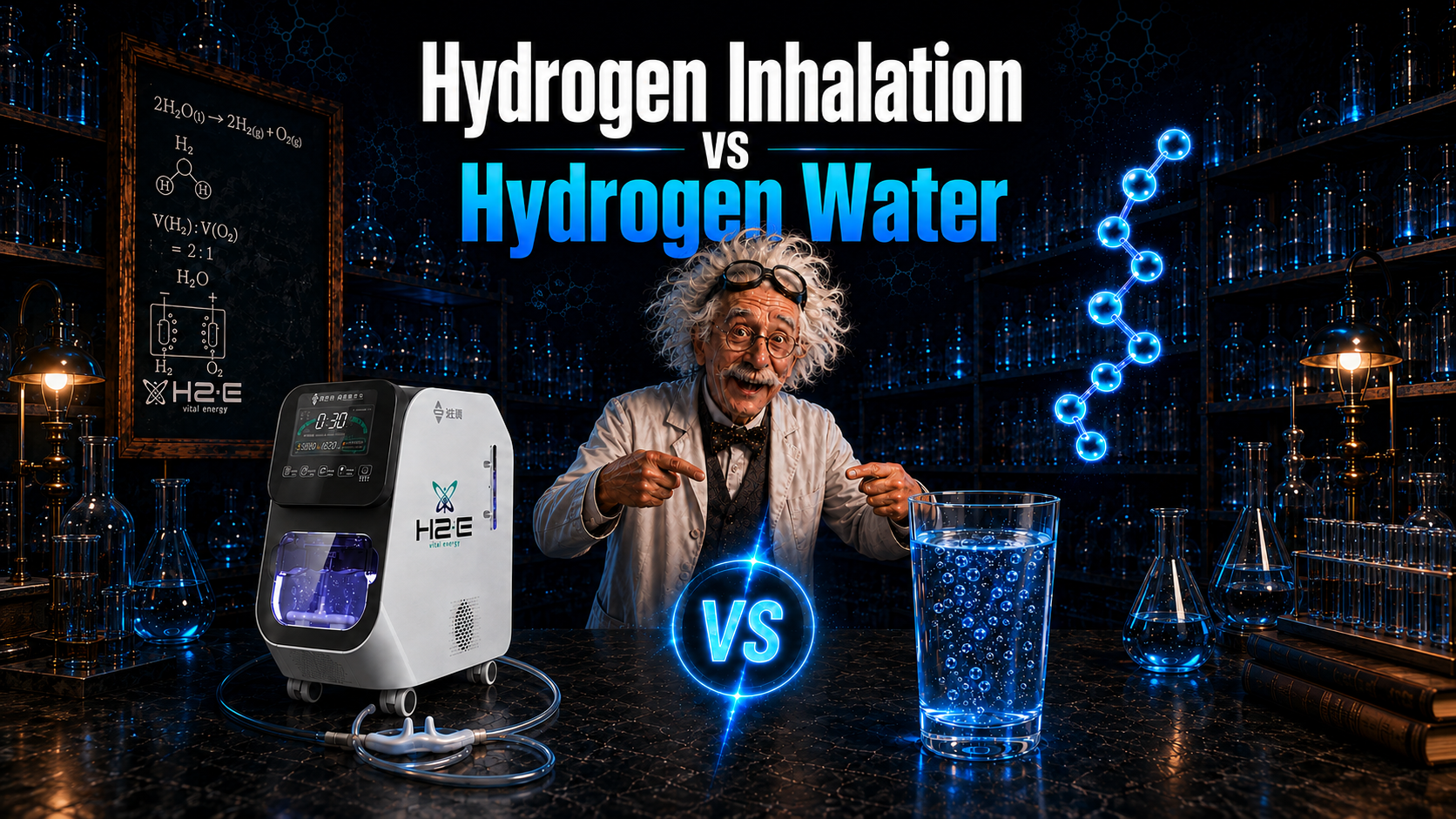
Hydrogen inhalation and hydrogen-rich water deliver the same H₂ molecule, but the exposure is not identical.
Hydrogen-rich water provides a limited quantity of dissolved gas that begins escaping as soon as the container is opened or the water is poured. It is convenient and has been widely used in exercise and metabolic studies.
Hydrogen inhalation provides a continuous flow during a session. The gas enters through the lungs and can rapidly circulate through the bloodstream. Inhalation has been studied in exercise recovery and various clinical contexts.
It is not scientifically accurate to take a benefit shown in a water study and automatically claim the same magnitude of benefit for inhalation. Nor can a result from one inhalation protocol be applied to every machine, flow rate or session length.
Route, concentration, duration and total exposure all matter.
For a detailed comparison, read Hydrogen Water vs Hydrogen Gas.
How Quickly Might Someone Notice a Benefit?
There is no universal timeframe.
Hydrogen enters and leaves the body quickly, but outcomes develop on different schedules:
- perceived relaxation may be noticed during or shortly after a session;
- exercise studies may assess fatigue within minutes or hours;
- muscle recovery may be measured over one to three days;
- metabolic studies often last several weeks or months;
- healthy-ageing outcomes require much longer research.
Some people report an immediate sense of calm or energy. Others notice subtle changes only after repeated use, and some notice no difference.
Subjective experience can be meaningful, but it is not a substitute for objective measurement. Expectations, sleep, hydration, diet, medication and natural symptom variation can all influence how someone feels.
A sensible approach is to define a realistic wellness goal and avoid changing several variables at once. If the goal relates to a medical condition, evaluation should involve an appropriately qualified professional.
Who May Be Most Interested in Hydrogen Therapy?
Based on the current research and common wellness uses, interest often comes from:
- active adults seeking additional recovery support;
- athletes managing demanding training schedules;
- adults interested in healthy ageing;
- people exploring non-stimulant ways to support everyday energy;
- wellness users interested in oxidative-stress and inflammatory balance;
- people who have discussed supportive care with their healthcare team;
- clinics seeking a comfortable, non-invasive wellness experience.
This does not mean hydrogen therapy is appropriate for everyone. Pregnancy, serious heart or lung conditions, recent acute illness, respiratory equipment and ongoing medical treatment are reasons to seek professional advice first.
What Hydrogen Therapy Cannot Promise
Clear boundaries protect consumers and strengthen trust.
Current research does not justify claims that hydrogen therapy:
- cures cancer;
- reverses dementia;
- replaces diabetes or cholesterol medication;
- prevents heart attacks or stroke;
- guarantees weight loss;
- permanently removes inflammation;
- eliminates every cause of fatigue;
- extends human lifespan;
- detoxifies the body in a medically proven way;
- produces the same result for every person.
When marketing claims are much stronger than the underlying studies, confidence in the whole field suffers.
Hydrogen therapy deserves scientific interest precisely because it may have real biological effects. It does not need to be exaggerated into a universal cure.
How to Evaluate Claims About Hydrogen Therapy Benefits
Before accepting a health claim, ask the following questions.
Was the study conducted in humans?
Cell and animal studies help explain mechanisms, but human bodies and real-world conditions are more complex.
Was there a placebo or comparison group?
Without a comparison, it is difficult to know whether changes came from hydrogen, expectations, time or another factor.
How many people participated?
A result in ten or twenty people is interesting but less reliable than a large, independently replicated trial.
What delivery method was used?
Hydrogen-rich water, inhalation and hydrogen-rich saline create different exposures.
What outcome actually changed?
A blood biomarker is not the same as improved symptoms, physical function, fewer hospital admissions or longer life.
Were all outcomes positive?
A study may improve one measure but show no difference in five others. Marketing often highlights the favourable finding and ignores the neutral results.
Has the result been replicated?
Science becomes more trustworthy when independent teams obtain similar results.
Does the seller describe limitations?
Responsible education should acknowledge uncertainty, mixed results and the need for further research.
How Hydrogen Therapy Fits Into a Healthy Lifestyle
Hydrogen therapy is best viewed as one possible layer in a broader wellbeing strategy.
A strong foundation includes:
- nutritious food;
- regular movement and strength training;
- adequate sleep;
- hydration;
- stress management;
- social connection;
- avoiding smoking;
- moderation with alcohol;
- health screening and professional care.
If the foundations are weak, adding an advanced wellness technology cannot replace them. If the foundations are strong, hydrogen may offer an additional way to support recovery, relaxation or resilience.
This perspective prevents two common mistakes:
- expecting one intervention to solve every problem;
- dismissing a promising supportive technology because it is not a complete solution.
Health is usually built through several complementary actions repeated over time.
Frequently Asked Questions
What is the main benefit of hydrogen therapy?
There is no single proven benefit for everyone. The most encouraging human evidence currently relates to reduced perceived fatigue and selected aspects of exercise recovery. Research also suggests possible support for oxidative-stress and inflammatory regulation.
Does hydrogen therapy increase energy?
Some studies report reduced fatigue, and some users describe improved vitality. However, H₂ is not a stimulant and cannot correct every medical or lifestyle cause of low energy.
Is hydrogen therapy anti-inflammatory?
Research suggests H₂ may influence inflammatory pathways and selected biomarkers. It should not be described as a treatment or cure for inflammatory diseases.
Can hydrogen therapy help athletic recovery?
Several small trials have reported lower soreness, reduced lactate or better maintenance of selected performance measures. Other studies have found no clear advantage. It may support recovery, but evidence is mixed and it cannot replace sleep, nutrition or appropriate training.
Does molecular hydrogen improve mental clarity?
Some small studies and personal reports suggest potential effects on fatigue, mood or quality of life. Evidence is not strong enough to claim that H₂ treats cognitive or mental-health disorders.
Can hydrogen therapy help with ageing?
Molecular hydrogen is being studied in pathways relevant to ageing, and pilot studies have explored physical and biological markers. There is no proof that hydrogen extends human lifespan.
Is inhalation better than hydrogen water?
Neither route is automatically best. Inhalation provides continuous exposure during a session, while hydrogen-rich water is convenient and supported by numerous studies. The appropriate method depends on the goal, evidence, product quality and individual circumstances.
How often should hydrogen therapy be used?
Research protocols vary from a single exposure to daily use for weeks or months. There is no universal schedule for every person or benefit. Follow equipment guidance and seek professional advice when health conditions are involved.
Can hydrogen therapy replace medicine?
No. Do not stop or alter prescribed medication because of hydrogen therapy without direction from the prescribing clinician.
Is hydrogen therapy safe?
Molecular hydrogen has generally been well tolerated in published human studies, but device design and correct operation matter. Use reputable equipment, follow the manufacturer’s instructions and keep hydrogen-generating equipment away from flames, smoking and sparks.
Final Thoughts: Promising Benefits, Best Viewed With Scientific Honesty
The potential benefits of hydrogen therapy come from an unusual combination: H₂ is the smallest molecule, it moves rapidly through the body and it may influence several systems involved in cellular stress and recovery.
Human research provides encouraging evidence in fatigue and selected exercise-recovery outcomes. Trials have also reported changes in oxidative-stress, inflammatory, metabolic, vascular and quality-of-life measures.
But the evidence is not equal across every benefit.
Some findings come from small studies. Protocols differ. Neutral trials exist. Improvements in biomarkers do not automatically prove disease prevention, and promising mechanisms do not justify cure claims.
This does not make hydrogen therapy unimportant. It makes scientific honesty essential.
At H2=E, we believe the future of hydrogen therapy will be shaped by the quality of the science, the quality of the technology and the quality of the guidance people receive.
Molecular hydrogen may be a valuable helping hand within a wider approach to health, recovery and healthy ageing. It should not be presented as a magic cure on its own.
Explore the science and potential benefits of H₂ therapy.
Discover our range of premium home-use hydrogen therapy machines on our shop page or book a consultation with Antony for clear, practical guidance with hydrogen therapy via our contact page.
Scientific Studies and Further Reading
- Molecular Hydrogen Therapy—A Review of Clinical Studies and Outcomes
Reviews 81 clinical trials and provides a useful overview of the current human evidence.
Read the full review - Effects of Molecular Hydrogen on Fatigue and Aerobic Capacity
A systematic review and meta-analysis that found moderate evidence for reducing fatigue, although not for improving aerobic capacity overall.
View the study on PubMed - Can Molecular Hydrogen Supplementation Enhance Physical Performance?
A 2024 systematic review and meta-analysis examining fatigue, strength, explosive power and aerobic performance in healthy adults.
View the study on PubMed - Hydrogen Water, Endurance and Psychometric Fatigue
A randomised, double-blind, placebo-controlled study involving trained and untrained adults.
View the study on PubMed - Hydrogen-Rich Water, Muscle Performance and Soreness
This randomised crossover trial examined muscle performance, lactate response and delayed-onset muscle soreness after resistance exercise.
View the study on PubMed - Hydrogen-Rich Water and Inflammatory Responses in Healthy Adults
A randomised, double-blind, controlled study examining inflammation, antioxidant capacity and peripheral blood cells.
View the study on PubMed - Hydrogen-Rich Water and Metabolic Syndrome
A 24-week randomised controlled trial examining glucose, cholesterol, inflammation and body-composition measures.
View the study on PubMed - Hydrogen-Rich Water and Lipid and Glucose Metabolism
A pilot study involving people with type 2 diabetes or impaired glucose tolerance.
View the study on PubMed - Hydrogen-Rich Water and HDL Function
A double-blind, randomised, placebo-controlled trial involving people with high cholesterol.
View the study on PubMed - Hydrogen-Rich Water and Non-Alcoholic Fatty Liver Disease
A small randomised, double-blind, placebo-controlled human trial examining liver fat and associated biological markers.
View the study on PubMed - Hydrogen-Rich Water, Mood, Anxiety and Autonomic Function
A small randomised, double-blind, placebo-controlled study examining quality of life, mood and nervous-system measures.
View the study on PubMed - Six Months of Hydrogen-Rich Water in Adults Over 70
A randomised pilot trial examining physical, cognitive and molecular markers associated with ageing.
View the study on PubMed - A Neutral Study: Hydrogen-Rich Water and High-Intensity Training Recovery
This 2024 trial found that eight days of hydrogen-rich water alone might not be sufficient to improve muscle soreness or fatigue—useful for presenting a balanced scientific picture.
View the study on PubMed