Molecular hydrogen and heart health have become an increasingly interesting area of scientific research. Heart and circulatory diseases remain among the UK’s greatest health challenges, encouraging researchers to investigate new approaches that may influence oxidative stress, inflammation, blood-vessel function and cellular recovery.
According to the British Heart Foundation’s UK heart and circulatory disease statistics, cardiovascular diseases affect millions of people and remain responsible for approximately one-quarter of UK deaths.
Molecular hydrogen—written as H₂—is now being studied for its possible effects on several biological processes connected with cardiovascular health. Early laboratory, animal and small human studies have produced promising findings, but the evidence remains preliminary. Molecular hydrogen has not been proven to prevent or treat heart disease and should never replace prescribed medication, emergency treatment or conventional cardiovascular care.
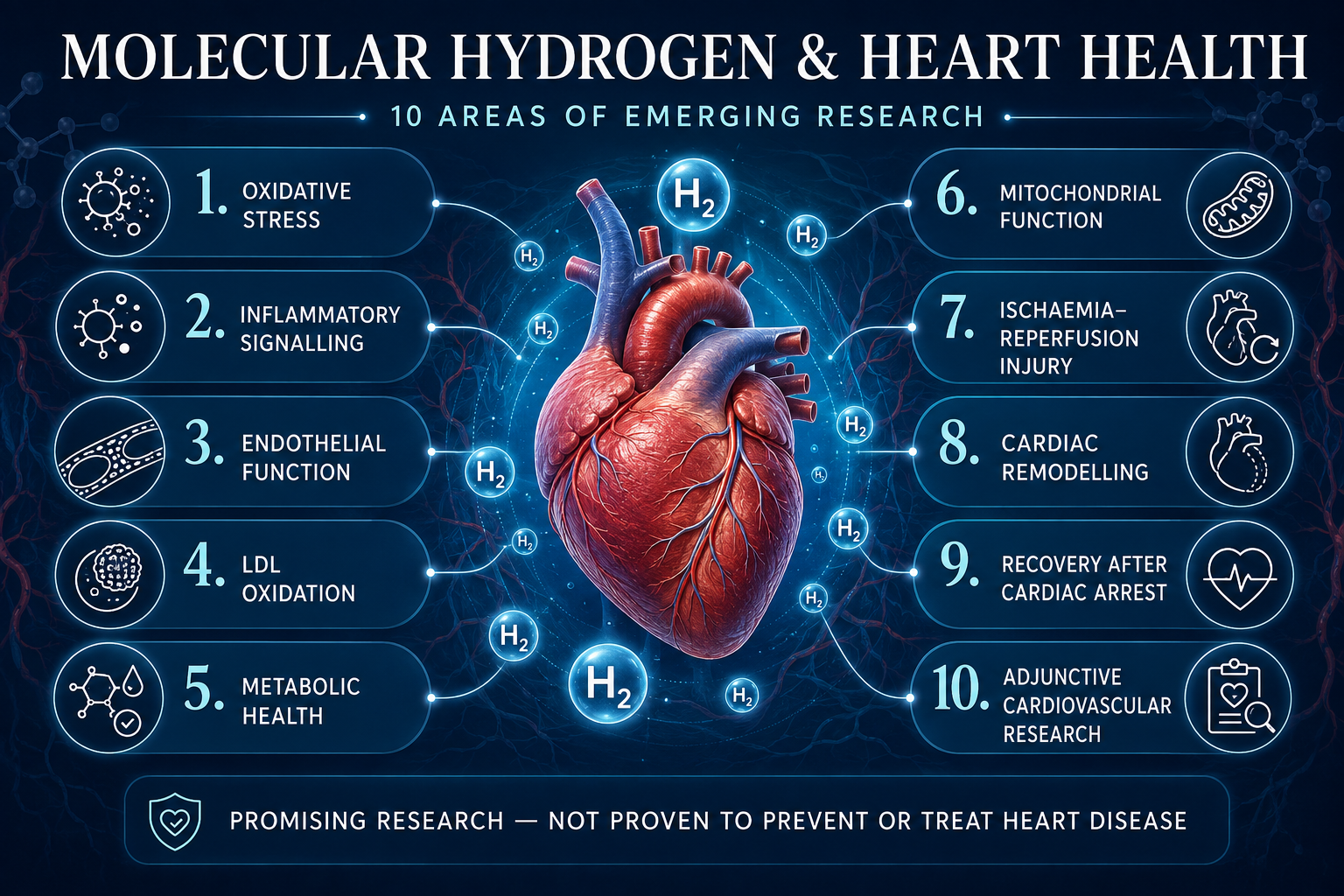
- Oxidative stress
- Inflammatory signalling
- Blood-vessel function
- Cholesterol metabolism
- Mitochondrial function
- Damage following interrupted blood flow
- Recovery after cardiac arrest
These findings are interesting, but they must be interpreted carefully. Most studies are still small, and many proposed cardiovascular effects have been demonstrated mainly in laboratory or animal models.
Molecular hydrogen has not been proven to prevent heart disease, and hydrogen therapy should never replace prescribed medication, emergency treatment or conventional cardiovascular care.
## Molecular Hydrogen and Heart Health: Why Is H₂ Being Studied?
Researchers examining molecular hydrogen and heart health are particularly interested in H₂ because it can diffuse rapidly through biological membranes. Studies are investigating whether this exceptionally small molecule can influence oxidative balance, inflammatory signalling, mitochondrial function and cellular responses to stress.
1. Molecular Hydrogen May Help Regulate Oxidative Stress
Oxidative stress occurs when the production of reactive molecules exceeds the body’s ability to regulate them effectively.
Some reactive oxygen species have useful functions in immune defence and cellular communication. However, excessive oxidative activity may damage lipids, proteins, DNA and blood-vessel walls.
Oxidative stress is associated with several processes involved in cardiovascular disease, including:
- Endothelial dysfunction
- Oxidation of LDL cholesterol
- Inflammatory signalling
- Damage following a heart attack
- Abnormal changes in heart tissue
Interest in molecular hydrogen increased substantially after a 2007 laboratory study reported that H₂ could reduce particularly damaging reactive species while interfering less with biologically useful signalling molecules.
Later research suggested that its effects may be more complex than simply neutralising free radicals. H₂ may also influence the body’s own antioxidant and stress-response pathways.
This remains an active area of research rather than proof that hydrogen prevents cardiovascular disease.
2. H₂ Is Being Studied for Its Effects on Inflammatory Signalling
Inflammation is an essential part of healing and immune defence. The problem arises when inflammatory signalling becomes excessive or remains active for long periods.
Persistent low-grade inflammation is associated with the development and instability of atherosclerotic plaques—the fatty deposits that can narrow arteries and contribute to heart attacks and strokes.
Laboratory and animal studies suggest molecular hydrogen may influence inflammatory mediators such as:
- Nuclear factor kappa B
- Tumour necrosis factor-alpha
- Interleukin-6
- Other cytokines involved in cellular stress
Some human hydrogen studies have also reported changes in inflammatory biomarkers. However, results vary according to the population, delivery method and study duration.
A change in a blood marker does not automatically mean that someone’s risk of a heart attack has been reduced. Larger and longer clinical trials are needed to establish whether these biological effects produce meaningful cardiovascular benefits.
3. Molecular Hydrogen May Support Endothelial Function
The endothelium is the thin layer of cells lining the inside of blood vessels. It helps regulate:
- Blood-vessel relaxation
- Blood pressure
- Blood clotting
- Movement of substances between the bloodstream and tissues
- Inflammatory responses
When the endothelium becomes dysfunctional, arteries may become less flexible and less able to regulate blood flow. Endothelial dysfunction is considered an early feature of atherosclerosis and cardiovascular disease.
Small studies have investigated whether hydrogen-rich water can influence vascular function. Some findings suggest possible improvements in markers associated with blood-vessel health, potentially through reduced oxidative stress and improved nitric oxide availability.
These preliminary results are encouraging, but there is not yet enough evidence to conclude that hydrogen therapy prevents or reverses arterial disease.
4. H₂ May Influence LDL Oxidation
LDL cholesterol plays an important role in cardiovascular risk, particularly when elevated levels are combined with smoking, hypertension, diabetes, inflammation or other risk factors.
Researchers are also interested in modified or oxidised forms of LDL. Oxidised LDL can contribute to inflammatory activity in arterial walls and the formation of atherosclerotic plaques.
A small study involving people with type 2 diabetes or impaired glucose tolerance reported reductions in markers of modified LDL after participants consumed hydrogen-rich water.
Another clinical study investigated hydrogen-rich water in people with potential metabolic syndrome and reported changes in cholesterol and metabolic biomarkers after 24 weeks.
These studies are too small to show that hydrogen prevents heart attacks. Hydrogen therapy must not be used as a replacement for prescribed cholesterol-lowering treatment, dietary changes or professional cardiovascular risk management.
5. Molecular Hydrogen Is Being Investigated in Metabolic Health
High blood glucose, insulin resistance, abdominal obesity, abnormal cholesterol and elevated blood pressure frequently occur together. This collection of risk factors is often described as metabolic syndrome.
Metabolic syndrome considerably increases the likelihood of developing cardiovascular disease and type 2 diabetes.
Small human studies of hydrogen-rich water have reported potential changes in:
- Fasting glucose
- HbA1c
- Cholesterol
- Triglycerides
- Oxidative-stress markers
- Inflammatory biomarkers
A 2024 systematic review and meta-analysis found modest lipid-lowering effects in people with metabolic disorders, but the authors also highlighted differences between studies and the need for stronger research.
These findings do not establish H₂ as a treatment for diabetes, high cholesterol or metabolic syndrome. Anyone taking medication for these conditions should continue following their clinician’s advice.
6. H₂ May Help Protect Mitochondrial Function
Mitochondria produce most of the energy needed by cells. The heart has an exceptionally high energy requirement because it must contract continuously throughout life.
Cardiac cells therefore contain large numbers of mitochondria and can be particularly vulnerable to mitochondrial dysfunction.
Experimental studies suggest molecular hydrogen may help maintain mitochondrial function by influencing:
- Oxidative balance
- Cellular energy production
- Mitochondrial membrane stability
- Stress-response signalling
- Programmed cell death
This has made H₂ an interesting research subject in situations where heart tissue is exposed to severe metabolic stress.
However, much of the mitochondrial evidence comes from cells and animal models. It cannot yet be assumed that home hydrogen therapy produces the same effects in people with cardiovascular disease.
7. Hydrogen Is Being Studied in Ischaemia–Reperfusion Injury
A heart attack occurs when blood flow to part of the heart becomes restricted or blocked. Restoring circulation as quickly as possible is essential for saving heart muscle.
However, the sudden return of oxygen-rich blood can also produce additional oxidative and inflammatory stress. This is known as ischaemia–reperfusion injury.
Animal studies have suggested that molecular hydrogen may reduce some forms of damage associated with interrupted and restored blood flow.
A small pilot study investigated hydrogen inhalation in patients experiencing an acute ST-elevation myocardial infarction. The researchers found the treatment feasible and did not identify major safety concerns, but the study was not large enough to demonstrate a definitive clinical benefit.
Hydrogen must never delay emergency treatment for a suspected heart attack. Call 999 immediately if someone develops symptoms such as chest pressure, pain spreading to the arm or jaw, severe breathlessness, sweating, nausea or sudden collapse.
8. H₂ May Influence Cardiac Remodelling and Fibrosis
After damage or prolonged strain, the heart may undergo structural changes known as cardiac remodelling.
Initially, some changes can help the heart maintain its pumping function. Over time, excessive remodelling and fibrosis—the accumulation of stiff scar-like tissue—can contribute to reduced cardiac performance and heart failure.
Preclinical studies have investigated whether molecular hydrogen may influence the pathways involved in:
- Fibrosis
- Inflammation
- Oxidative injury
- Enlargement of heart muscle
- Death of cardiac cells
Some animal experiments have produced positive findings, but this does not mean hydrogen therapy has been proven to treat heart failure in humans.
People with heart failure require specialist medical monitoring and should never adjust medication, fluid intake or treatment based on experimental hydrogen research.
9. Molecular Hydrogen May Support Recovery After Cardiac Arrest
Cardiac arrest is different from a heart attack. During cardiac arrest, the heart suddenly stops pumping blood effectively. Immediate CPR and defibrillation are critical.
Even when circulation is restored, the brain and other organs may have suffered from oxygen deprivation. The return of blood flow can then trigger further inflammatory and oxidative damage.
The multicentre HYBRID II randomised clinical trial investigated inhaled hydrogen in unconscious patients following out-of-hospital cardiac arrest. The results suggested a possible improvement in favourable neurological outcomes, but the trial recruited fewer participants than originally planned and did not provide definitive evidence of effectiveness.
This is an important area of hospital-based research, but it is not evidence for using a domestic hydrogen machine during a cardiac emergency.
10. H₂ Could Eventually Become an Adjunct to Cardiovascular Care
The most realistic future role for molecular hydrogen—if stronger trials confirm its value—would probably be as an adjunct.
An adjunct is something used alongside established medical treatment, not instead of it.
Researchers may eventually identify particular situations in which H₂ offers useful support, such as:
- Reducing oxidative injury during certain medical procedures
- Supporting recovery after interrupted blood flow
- Influencing selected metabolic biomarkers
- Assisting rehabilitation under professional supervision
- Complementing broader healthy-ageing programmes
However, no major cardiovascular guideline currently recommends hydrogen therapy for preventing or treating heart disease.
The correct conclusion is not that molecular hydrogen has no value, nor that it has already been proven. The evidence is promising in certain areas, but larger, independently replicated human trials are still required.
Can Hydrogen Therapy Prevent Heart Disease?
There is currently no reliable evidence that hydrogen therapy alone prevents heart attacks, strokes or cardiovascular death.
The most firmly established ways to reduce cardiovascular risk remain:
- Not smoking
- Maintaining regular physical activity
- Eating a balanced, fibre-rich diet
- Managing blood pressure
- Controlling cholesterol and blood glucose
- Maintaining a healthy weight
- Limiting excessive alcohol consumption
- Getting sufficient sleep
- Attending NHS health checks when eligible
- Taking prescribed medication correctly
Molecular hydrogen should be considered an emerging area of research rather than a substitute for any of these measures.
Is Hydrogen Therapy Safe for People With Heart Conditions?
Published studies have generally found molecular hydrogen to be well tolerated under controlled conditions. However, heart disease varies considerably, and evidence remains limited for many cardiovascular diagnoses.
Someone with a heart condition should consult an appropriately qualified healthcare professional before beginning hydrogen therapy—particularly if they:
- Have unstable angina or recent chest pain
- Recently experienced a heart attack or cardiac arrest
- Have uncontrolled blood pressure
- Have heart failure
- Use supplemental oxygen
- Have an implanted cardiac device
- Take multiple cardiovascular medications
- Are awaiting or recovering from surgery
Hydrogen is also flammable, so correct equipment, ventilation, setup and operating procedures are essential. Our detailed guide explains hydrogen therapy safety, side effects and responsible equipment use.
Final Thoughts: Promising Science, but Not Proven Prevention
Molecular hydrogen is being studied because it may influence several biological processes connected with cardiovascular health, including oxidative stress, inflammatory signalling, vascular function, lipid metabolism and mitochondrial activity.
Early laboratory, animal and small human studies offer reasons for continued investigation. Clinical research involving heart attacks, metabolic health and recovery after cardiac arrest is particularly interesting.
However, the evidence does not currently prove that hydrogen therapy prevents heart disease, reduces cardiovascular mortality or replaces conventional care.
The most responsible position is therefore one of cautious optimism:
Molecular hydrogen is a promising research subject with potential cardiovascular applications, but larger and more rigorous human trials are needed before definite health claims can be made.
Anyone concerned about their heart health should seek a professional cardiovascular assessment and continue following established prevention and treatment recommendations.
Frequently Asked Questions
Is molecular hydrogen good for the heart?
Early studies suggest molecular hydrogen may influence oxidative stress, inflammation and other processes relevant to heart health. However, it has not been proven to prevent or treat cardiovascular disease.
Can hydrogen therapy clear blocked arteries?
No clinical evidence demonstrates that hydrogen therapy clears blocked arteries. Atherosclerosis requires appropriate medical assessment and evidence-based risk management.
Can hydrogen lower cholesterol?
Some small hydrogen-rich-water studies have reported modest changes in cholesterol or modified LDL. The evidence is not strong enough to replace dietary measures or prescribed cholesterol medication.
Can I use hydrogen therapy after a heart attack?
Only after discussing it with the healthcare team responsible for your treatment. Hydrogen therapy must never delay emergency care, rehabilitation, medication or follow-up appointments.
Is hydrogen inhalation the same as oxygen therapy?
No. Molecular hydrogen and medical oxygen are different gases with different uses. A hydrogen-generating machine is not a substitute for prescribed oxygen equipment.
Scientific references
- Ohsawa I, et al. Hydrogen acts as a therapeutic antioxidant by selectively reducing cytotoxic oxygen radicals. Nature Medicine. 2007.
- Katsumata Y, et al. The effects of hydrogen gas inhalation on adverse left ventricular remodelling after percutaneous coronary intervention for ST-elevation myocardial infarction. Circulation Journal. 2017.
- Tamura T, et al. Efficacy of inhaled hydrogen on neurological outcome following brain ischaemia during post-cardiac arrest care: HYBRID II randomised clinical trial. eClinicalMedicine. 2023.
- Kajiyama S, et al. Supplementation of hydrogen-rich water improves lipid and glucose metabolism in patients with type 2 diabetes or impaired glucose tolerance. Nutrition Research. 2008.
- LeBaron TW, et al. The effects of 24-week, high-concentration hydrogen-rich water on body composition, blood lipid profiles and inflammation biomarkers in people with metabolic syndrome. Diabetes, Metabolic Syndrome and Obesity. 2020.
- Jamialahmadi T, et al. The effects of hydrogen-rich water on blood lipid profiles in metabolic disorders: a systematic review and meta-analysis. 2024.
This article is for educational purposes only and does not provide medical advice. H2=E does not claim that molecular hydrogen prevents, treats or cures heart disease. Hydrogen therapy should not replace medical assessment, prescribed medication or emergency cardiovascular treatment.