
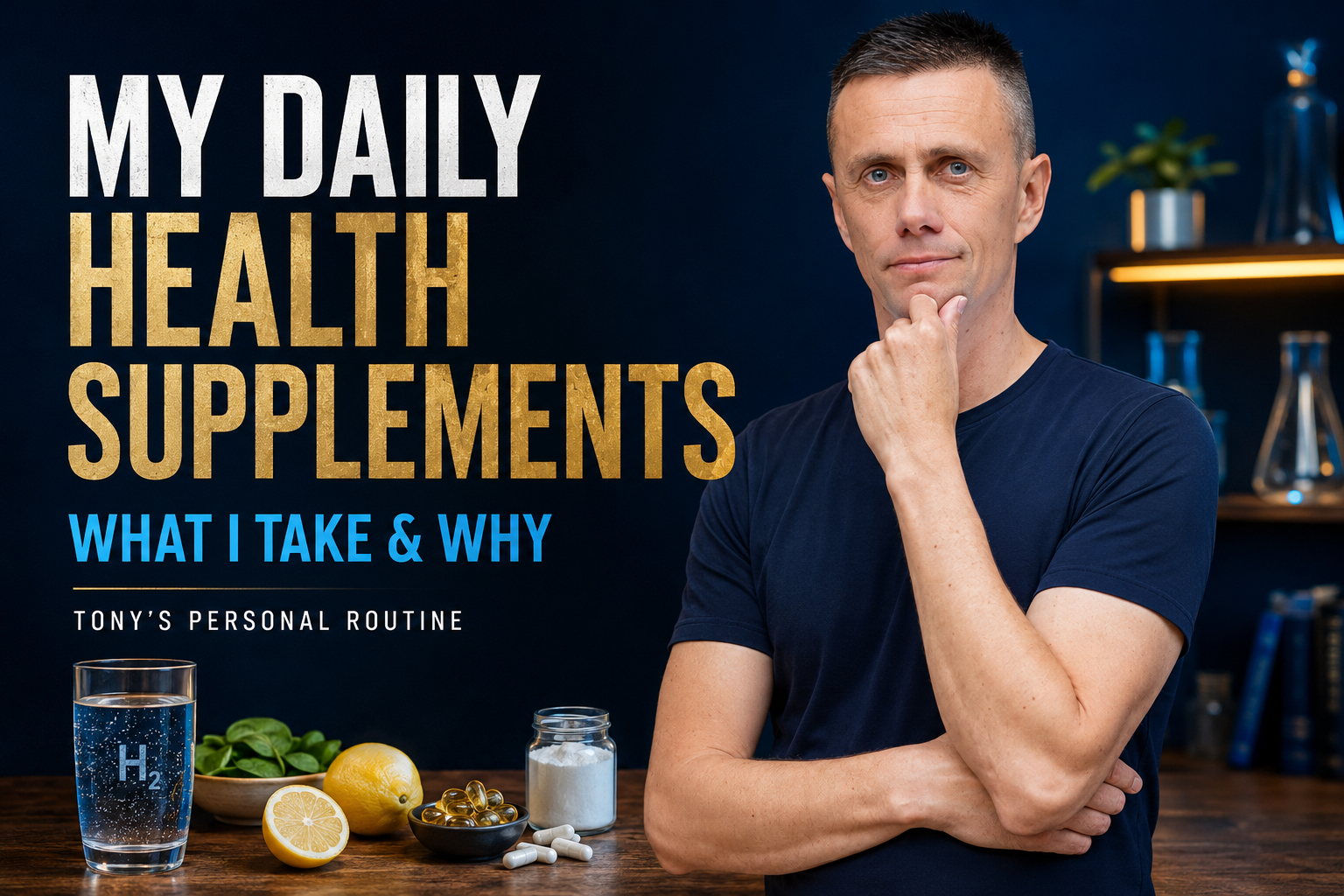
My Daily Health Supplements
After years of experimenting, I have learned that more supplements are not always better. Here is the simple routine I currently use—and the lessons behind it.
People often ask me two questions:
“What supplements do you take?”
“Which supplements do you think are the best?”
My honest answer is that there is no perfect list for everyone. A supplement that suits me may be unnecessary—or completely unsuitable—for someone else. Age, diet, health conditions, medication, blood-test results and individual tolerance all matter.
Over the years, I have tried many different supplements. Some made a noticeable difference, some did very little, and others simply did not agree with me. The biggest lesson I have learned is that more is not always better.
These days, I prefer a smaller and more deliberate routine. This article is a personal account of what I currently choose, not a prescription or a recommendation that everybody should copy it.
A quick health note: Supplements can interact with medicines, duplicate nutrients and affect certain medical conditions or blood tests. Speak to your GP, pharmacist or another appropriately qualified healthcare professional before starting something new—particularly if you take regular medication, are pregnant, have an operation planned, or live with a thyroid, kidney, liver, heart or autoimmune condition.
Supplements are rarely black and white
The supplement world is enormous. There are different forms of magnesium, several forms of vitamin B3, countless herbal extracts and products containing long combinations of ingredients.
That variety can be useful, but it can also become confusing. It is easy to read about a benefit, buy another bottle and slowly build a cupboard full of products without knowing whether the complete combination still makes sense.
I used to think mainly about what each supplement might add. Now I also ask:
-
Do I have a genuine reason for taking it?
-
Is there evidence that I need it?
-
Does another product already contain the same ingredient?
-
Could it interact with medication or another supplement?
-
Have I noticed a meaningful benefit?
-
Would improving my food, sleep or exercise address the same problem more effectively?
There is no scientifically established rule that everyone should take a particular number of supplements. For me, simplicity makes it easier to understand what is helping and to notice when something does not suit me.
The “building blocks” idea
I have always liked thinking about nutrition as a set of building blocks.
Imagine a lorry arriving with materials needed to keep a factory running. The body also needs raw materials—protein, essential fats, carbohydrate, vitamins, minerals and water—to support energy production, tissue repair and thousands of chemical reactions.
If someone has a genuine nutritional deficiency, correcting it can make an important difference. But this analogy has a limit: adding more and more building materials does not make the factory run infinitely faster. Once needs are met, extra quantities may offer no benefit and can occasionally cause harm.
That is why symptoms alone are not always a reliable guide. Fatigue, low mood, poor sleep and reduced exercise performance can have many causes. When a problem is persistent, a proper medical assessment and relevant blood tests are more useful than repeatedly guessing with supplements.
My routine changes over time
The list below reflects my routine at the time of writing. I do not promise that it will remain identical forever.
I reassess supplements when:
-
my diet or training changes;
-
I start or stop medication;
-
blood-test results suggest a different need;
-
I experience a side effect;
-
the original reason for taking something has passed; or
-
good new evidence changes my view.
I also prefer introducing only one new product at a time. If five things change together, it becomes almost impossible to know what caused a benefit or a problem.
My morning routine
Hydrogen-rich water and electrolytes
I normally start the morning with a glass of freshly prepared hydrogen-rich water. I sometimes add a measured electrolyte mixture and a squeeze of lemon, sweeten with monk sugar.
I enjoy the ritual, the taste and the way it encourages me to hydrate at the beginning of the day.
Electrolytes are not necessary in every glass of water. I am more likely to include them around exercise, heavier sweating or hot weather, and I keep the quantity measured rather than using an unmeasured salt concentrate.
My Flax Seed Porridge
With breakfast, I often freshly grind 3 table spoons of flax seeds mix them with some coconut yougurt, coconut milk and add 2 table spoons of udos oil. some walnuts and one teaspoon of sugar free jam.
L-theanine
I sometimes take L-theanine with breakfast, particularly when I want calm focus.
L-theanine is an amino acid found naturally in tea. I find it gentle, but personal experience is not proof that it will improve concentration or anxiety for everyone. It can also contribute to drowsiness in some people and may not combine well with every medicine or sedating product.
Creatine hydrochloride
Creatine is one of the most extensively researched sports supplements. Creatine monohydrate has by far the largest evidence base, but I struggled with digestive discomfort when I used it.
Creatine hydrochloride—often shortened to creatine HCl—has felt easier on my stomach. That is my personal tolerance, not evidence that HCl is superior to monohydrate for most people.
I use creatine to complement resistance training, recovery and an active lifestyle. It does not replace training or protein-rich food. Anyone with kidney disease, unexplained abnormal kidney tests or a complex medical history should discuss creatine with a clinician.
Creatine can also raise measured creatinine without necessarily indicating kidney damage, so I tell healthcare professionals that I take it when having blood tests.
What I sometimes use rather than taking continuously
A B-complex
When my diet has been less consistent or a healthcare discussion gives me a reason, I may use a B-complex for a limited period. I do not use it as an automatic treatment every time my mood or energy falls.
B vitamins help with normal energy metabolism, but they are not stimulants in the same way as caffeine. If levels are already adequate, taking more does not guarantee more energy.
Some supplements contain methylfolate or methylcobalamin and market them as “active” or “methylated” forms. These forms may suit some people, but it is too broad to say that everybody with a health condition or everyone over 50 will absorb them better.
I check the label carefully because B-complex products can contain very different doses. Particular cautions include:
-
high-dose vitamin B6 taken over time, which can cause nerve problems;
-
niacin, which can cause flushing and other adverse effects at higher doses;
-
folic acid, which may duplicate a prescription or mask aspects of B12 deficiency; and
-
biotin, which can interfere with certain laboratory tests, including some thyroid and heart-related tests.
Low mood or persistent fatigue deserves proper assessment rather than repeated short courses of supplements. Sleep problems, thyroid disease, anaemia, diabetes, medication effects, depression and other conditions may need to be considered.
My evening routine
About an hour before bed, I keep the routine simple.
Magnesium glycinate
I often take one capsule of magnesium glycinate according to the product label. I find this form comfortable and associate it with my evening wind-down.
The amount of “magnesium glycinate” on the front of a bottle is not necessarily the amount of elemental magnesium delivered. I check the supplement panel and consider magnesium coming from other products as well.
Magnesium supplements can cause digestive symptoms and may be unsafe when kidney function is significantly impaired. They can also interfere with the absorption of medicines including certain antibiotics and thyroid medication if taken too close together, so timing should be checked with a pharmacist.
Glycine
I sometimes include glycine as part of my bedtime routine. My original article stated “2 mg,” which was almost certainly a unit error. Rather than give readers an uncertain dose, I recommend checking the exact product label and discussing personal suitability where necessary.
Small studies have investigated glycine and sleep, but the evidence is not strong enough to describe it as a treatment for insomnia.
L-theanine
On some evenings, I also use L-theanine. I experience it as calming, but I do not assume that every supplement in my evening stack is necessary every night.
Combining several relaxing products may increase sleepiness. Alcohol, sleeping tablets, antihistamines, pain medicines and other sedating substances can change the safety picture. This is another reason to keep the routine visible to a doctor or pharmacist.
My routine at a glance
| Time | What I may use | My reason | What I keep in mind |
|---|---|---|---|
| Morning | Hydrogen-rich water | Hydration ritual and interest in emerging H₂ research | Not a replacement for nutrition or treatment |
| With breakfast | Flax Seed Porridge | Supports dietary omega-3 intake | Check EPA/DHA and medication suitability |
| Morning, when wanted | L-theanine | Calm focus | May cause drowsiness in some people |
| Around training | Creatine HCl | Strength and training support with better personal tolerance | Monohydrate has more evidence; disclose before blood tests |
| Occasionally | B-complex | Short-term, reason-led use | Avoid excessive doses and duplicated ingredients |
| Evening | Magnesium glycinate | Part of my wind-down routine | Check elemental dose, kidneys and medicine timing |
| Evening, sometimes | Glycine and/or L-theanine | Personal sleep routine | Evidence is limited; watch combined sedation |
What I have stopped doing
A useful supplement routine is also about knowing what to remove.
I no longer believe that:
-
there is a magic maximum number that suits everyone;
-
every symptom needs another supplement;
-
“natural” automatically means safe;
-
a methylated B-complex is necessarily better for everyone over 50;
-
putting iodine on the skin accurately tests or corrects iodine status;
-
supplements should be continued indefinitely without review; or
-
feeling a short-term effect proves that the product improves long-term health.
Changing my mind when the evidence changes is not failure—it is part of learning.
How I choose a supplement
Before buying something, I now look for:
-
A clear reason. What specific gap or goal am I addressing?
-
A transparent label. I avoid “proprietary blends” that hide ingredient quantities.
-
A sensible dose. Bigger numbers do not automatically produce better results.
-
Independent quality testing. This can reduce—but not eliminate—the risk of contamination or an inaccurate label.
-
Interaction checks. Medicines and other supplements are considered together.
-
A review date. I decide when I will assess whether it is helping.
-
One change at a time. This gives me a better chance of understanding the response.
For any form of molecular hydrogen, our broader hydrogen therapy safety guide explains the main precautions.
Food remains the foundation
Supplements sit on top of daily habits; they cannot compensate fully for a poor foundation.
My wife’s great-grandmother lived to 115. One of the simplest lessons I took from her was that she ate the foods that suited her body: uncomplicated meals based around meat, fish, vegetables and fruit, low in sugar and avoiding bad oils.
I would not turn one person’s exceptional lifespan into a scientific formula, but I value the principle behind it. Food provides far more than isolated vitamins. It delivers protein, fibre, fats and thousands of compounds in combinations that a cupboard of capsules cannot reproduce.
For me, the essentials remain:
-
mostly simple, nourishing food;
-
enough protein and plants;
-
regular movement and strength work;
-
good-quality sleep;
-
relationships and purpose;
-
music, laughter and dancing;
-
time outdoors; and
-
doing something positive for other people.
Those habits may look less exciting than the newest supplement, but they usually deserve attention first.
My final thoughts
There are hundreds of supplements available, and many overlap. Some people have a diagnosed deficiency or health situation in which a particular supplement is genuinely useful. Others may be taking several products without a clear reason.
The list in this article is simply what I have found suits me at this stage of my life. It has evolved, and it will continue to evolve.
If you have persistent symptoms or a complicated medical history, start with a qualified healthcare professional. A GP, pharmacist or registered dietitian can help identify appropriate tests and check interactions. Some practitioners work in functional or integrative medicine, but credentials and methods vary, so look for recognised professional registration and evidence-based care.
I still believe that one of the most valuable skills is learning to listen to your body—but listening also means recognising when symptoms need investigation rather than another supplement.
Research carefully, keep the basics strong and stay open to changing your mind.
Keep happy. Dance. Listen to music. Do good things in the world. And whenever you can, go to sleep with a smile on your face and in your heart.
Wishing you an abundance of health and happiness.
Tony
Frequently asked questions
How many supplements should someone take each day?
There is no universal maximum or ideal number. The aim should be to use the fewest products necessary for clear, evidence-based reasons while avoiding duplication and interactions.
Are methylated B vitamins always better?
No. Methylated forms may suit some people, but they are not automatically superior for everyone or for every person over 50.
Can supplements replace a healthy diet?
No. Supplements can address specific gaps, but food provides protein, energy, fibre and a complex mixture of nutrients that capsules cannot replace.
Is creatine HCl better than creatine monohydrate?
Creatine monohydrate has the strongest research base. Tony personally finds HCl easier on his stomach, but that does not prove it is more effective.
Can I copy Tony’s routine exactly?
The article is shared for personal interest, not as a recommended stack. Your diet, medication, health conditions and goals may be very different.
Should supplements be cycled?
Some products are intended for short-term use, while others may be appropriate continuously when a need exists. There is no rule that every supplement must be cycled; review the reason, evidence and safety of each one.
Personal and medical disclaimer
This article describes Tony’s personal experience at the time of writing. It is not medical advice and does not diagnose, prevent or treat disease. Do not start, stop or change medication or supplements without appropriate professional advice. Product formulations and personal circumstances can change.
References and further reading
-
NHS. Iodine—Vitamins and minerals. NHS guidance
-
NIH Office of Dietary Supplements. Iodine: Fact Sheet for Consumers. NIH ODS
-
Kreider RB, et al. International Society of Sports Nutrition position stand: safety and efficacy of creatine supplementation in exercise, sport, and medicine. Journal of the International Society of Sports Nutrition. 2017. PubMed
-
Specialist Pharmacy Service. Complementary products: resources for interactions with medicines. NHS SPS