Asthma is a chronic respiratory condition in which the airways become inflamed and sensitive. Symptoms can include wheezing, coughing, chest tightness and breathlessness. For some people they are occasional; for others, asthma can seriously affect daily life and cause potentially life-threatening attacks.
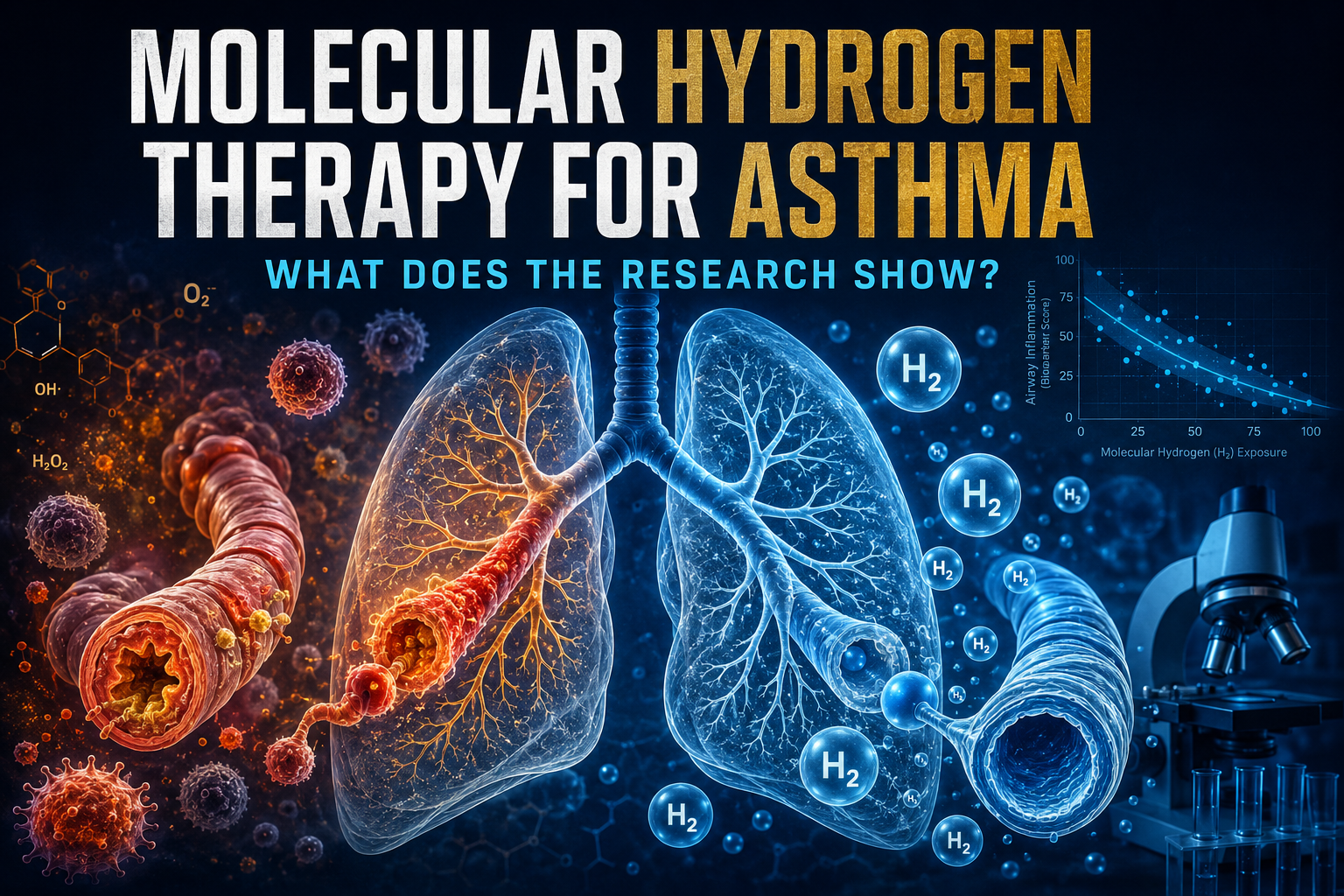
Molecular hydrogen therapy for asthma has attracted attention because hydrogen gas, or H₂, is being studied for possible effects on oxidative stress and inflammatory signalling. Laboratory and animal studies have produced interesting results, and one small human study found changes in several inflammatory markers after a single hydrogen-inhalation session.
However, the evidence remains at an early stage. Molecular hydrogen has not been shown to control asthma symptoms, improve long-term lung function, reduce attacks or replace prescribed inhalers.
This article examines the research without turning preliminary findings into treatment promises.
Important: Molecular hydrogen is not a rescue treatment for an asthma attack. Always follow your personal asthma action plan and use your prescribed reliever exactly as instructed. If symptoms worsen or the reliever does not help, call 999 according to current emergency guidance.
The short answer
Molecular hydrogen is scientifically interesting, but it is not an established asthma therapy.
The most relevant human study included just 10 people with asthma. They inhaled a gas containing 2.4% hydrogen for 45 minutes on one occasion. Researchers observed reductions in selected inflammatory markers, but the study did not show better symptoms, improved FEV₁, fewer attacks or reduced medication use.
Several studies in mice report reduced airway inflammation, hyperresponsiveness, mucus production and allergic immune activity. Animal models can help scientists understand mechanisms, but they cannot establish that an intervention works in people.
The appropriate conclusion is that molecular hydrogen deserves further research—not that it is ready to become part of routine asthma management.
What happens in asthma?
Asthma is not simply a shortage of oxygen or an accumulation of mucus. It involves several interacting processes:
inflammation and swelling within the airways;
tightening of the smooth muscle surrounding the airways;
increased airway sensitivity to triggers;
excess mucus in some patients; and
over time, structural changes known as airway remodelling in some forms of persistent asthma.
Common triggers include viral infections, allergens, smoke, air pollution, exercise, cold air and workplace exposures. Asthma also has different phenotypes and biological pathways. An intervention that influences one inflammatory marker may not work for every type of asthma.
Diagnosis and monitoring can involve symptom history, spirometry, bronchodilator reversibility, fractional exhaled nitric oxide and peak-flow measurements. These tests help clinicians distinguish asthma from other causes of breathlessness and choose appropriate treatment.
What is molecular hydrogen therapy?
Molecular hydrogen consists of two hydrogen atoms and is written H₂. Researchers have administered it through several methods, including:
inhaling a hydrogen-containing gas mixture;
drinking hydrogen-rich water; and
using hydrogen-rich saline in laboratory or animal research.
These methods are not interchangeable. They create different concentrations, exposure patterns and tissue delivery. A finding from injected hydrogen-rich saline in mice cannot be used as proof that drinking hydrogen water or using a home inhalation machine will help a person with asthma.
Hydrogen is being studied as a biological signalling molecule rather than as a conventional bronchodilator. It does not mechanically open constricted airways in the way a prescribed reliever medicine does.
Why might hydrogen be relevant to asthma research?
Oxidative stress
The lungs constantly encounter oxygen, pollutants and airborne particles. Reactive oxygen species are also generated during normal metabolism and immune activity. When reactive species exceed the body’s protective capacity, oxidative stress can influence airway cells and inflammatory pathways.
Oxidative stress has been associated with asthma severity and may be particularly relevant during exacerbations. Molecular hydrogen has been investigated for possible effects on redox signalling and cellular defence systems.
It is often described as a “selective antioxidant,” but that phrase can oversimplify a complex and still-developing field. Modern research suggests that H₂ may influence signalling networks and the body’s own protective responses, rather than merely acting as a sponge that neutralises every damaging molecule.
Inflammatory signalling
Asthma can involve cytokines and immune pathways including type 2 inflammation, although the pattern varies between patients. Animal research suggests that molecular hydrogen may affect pathways such as NF-κB and Nrf2 and alter some inflammatory mediators.
That is biological plausibility—not clinical proof. Reducing a cytokine in a mouse or changing a biomarker after one human session does not establish better asthma control.
Airway hyperresponsiveness and remodelling
Asthmatic airways can react too strongly to triggers, while long-term inflammation may contribute to structural changes. Several mouse studies have explored whether H₂ influences airway hyperresponsiveness, goblet cells, collagen deposition and mucus-related proteins.
These are valuable research endpoints, but human trials must show whether they translate into meaningful improvements in breathing, quality of life and exacerbation risk.
What does the human research show?
The 2020 prospective study
The principal direct human evidence comes from a prospective study published in QJM in 2020. It included 10 people with asthma and 10 with chronic obstructive pulmonary disease.
Participants inhaled a steam-mixed gas containing 2.4% hydrogen for 45 minutes. Researchers measured cytokines in blood and exhaled-breath condensate immediately before and after the single session.
In the asthma group, the researchers reported:
a reduction in blood monocyte chemoattractant protein-1;
a reduction in blood interleukin-8; and
a small reduction in interleukin-6 in exhaled-breath condensate.
These findings indicate a short-term change in selected inflammatory markers. They do not establish a treatment effect.
Important limitations include:
only 10 asthma participants;
no placebo or sham-inhalation control group;
no randomised comparison;
only one 45-minute exposure;
immediate biomarker measurements rather than sustained follow-up; and
no demonstration of improved symptoms, Asthma Control Test score, FEV₁, peak flow, quality of life, medication use or exacerbation rate.
It is therefore inaccurate to claim that human trials have already shown improved lung function or fewer asthma attacks from molecular hydrogen.
What do the animal studies show?
Animal research is more extensive than human research, although it remains preclinical.
Hydrogen-rich saline and airway remodelling
A 2013 study used hydrogen-rich saline in mice exposed to ovalbumin to create allergic airway inflammation. The researchers reported reductions in inflammatory cells and cytokines, mucus-related changes, collagen deposition and markers associated with airway remodelling. NF-κB activity was also reduced.
This was an injected experimental preparation in mice—not hydrogen inhalation or hydrogen water in people.
Hydrogen inhalation and lung function in mice
A 2018 mouse study reported that hydrogen inhalation reduced airway inflammation and hyperresponsiveness and improved measured lung-function parameters in an allergic-asthma model. These results may explain why the subject is worth investigating clinically, but they do not prove an FEV₁ benefit in humans.
Alveolar macrophages and immune activity
A 2019 study found that hydrogen inhalation improved the phagocytic activity of alveolar macrophages in asthmatic mice. It also reported lower airway hyperresponsiveness, inflammation, goblet-cell hyperplasia, type 2 immune activity and oxidative-stress markers.
More recent preclinical research
Further mouse studies published in 2024 and 2025 have reported changes in allergic inflammation, oxidative-stress markers and cytokines following hydrogen inhalation. The growing number of animal experiments strengthens the mechanistic case for a well-designed human trial. It does not remove the need for one.
Evidence at a glance
| Study type | What was found | What it cannot establish |
|---|---|---|
| One human prospective study | Selected inflammatory markers changed after one 45-minute H₂ session in 10 asthma patients | Symptom relief, improved FEV₁, fewer attacks, long-term safety or medication reduction |
| Mouse inhalation studies | Reduced airway inflammation, hyperresponsiveness and allergic immune activity | That the same effect occurs in human asthma |
| Mouse hydrogen-rich saline study | Reduced inflammatory and remodelling markers | Benefits from inhaled H₂ or hydrogen water in people |
| Reviews and trial registrations | A rationale and plans for further study | Efficacy; a registered protocol is not a published result |
Does molecular hydrogen improve FEV₁?
There is not currently sufficient direct human evidence to say that it does.
FEV₁ is the amount of air a person can forcefully exhale in the first second of a spirometry test. It is an important objective measure, although asthma control cannot be judged from FEV₁ alone.
Improvements reported in mouse lung-function measurements should not be rewritten as human FEV₁ results. The small 2020 patient study concentrated on inflammatory biomarkers and did not establish a clinically meaningful improvement in lung function.
Could hydrogen reduce asthma medication?
There is no reliable evidence supporting medication reduction because of hydrogen therapy.
Asthma medicines serve specific roles. Inhaled corticosteroid-containing treatment reduces airway inflammation and attack risk, while prescribed reliever therapy can rapidly open the airways when symptoms occur. Other treatments are chosen according to asthma type and severity.
Stopping or reducing preventer treatment without clinical supervision can allow inflammation and risk to increase even if the person temporarily feels well. Any step-down decision should be made with a GP, asthma nurse or respiratory specialist after sustained control has been assessed.
Can hydrogen inhalation stop an asthma attack?
No evidence shows that molecular hydrogen can act as a rescue treatment.
During an attack, the airways may narrow rapidly. A prescribed reliever contains medicine designed to open them. Hydrogen is not an established bronchodilator and should never replace an asthma action plan, reliever inhaler or emergency care.
Asthma + Lung UK advises people to sit upright, remain as calm as possible and follow the attack instructions for their particular reliever. Call 999 if symptoms worsen at any time, the reliever is not helping within the stated maximum doses, or no reliever is available.
What does evidence-based asthma care involve?
Current asthma management is personalised, but it normally includes several foundations:
An accurate diagnosis. Breathlessness and wheezing can have other causes.
An inhaled corticosteroid-containing plan. Current guidance aims to treat airway inflammation rather than relying on a blue reliever alone.
Correct inhaler technique. A clinician or pharmacist should check it regularly.
A written asthma action plan. This explains daily treatment, deterioration signs and emergency action.
Trigger management. This may include smoke avoidance, allergy strategies and occupational assessment.
Regular review. Symptoms, attacks, reliever use, adherence and risk factors should be reassessed.
Specialist treatment where required. People with difficult or severe asthma may need phenotype testing and biologic medicines.
Molecular hydrogen does not currently appear as a recommended asthma treatment in the BTS/NICE/SIGN guideline.
Hydrogen inhalation versus hydrogen-rich water
The limited human asthma study used inhalation. It cannot validate hydrogen-rich water for asthma.
Inhalation delivers H₂ through the lungs, whereas hydrogen water is consumed and provides a different exposure. The concentration in water also falls after a container is opened. Even if both methods deliver the same molecule, dose, timing and tissue availability differ.
Our detailed guide to hydrogen inhalation versus hydrogen water explains these differences further.
Safety considerations for people with asthma
The 2020 study provides limited information about a single controlled exposure. It cannot establish the long-term safety of repeated home inhalation in children, pregnant people, people with severe asthma or those using supplemental oxygen.
Important practical considerations include:
Hydrogen is flammable. It must not accumulate or be used near flames, smoking, sparks or heat.
Consumer machines vary. Flow, gas composition, purity and safety controls may not match a published study.
Humidified gas may irritate some users. Any coughing, tightness or wheezing during inhalation is a reason to stop and seek advice.
Asthma can change quickly. Feeling temporarily relaxed during a session does not show that airway inflammation or attack risk is controlled.
Oxygen equipment requires medical oversight. Never connect, combine or modify prescribed respiratory equipment without explicit professional direction.
Children require particular caution. There is no adequate paediatric evidence supporting hydrogen therapy for asthma.
Read our full guide, Is Hydrogen Therapy Safe?, before considering any form of H₂ therapy.
Questions to ask before trying molecular hydrogen
Anyone considering H₂ alongside conventional care should first ask:
Is my asthma diagnosis confirmed and currently well controlled?
What would we measure—symptoms, peak flow, reliever use or a validated control score?
Does the proposed machine deliver the same exposure studied in humans?
What safety certification, gas monitoring and ventilation are provided?
Could inhalation itself trigger coughing or bronchospasm?
Who will review my asthma if symptoms change?
Is the provider promising medication reduction without evidence?
Keep prescribed medication unchanged unless the clinician responsible for your asthma advises otherwise.
The evidence-based verdict
Molecular hydrogen therapy for asthma has an interesting scientific foundation. Multiple mouse studies report effects on airway inflammation, oxidative stress, mucus, immune signalling and hyperresponsiveness. A small human study also detected short-term changes in selected inflammatory biomarkers after one inhalation session.
But the clinical evidence stops there. We do not yet know whether repeated H₂ inhalation improves day-to-day symptoms, FEV₁, quality of life or attack risk. We also do not know the best concentration, duration, schedule or which—if any—asthma phenotype might respond.
Molecular hydrogen should therefore be described as investigational, not as a proven asthma treatment or a way to reduce inhalers. The next meaningful step is a sufficiently large, randomised, blinded and placebo-controlled human trial using clinically relevant outcomes.
Frequently asked questions
Is molecular hydrogen therapy approved for asthma?
No. Molecular hydrogen is not an approved or guideline-recommended asthma treatment in the UK.
What did the human asthma study actually find?
Ten people with asthma inhaled 2.4% hydrogen for 45 minutes once. Several inflammatory markers decreased afterwards. The study did not prove symptom relief, improved FEV₁ or fewer attacks.
Can hydrogen replace a preventer inhaler?
No. There is no evidence that it provides the established protection of inhaled corticosteroid-containing treatment. Never change prescribed medication without an asthma clinician.
Can hydrogen replace a reliever during an asthma attack?
No. Hydrogen is not a rescue bronchodilator. Follow your written asthma action plan and obtain emergency help when required.
Is hydrogen water useful for asthma?
There is insufficient clinical evidence. The main direct human asthma study used inhaled gas, and results cannot be transferred automatically to drinking water.
Does hydrogen reduce airway inflammation?
It reduced selected biomarkers in one very small human study and several inflammatory measures in mouse models. Whether that produces meaningful, lasting clinical benefit in people is unknown.
Is hydrogen inhalation safe for children with asthma?
Adequate paediatric trials are lacking. Children should not use experimental inhalation as a substitute for their prescribed asthma plan, and parents should discuss any proposed use with the child’s clinical team.
What research is needed next?
Researchers need larger placebo-controlled trials measuring symptoms, validated asthma-control scores, spirometry, exacerbations, medication use, adverse events and sustained follow-up.
Medical disclaimer
This article is for general education and does not provide medical advice, diagnosis or treatment. Molecular hydrogen remains investigational for asthma. Never stop or reduce prescribed medicine, replace a reliever inhaler, or delay urgent treatment. Discuss any complementary intervention with a qualified asthma clinician.
References
Wang S-T, et al. Hydrogen gas (XEN) inhalation ameliorates airway inflammation in asthma and COPD patients. QJM. 2020;113(12):870–875. PubMed
Zhang N, et al. Inhalation of hydrogen gas attenuates airway inflammation and oxidative stress in allergic asthmatic mice. Asthma Research and Practice. 2018. PubMed
Huang P, et al. Hydrogen gas inhalation enhances alveolar macrophage phagocytosis in an ovalbumin-induced asthma model. International Immunopharmacology. 2019;74:105646. PubMed
Xiao M, et al. Hydrogen-rich saline reduces airway remodeling via inactivation of NF-κB in a murine model of asthma. European Review for Medical and Pharmacological Sciences. 2013;17(8):1033–1043. PubMed
He W, et al. Hydrogen Gas Inhalation Alleviates Airway Inflammation and Oxidative Stress in an Ovalbumin-Induced Asthma Mouse Model. Antioxidants. 2024;13(11):1328. PubMed
BTS, NICE and SIGN. Asthma: diagnosis, monitoring and chronic asthma management (NG245). 2024. NICE guideline
Asthma + Lung UK. Asthma attacks. Emergency guidance