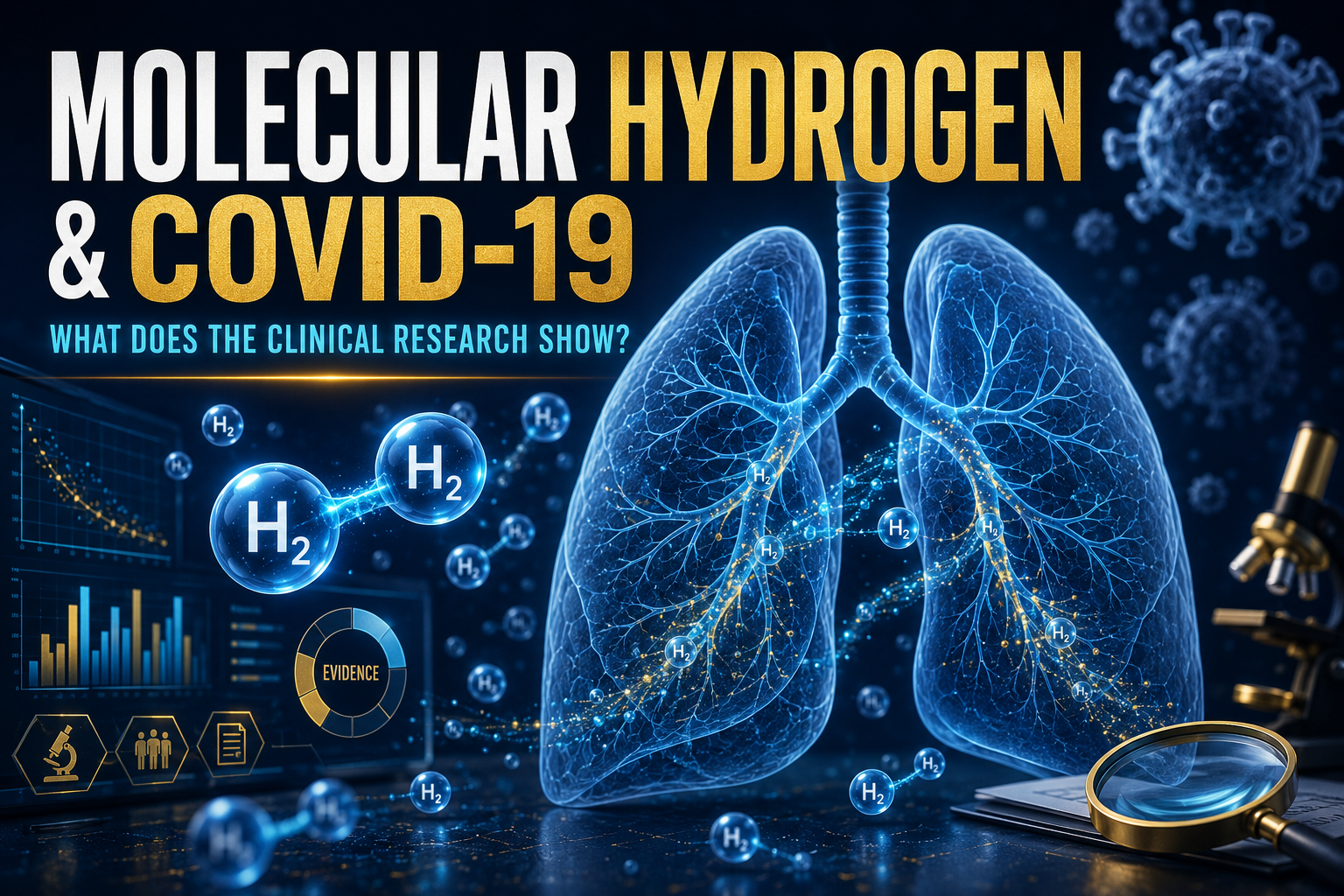
Molecular hydrogen and COVID-19 attracted considerable attention during the first years of the pandemic. Researchers proposed that hydrogen gas might influence oxidative stress and inflammatory signalling, while small clinical studies tested hydrogen–oxygen inhalation in hospital patients.
The important word is experimental. Molecular hydrogen has not been proven to prevent COVID-19, eliminate SARS-CoV-2 or replace established medical care. The published human studies are small, use different methods and mostly assess hydrogen as an addition to standard treatment—not as an alternative.
This updated review separates biological theory from clinical evidence and explains what patients should know before considering hydrogen therapy.
Important: Sudden or worsening breathlessness, chest pain, confusion, blue or grey lips or skin, collapse, or other signs of serious illness require urgent medical assessment. Do not delay NHS care while trying hydrogen or any other complementary intervention.
The short answer
Early human studies suggest that a medically delivered hydrogen–oxygen gas mixture may improve some respiratory symptoms or recovery measurements in selected patients. However, these findings do not establish molecular hydrogen as a COVID-19 treatment.
There is currently no convincing evidence that molecular hydrogen:
prevents infection;
kills SARS-CoV-2 in the human body;
replaces vaccination or prescribed antiviral medicine;
replaces supplemental oxygen or respiratory support;
prevents hospitalisation, intensive-care admission or death; or
reliably treats long COVID.
Larger, independent and well-controlled trials are needed before meaningful clinical claims can be made.
Why did researchers study molecular hydrogen?
Molecular hydrogen, written as H₂, is a small gas. Laboratory and animal research has investigated its possible effects on oxidative stress, inflammation and cell signalling. These pathways are relevant because severe viral illness can involve tissue injury and a dysregulated inflammatory response.
That provides a scientific reason to conduct research, but it is not proof of treatment efficacy. Many compounds affect biomarkers in cells or animals without producing a useful benefit in patients.
Hydrogen was also studied as part of a hydrogen–oxygen gas mixture. Researchers proposed that the lower density of this mixture, compared with air or oxygen alone, might reduce airway resistance and ease the work of breathing. That physical explanation is distinct from any proposed antioxidant or anti-inflammatory action.
Hydrogen gas is not an antiviral
An antiviral directly interferes with a virus or its replication. The clinical studies discussed below did not establish molecular hydrogen as an antiviral medicine.
A change in a laboratory marker, inflammatory molecule or the time until a test becomes negative does not by itself prove direct antiviral activity. Results may be influenced by the illness, other treatment, patient differences and study design.
Claims that hydrogen water or hydrogen inhalation can “kill COVID” therefore go beyond the available evidence.
What have the human studies found?
1. The 2020 multicentre open-label study
A 2020 multicentre study compared inhalation of a hydrogen–oxygen mixture with oxygen therapy in hospitalised COVID-19 patients. The researchers reported more rapid improvements in several symptoms, including breathlessness, cough and chest discomfort, in the hydrogen–oxygen group.
The findings were interesting, particularly during the early phase of the pandemic, but the study had important limitations. It was open-label, meaning patients and clinicians knew which treatment was given. It also took place before current vaccination, antiviral and hospital-treatment practices were established.
The trial did not prove that hydrogen reduced mortality or replaced oxygen. It studied a controlled gas mixture alongside clinical management.
2. The 2023 Omicron-era trial
A later study enrolled 64 hospital patients infected during the Omicron period and assigned 32 to hydrogen–oxygen therapy and 32 to oxygen therapy. The authors reported favourable trends in viral shedding, inflammatory markers and chest imaging in the hydrogen–oxygen group.
The sample was small, and the results have not been confirmed by large independent trials. A study of 64 people cannot reliably answer questions about uncommon complications, hospitalisation risk, intensive-care admission or survival.
This trial supports further investigation; it does not establish routine treatment.
3. Research in early post-COVID rehabilitation
A small study also examined molecular-hydrogen inhalation during early recovery after COVID-19. It reported improvements in selected physical and respiratory measurements.
This is different from treating an active infection, and early post-hospital recovery is not necessarily the same as long COVID. Long COVID includes varied and sometimes fluctuating symptoms, with different possible causes. Preliminary rehabilitation findings should not be presented as proof that hydrogen treats the condition.
4. Registered studies are not results
Several hydrogen studies have appeared in clinical-trial registries, including protocols involving inhaled gas, hydrogen-rich water and post-COVID symptoms. A registry entry shows that researchers intended to run a study. Unless results are published and critically reviewed, it does not demonstrate safety or efficacy.
Evidence at a glance
| Research | What was tested | Reported finding | Why caution is needed |
|---|---|---|---|
| 2020 hospital study | Hydrogen–oxygen inhalation versus oxygen therapy | Faster improvement in several respiratory symptoms | Open-label, early-pandemic care and limited ability to establish major outcomes |
| 2023 Omicron-era trial | 32 patients received hydrogen–oxygen and 32 received oxygen | Favourable trends in viral shedding, IL-6 and imaging | Small study; larger independent trials are required |
| Early post-COVID study | Hydrogen inhalation during rehabilitation | Improvements in selected physical and respiratory measures | Small, short-term study; not proof of a long-COVID treatment |
| Registered trials | Inhalation or hydrogen-rich water | Research is planned, ongoing or awaiting publication | Registration alone is not clinical evidence |
Can molecular hydrogen control a “cytokine storm”?
Early pandemic articles often used the phrase “cytokine storm” to describe severe COVID-19. The immune response is more complicated than a single switch that an antioxidant can turn off.
Molecular hydrogen has been associated with changes in inflammatory signalling in preclinical research, and one small clinical trial reported a change in interleukin-6. Neither finding proves that hydrogen can control severe immune dysregulation or prevent organ damage.
It would be inaccurate to call hydrogen the best treatment for a cytokine storm. Severe COVID-19 must be managed by clinicians using treatments supported by current evidence and appropriate to the individual patient.
Does COVID-19 attack haemoglobin?
Some early-pandemic posts claimed that SARS-CoV-2 directly attacked haemoglobin and that this made standard respiratory treatment inappropriate. Those claims were based largely on speculative computational work and were not supported as an explanation of COVID-19 respiratory failure.
COVID-19 can affect the lungs, blood vessels and other organs, and severe illness can reduce the body’s ability to oxygenate tissues. That does not mean prescribed oxygen or respiratory support is misguided.
What about ventilators?
Mechanical ventilation is not risk-free, but it can be life-saving when a person cannot maintain adequate breathing or oxygenation. Very high mortality figures circulated from overwhelmed hospitals in 2020, when clinicians were treating a new disease in exceptionally ill patients. Those observations did not prove that ventilators caused the deaths.
Decisions about oxygen, non-invasive support or ventilation depend on the patient’s condition and should be made by the clinical team. A hydrogen device must never be used as a substitute.
Hydrogen–oxygen inhalation is not the same as oxygen therapy
The terms can sound similar, but their roles are different:
Medical oxygen is an established treatment for hypoxaemia and is prescribed and monitored to achieve an appropriate oxygen level.
Hydrogen–oxygen inhalation remains investigational for COVID-19. The studies used particular generators, gas ratios and clinical protocols.
Hydrogen-rich water is another delivery method and cannot be assumed to reproduce the findings of inhalation studies.
It is therefore misleading to cite a hospital gas study as evidence that any hydrogen machine, hydrogen tablet or bottled water will produce the same result.
Could molecular hydrogen help with long COVID?
At present, there is not enough evidence to say that it does.
Long COVID is an umbrella term for persistent symptoms after infection. These may include fatigue, post-exertional symptom worsening, breathlessness, cognitive difficulties, sleep disturbance, palpitations and pain. People can have very different symptom patterns and medical needs.
Small studies of early recovery and registered long-COVID trials create research interest, not a treatment recommendation. Anyone with persistent symptoms should seek an appropriate assessment, especially when symptoms are new, worsening or affecting everyday activity.
What is established COVID-19 care in the UK?
Care depends on illness severity, medical history and risk of complications. The NHS advises that eligible people at the highest risk who develop symptoms and test positive should contact their GP, NHS 111 or hospital specialist promptly for assessment. Available outpatient medicines include nirmatrelvir with ritonavir and molnupiravir; they need to be started quickly when prescribed.
People admitted to hospital may receive oxygen and other evidence-based treatments according to their condition. Current NHS and NICE guidance should take priority over older blog posts, social-media videos or product claims.
Molecular hydrogen is not listed as a standard NHS COVID-19 treatment.
Safety and practical concerns
Hydrogen gas is highly flammable. Medical research systems use controlled concentrations, ventilation, monitoring and safety procedures. A consumer device is not automatically equivalent to equipment used in a clinical trial.
Potential concerns include:
fire or explosion where hydrogen accumulates or meets an ignition source;
incorrect gas concentration or unreliable output;
contamination or poor device maintenance;
nasal or airway discomfort;
interaction with prescribed oxygen equipment; and
the greatest practical risk—delaying effective assessment or treatment.
Never modify respiratory equipment, combine a hydrogen generator with prescribed oxygen, or use a gas device near flames, cigarettes, sparks or heat unless this is part of a properly supervised medical protocol.
For a broader overview, read Is Hydrogen Therapy Safe?.
How to judge a hydrogen-and-COVID claim
Before accepting a headline or sales claim, ask:
Was the research conducted in humans with COVID-19?
Was it randomised, blinded and adequately controlled?
How many people participated?
Was hydrogen added to standard care, or genuinely tested alone?
Were meaningful outcomes measured, such as hospitalisation or mortality, rather than only biomarkers?
Was the delivery method the same as the product being promoted?
Has an independent group repeated the result?
Are risks and study limitations clearly disclosed?
These questions also help when reviewing broader hydrogen therapy benefits.
The evidence-based verdict
Molecular hydrogen is an interesting research subject, and the small clinical studies should not be dismissed. They provide a rationale for larger, rigorous trials of hydrogen–oxygen inhalation as an adjunct in carefully defined patients.
However, the current evidence is not strong enough to describe hydrogen as a proven COVID-19 treatment. It is not established to prevent infection, directly eliminate the virus, replace antivirals, correct low oxygen or prevent severe outcomes. Evidence for long COVID is also preliminary.
The responsible conclusion is simple: promising biological ideas and small clinical signals justify research—not treatment promises.
Frequently asked questions
Can hydrogen therapy cure COVID-19?
No. There is no reliable evidence that hydrogen therapy cures COVID-19 or eliminates SARS-CoV-2 from the body.
Is molecular hydrogen an approved COVID-19 treatment?
Molecular hydrogen is not a standard NHS treatment for COVID-19. Small trials have investigated it as an adjunct, but this is not the same as clinical approval or routine recommendation.
Can hydrogen inhalation replace medical oxygen?
No. Supplemental oxygen is used to treat inadequate oxygenation and is prescribed and monitored clinically. Hydrogen inhalation must not replace it.
Does hydrogen water provide the same result as hydrogen–oxygen inhalation?
That has not been established. Drinking hydrogen-rich water and inhaling a controlled gas mixture produce different exposures. Results from one method cannot automatically be applied to another.
Does hydrogen reduce inflammation in COVID-19?
Some laboratory research and small human studies report changes in inflammatory markers. It is not yet clear whether these changes produce important, repeatable clinical benefits.
Can I use a hydrogen machine at home if I have COVID-19?
Do not use a machine as a substitute for testing, medical advice or prescribed treatment. Hydrogen is flammable, and home equipment may not match research-grade systems. Speak to a qualified clinician and follow the manufacturer’s safety instructions.
Can molecular hydrogen treat long COVID?
There is not enough published evidence to recommend it as a long-COVID treatment. Early recovery research and trial registrations are preliminary.
What should a high-risk person do after a positive COVID-19 test?
Follow current NHS guidance and contact your GP, NHS 111 or hospital specialist promptly if you may qualify for treatment. Prescribed antivirals work best when started within the required time window.
Medical disclaimer
This article is for general education and does not provide medical advice, diagnosis or treatment. Molecular hydrogen remains investigational for COVID-19 and post-COVID conditions. Do not stop prescribed medicine, alter oxygen equipment or delay urgent care. Discuss any complementary therapy with an appropriately qualified healthcare professional.
References
Guan W-J, et al. Hydrogen/oxygen mixed gas inhalation improves disease severity and dyspnea in patients with Coronavirus disease 2019 in a recent multicenter, open-label clinical trial. Journal of Thoracic Disease. 2020. PubMed
Chen J-B, et al. The efficacy of hydrogen/oxygen therapy favored the recovery of Omicron SARS-CoV-2 variant infection. Journal of Clinical Biochemistry and Nutrition. 2023. PubMed
Botek M, et al. Molecular Hydrogen Positively Affects Physical and Respiratory Function in Acute Post-COVID-19 Patients: A New Perspective in Rehabilitation. International Journal of Environmental Research and Public Health. 2022. PubMed
ClinicalTrials.gov. Hydrogen Therapy in Patients With Moderate COVID-19. NCT04633980
ClinicalTrials.gov. Hydrogen Water for COVID-19. NCT04716985
ClinicalTrials.gov. Effect of Inhaled Hydroxy Gas on Long COVID Symptoms. NCT06159296
NHS. Treatments for COVID-19. Current NHS guidance
NICE. COVID-19 rapid guideline: managing COVID-19 (NG191). NICE guidance