The Hydrogen Cancer Control book explores an emerging and highly sensitive question: could molecular hydrogen eventually play a supportive role alongside conventional cancer care?
Cancer is not one disease with one cause or one universal treatment. It includes more than 200 different diseases, each involving distinct genetic changes, biological pathways, treatment responses and prognoses.
The book examines laboratory research, proposed biological mechanisms, clinical observations and individual case reports involving molecular hydrogen. Its central argument is not that hydrogen provides a simple cure. Instead, it considers whether H₂ may influence some of the cellular processes affected by cancer and intensive cancer treatment.
This distinction is essential.
Current evidence does not establish molecular hydrogen as a cancer treatment. It has not been proven to shrink tumours, prevent cancer progression or improve survival. Surgery, chemotherapy, radiotherapy, immunotherapy, targeted therapies and hormone treatments remain the evidence-based foundations of oncology care.
However, a small amount of human research has investigated molecular hydrogen in relation to quality of life, fatigue, oxidative stress and selected treatment-related effects. These findings make the subject worthy of careful scientific investigation—but not exaggerated medical claims.
What Is the Hydrogen Cancer Control Book?
Hydrogen Cancer Control: Theory and Practice brings together theories and research concerning the possible relationship between molecular hydrogen and cancer biology.
Rather than focusing on a single study, the book discusses several categories of evidence:
- Laboratory experiments involving cells
- Animal models of cancer or treatment-related injury
- Proposed biological mechanisms
- Small observational human studies
- Individual clinical experiences
- Published case reports
- Possible supportive applications during cancer treatment
Combining these different types of evidence can help readers understand how a research field develops. However, it also creates a risk: findings from laboratory experiments, patient observations and controlled clinical trials do not carry the same scientific weight.
A substance can produce an interesting effect in isolated cells without treating cancer in a living person. Similarly, a patient may improve after using several therapies simultaneously, but this does not prove which intervention caused the improvement.
The book is therefore best read as an exploration of a developing research field—not as a clinical treatment guide.
Understanding the Bigger Picture
One of the strongest messages in the Hydrogen Cancer Control book is that cancer is extraordinarily complex.
Factors associated with cancer development and progression can include:
- Inherited and acquired genetic changes
- Age
- Environmental exposures
- Tobacco and alcohol
- Some infections
- Hormonal influences
- Immune function
- Metabolic changes
- Chronic inflammation
- Lifestyle and overall health
The importance of each factor differs considerably between cancer types and individuals. Even two people diagnosed with the same cancer can respond very differently to treatment.
Because of this complexity, there is rarely one intervention capable of addressing every aspect of the disease.
Comprehensive cancer care may involve surgery, medication, radiotherapy, symptom control, rehabilitation, nutritional support and psychological care. Carefully selected complementary approaches may sometimes help a person cope with symptoms or treatment, but they must not be confused with therapies proven to control the cancer itself.
Cancer Research UK explains that complementary therapies are used alongside conventional treatment, whereas alternative therapies are used instead of it. Replacing or delaying recommended cancer treatment can have serious consequences.
Why Is Molecular Hydrogen Being Studied?
Molecular hydrogen, written as H₂, is a colourless and odourless gas. Because it is exceptionally small, it can diffuse through biological membranes and distribute rapidly through the body.
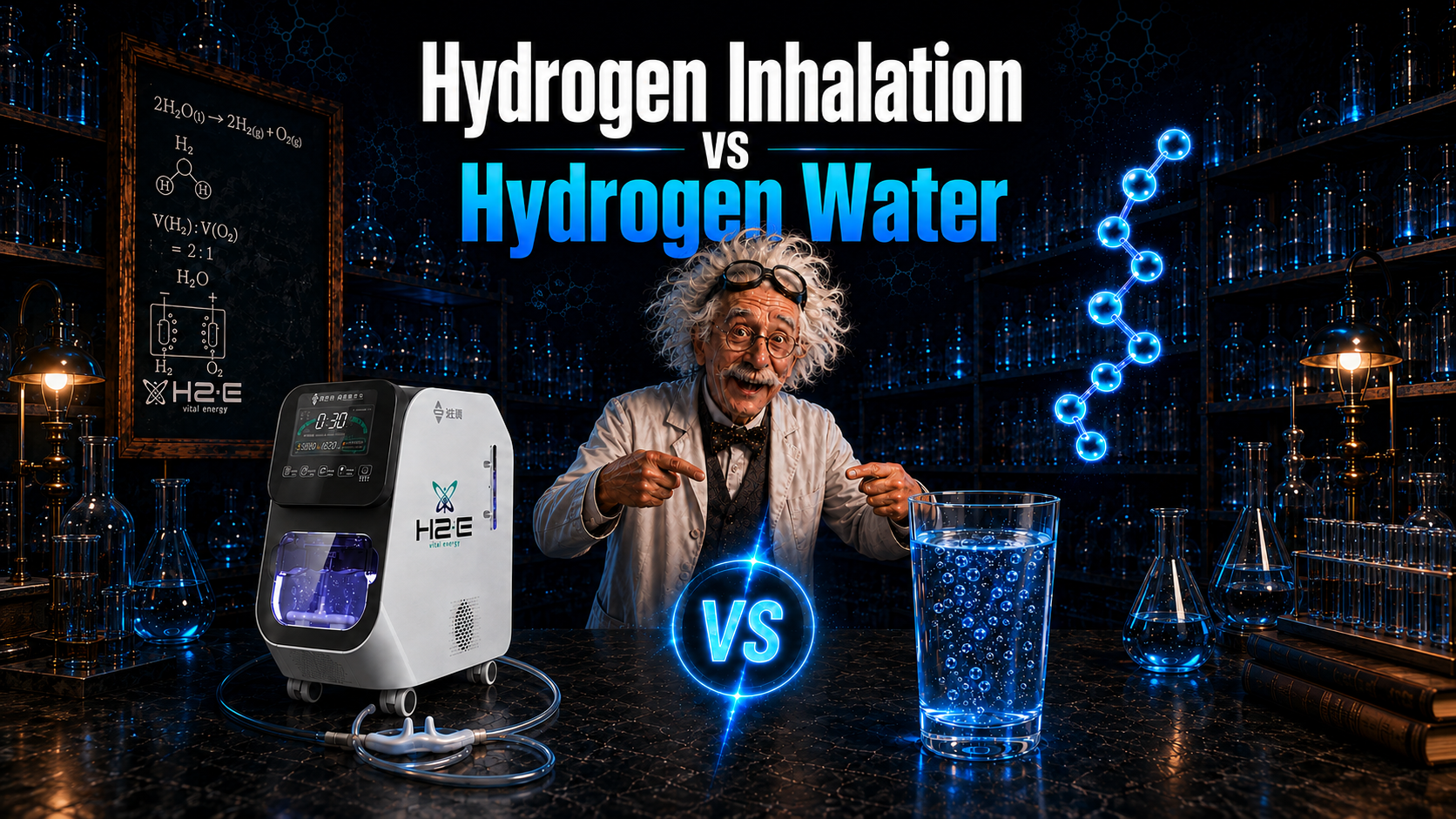
Researchers have studied H₂ through several delivery methods, including:
- Hydrogen-rich water
- Controlled hydrogen inhalation
- Hydrogen-rich saline in experimental settings
- Topical or bathing applications
Scientific interest increased after research suggested that molecular hydrogen might influence oxidative stress and cellular signalling.
Oxidative stress occurs when reactive molecules exceed the body’s ability to regulate them effectively. These molecules are not universally harmful; some play essential roles in immune defence and signalling. Problems may arise when oxidative activity becomes excessive or poorly controlled.
Research now suggests that molecular hydrogen’s actions may involve more than directly neutralising reactive molecules. H₂ may influence the body’s own antioxidant systems, inflammatory signalling and stress-response pathways.
For a broader introduction, read what hydrogen therapy is and how molecular hydrogen works.
The Biological Pathways Discussed in Hydrogen Research
The Hydrogen Cancer Control book considers several mechanisms through which molecular hydrogen could theoretically influence cellular health.
1. Oxidative-stress regulation
Cancer and its treatments can both alter oxidative balance. Chemotherapy and radiotherapy may intentionally use oxidative damage as part of their action against cancer cells, while also affecting healthy tissues.
Experimental research suggests H₂ may influence oxidative-stress responses. However, this creates an important unanswered question: could changing oxidative activity protect healthy tissue without reducing the effectiveness of treatment?
This cannot be assumed. Anyone undergoing chemotherapy or radiotherapy should discuss hydrogen therapy—and any antioxidant supplement—with their oncology team.
2. Inflammatory signalling
Inflammation can have several roles in cancer. Short-term inflammation supports healing and immune defence, while persistent inflammatory signalling may contribute to an environment associated with tumour development or progression.
Laboratory research suggests molecular hydrogen may influence inflammatory mediators. Yet reduced inflammatory biomarkers do not automatically demonstrate tumour control or improved survival.
3. Mitochondrial function
Mitochondria help cells produce energy and participate in stress responses, metabolism and programmed cell death.
Cancer cells often display altered energy metabolism. Researchers are studying whether molecular hydrogen affects mitochondrial stability and cellular signalling, but the implications may differ between healthy and malignant cells.
4. Immune regulation
The immune system can recognise and destroy abnormal cells, but tumours may develop mechanisms that help them avoid immune attack.
Some experimental hydrogen research has examined immune-cell activity, including exhausted CD8-positive T cells. This is scientifically interesting, but it is not equivalent to evidence that hydrogen functions as an approved cancer immunotherapy.
5. Protection of healthy tissue
Another research question is whether molecular hydrogen may help healthy tissues manage oxidative or inflammatory stress associated with intensive treatment.
This is one of the more plausible supportive applications, but any protective effect must be studied carefully to ensure it does not also protect malignant cells or interfere with treatment.
What Does the Human Evidence Show?
The human evidence remains limited. Two frequently discussed areas are quality of life during radiotherapy and observational reports involving hydrogen inhalation.
Hydrogen-rich water during radiotherapy
A small randomised study involving people receiving radiotherapy for liver tumours investigated hydrogen-rich water.
Participants who consumed hydrogen-rich water reported better quality-of-life scores than the placebo group. The researchers also examined markers associated with oxidative stress and reported no apparent reduction in the anti-tumour effect of radiotherapy.
This was an encouraging preliminary finding, but it had important limitations:
- The study was small.
- It examined quality of life rather than survival.
- The findings cannot automatically be applied to other cancers.
- It used hydrogen-rich water, not hydrogen inhalation.
- Independent replication is needed.
The study does not demonstrate that hydrogen treats liver cancer. It suggests a possible supportive effect that warrants further research.
Observational hydrogen-inhalation research
A real-world observational study involving people with advanced cancer reported changes in symptoms such as fatigue, insomnia, appetite and pain after hydrogen inhalation.
The publication also described tumour-related outcomes in some participants. However, the study did not provide the level of control found in a high-quality randomised clinical trial.
Without a suitable control group, it is difficult to separate the possible effects of hydrogen from:
- Concurrent cancer treatment
- Natural variations in disease progression
- Differences between cancer types
- Changes in medication
- Supportive care
- Participant selection
- Placebo and expectation effects
Observational research can generate valuable hypotheses, but it cannot establish that hydrogen caused the reported outcomes.
What Can Case Reports Tell Us?
The Hydrogen Cancer Control book includes or discusses individual clinical experiences and case reports.
Case reports can help researchers identify unexpected outcomes, document unusual responses and decide which questions deserve formal investigation.
However, they cannot prove effectiveness.
If someone experiences tumour stabilisation or regression while receiving hydrogen alongside conventional treatment, several explanations remain possible. The improvement could be associated with surgery, chemotherapy, immunotherapy, radiotherapy, the natural course of the condition or a combination of factors.
A case report is therefore a starting point for research—not confirmation of a treatment.
The correct next step is a well-designed clinical trial with:
- Clearly defined participants
- A comparison or placebo group where ethical
- Consistent treatment protocols
- Predefined outcomes
- Appropriate follow-up
- Transparent reporting of adverse events
- Independent replication
Can Molecular Hydrogen Treat Cancer?
There is currently insufficient clinical evidence to conclude that molecular hydrogen treats cancer.
Hydrogen therapy has not been proven to:
- Eliminate malignant cells in humans
- Shrink tumours reliably
- Stop metastasis
- Prevent cancer recurrence
- Replace chemotherapy or radiotherapy
- Replace surgery, immunotherapy or targeted treatment
- Extend cancer survival
Headlines describing hydrogen as a cancer cure go far beyond the available evidence.
A more accurate conclusion is that molecular hydrogen is an experimental research subject with possible supportive applications that require stronger clinical investigation.
Could H₂ Support Quality of Life?
Quality of life is an important and legitimate outcome in cancer care. Treatment can affect:
- Energy
- Sleep
- Appetite
- Mood
- Physical function
- Pain
- Daily independence
- Emotional wellbeing
Early hydrogen studies have reported possible improvements in some of these areas. However, the evidence is not yet strong enough to determine which patients may benefit, which delivery method is most appropriate or whether the effects are consistent.
Even when an intervention does not control a tumour, improving comfort or treatment tolerance may still be valuable. But those benefits must be demonstrated through reliable trials and discussed separately from anti-cancer claims.
Complementary Does Not Mean Risk-Free
Molecular hydrogen has generally been well tolerated in published human research, but that does not make every protocol appropriate for every patient.
Important considerations include:
- Cancer type and stage
- Current treatment
- Respiratory and cardiovascular health
- Recent or planned surgery
- Medication
- Delivery method
- Hydrogen concentration and exposure
- Machine safety
- Ventilation
- Individual clinical circumstances
Hydrogen is also flammable. Equipment quality, correct operation, ventilation and the removal of ignition sources are essential.
Our complete guide examines hydrogen therapy safety, side effects and responsible equipment use.
Anyone receiving cancer treatment should speak to their oncologist or specialist nurse before introducing hydrogen therapy. No prescribed treatment should be stopped, delayed or modified without professional medical advice.
Strengths of the Hydrogen Cancer Control Book
The book’s main strengths are that it:
- Brings a specialised research field into one resource
- Explores multiple proposed biological mechanisms
- Includes laboratory and clinical observations
- Encourages further investigation
- Demonstrates the breadth of molecular-hydrogen research
- Presents questions that may inform future clinical trials
For researchers and readers already interested in molecular hydrogen, it offers a useful view of how hydrogen oncology has developed.
Important Limitations
Readers should also recognise its limitations:
- Much of the evidence is preclinical.
- Human studies are generally small.
- Cancer types and stages vary substantially.
- Hydrogen delivery methods are inconsistent.
- Case reports cannot establish cause and effect.
- Long-term safety and survival data are limited.
- Some research comes from a relatively small number of institutions.
- Independent multicentre replication is needed.
- The book should not be treated as a clinical oncology guideline.
These limitations do not make the research meaningless. They determine how confidently its findings can be applied.
Questions to Ask Before Considering Hydrogen Therapy
Someone affected by cancer may wish to ask:
- Has my oncology team reviewed this alongside my treatment?
- What evidence relates specifically to my diagnosis?
- Is the proposed goal symptom support, general wellbeing or something else?
- Does the provider make unrealistic anti-cancer claims?
- What delivery method and protocol are being proposed?
- What safety measures does the equipment use?
- Could it interfere with my treatment or medical equipment?
- How will possible benefits and adverse effects be monitored?
- Am I being encouraged to delay conventional treatment?
- Are the claims based on controlled trials or isolated testimonials?
A responsible provider should welcome these questions and never guarantee a clinical outcome.
Final Review: Valuable Questions, but Not Definitive Answers
The Hydrogen Cancer Control book presents a thought-provoking collection of theories, experimental findings and clinical observations.
Its most valuable contribution is not proof that hydrogen controls cancer. It is the set of research questions it raises:
- Can molecular hydrogen support quality of life during treatment?
- Could it help healthy tissues respond to treatment-related stress?
- Which cancer populations, if any, may benefit?
- What delivery methods and doses should be investigated?
- Can supportive effects occur without reducing treatment effectiveness?
- Will encouraging early findings survive large independent trials?
The available evidence supports continued scientific investigation, not definite treatment claims.
Molecular hydrogen may eventually prove useful as one part of supportive cancer care for selected patients. At present, however, it remains investigational and should only be considered alongside—not instead of—professional oncology treatment.
At H2=E, we believe hope should be supported by evidence and communicated with integrity. People affected by cancer deserve information that acknowledges promising science without presenting possibility as proof.
Frequently Asked Questions
Who is the Hydrogen Cancer Control book for?
It may interest researchers, healthcare professionals and general readers who want to understand the theories and early evidence surrounding molecular hydrogen and cancer.
Does the book prove hydrogen treats cancer?
No. It discusses experimental findings, small studies, observations and case reports, but these do not establish hydrogen as a cancer treatment.
Can hydrogen therapy replace chemotherapy?
No. Hydrogen therapy must not replace chemotherapy, radiotherapy, surgery, immunotherapy or any treatment recommended by an oncology team.
Can someone use hydrogen during cancer treatment?
Suitability depends on the person’s diagnosis, treatment and medical circumstances. They should discuss it with their oncologist or specialist nurse before use.
Is molecular hydrogen an antioxidant?
It is often described in antioxidant terms, but its biological activity appears more complex. Researchers are investigating possible effects on oxidative balance, cellular signalling and the body’s own defence systems.
References and further reading
- Kang KM, et al. Effects of drinking hydrogen-rich water on the quality of life of patients treated with radiotherapy for liver tumours. Medical Gas Research. 2011. PubMed
- Chen JB, et al. Real world survey of hydrogen-controlled cancer: a follow-up report of 82 advanced cancer patients. Medical Gas Research. 2019. PubMed
- Chen JB, et al. A narrative review of hydrogen oncology: from real-world survey to clinical studies. Medical Gas Research. 2020. PubMed Central
- Cancer Research UK. Complementary and alternative therapies. Cancer Research UK
This article is for educational purposes and is not medical advice. H2=E does not claim that molecular hydrogen prevents, treats or cures cancer. Molecular hydrogen remains investigational in oncology and must not replace professional assessment, prescribed medication or conventional cancer treatment.