Important: Molecular hydrogen is not an approved treatment for cancer and must never replace surgery, radiotherapy, chemotherapy, immunotherapy, targeted therapy or any other treatment recommended by an oncology team. Research discussed here is preliminary and investigates hydrogen only as a possible adjunct—something used alongside established care.
Cancer treatment has advanced enormously, yet many patients still experience fatigue, nausea, inflammation, loss of appetite, reduced blood counts and other effects that can significantly affect quality of life. This has created interest in supportive approaches that might make treatment easier to tolerate without reducing its effectiveness.
One emerging area is molecular hydrogen and cancer therapy.
Molecular hydrogen (H₂) is being studied for possible effects on oxidative stress, inflammatory signalling, mitochondrial function and immune regulation. Laboratory experiments and a small number of human studies have produced interesting findings. Some have reported changes in quality of life, treatment-related symptoms or biological markers. However, the clinical evidence remains limited, and it does not establish that hydrogen cures cancer, shrinks tumours reliably or improves survival.
This article examines what has actually been studied, what the results may mean and where the evidence remains uncertain.
The short answer
Current research suggests that molecular hydrogen deserves further study as a possible supportive intervention during conventional cancer care. Small trials and observational studies have explored hydrogen-rich water or hydrogen inhalation in relation to quality of life, treatment-related toxicity, blood-cell changes and immune markers.
These results are hypothesis-generating—not proof of an effective cancer treatment. Most studies have been small, conducted at a single centre, lacked robust control groups or investigated a specific cancer and protocol that cannot be generalised to everyone.
The responsible conclusion is:
Molecular hydrogen may have potential as an adjunctive supportive therapy, but it remains investigational in oncology and should only be considered with the knowledge and approval of the treating cancer team.
What does “adjunct cancer therapy” mean?
An adjunctive or complementary intervention is used alongside standard medical treatment. It is different from an alternative therapy, which is used instead of conventional care.
That distinction matters. The US National Cancer Institute explains that standard cancer treatments are supported by scientific evidence, while many complementary approaches have received much less research. Some may be helpful, some may have no benefit and others may interfere with treatment.
For molecular hydrogen, “adjunctive” means it is being investigated for questions such as:
-
Could it help selected patients tolerate treatment more comfortably?
-
Could it influence fatigue or quality of life?
-
Could it reduce certain treatment-associated biological changes?
-
Can it be used without weakening the anti-tumour effect of chemotherapy or radiotherapy?
It does not mean that hydrogen is established as a cancer treatment.
What is molecular hydrogen?
Molecular hydrogen is a colourless, odourless gas made of two hydrogen atoms, written as H₂. It is the smallest molecule and can diffuse rapidly through tissues and biological membranes.
In research, it has been delivered in several ways:
-
Hydrogen inhalation: breathing a controlled hydrogen-containing gas through a cannula or mask;
-
Hydrogen-rich water: drinking water containing dissolved H₂;
-
Hydrogen-rich saline: used mainly in experimental or clinical research settings.
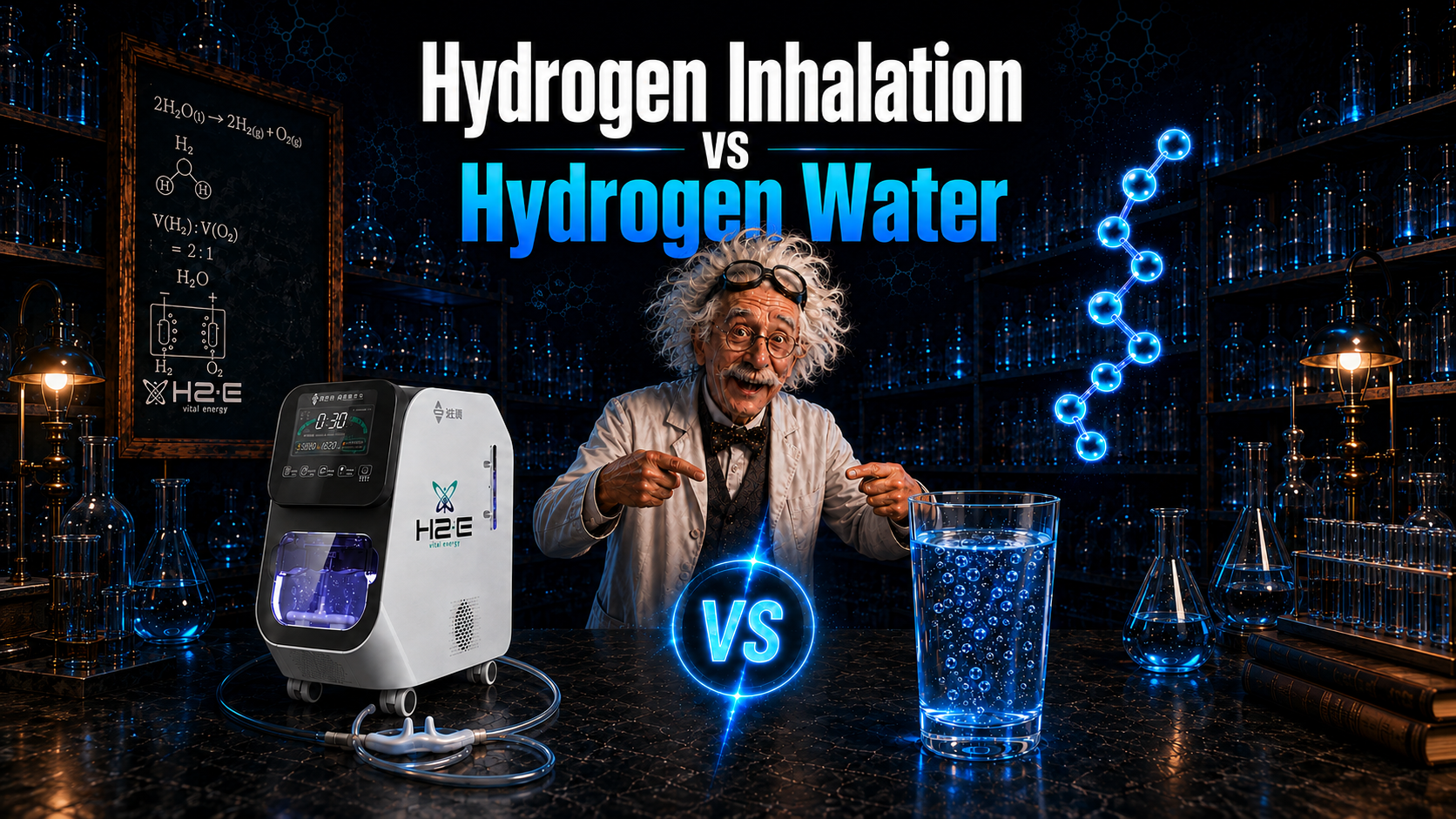
Hydrogen therapy is not the same as hydrogen peroxide, alkaline water or oxygen therapy. The dose and exposure produced by drinking hydrogen-rich water are also not directly equivalent to inhaling hydrogen gas. Our guide to hydrogen inhalation versus hydrogen-rich water explains the practical differences.
Why are researchers interested in hydrogen during cancer care?
Cancer biology is extraordinarily complex. Oxidative stress and inflammation are involved in tumour development, immune responses and treatment-related tissue damage—but they can have both helpful and harmful roles.
Chemotherapy and radiotherapy may use oxidative damage as part of the mechanism that harms cancer cells. At the same time, excessive oxidative and inflammatory stress can affect healthy tissues and contribute to side effects.
This creates an important scientific question: could molecular hydrogen influence damaging stress in healthy tissue without protecting the tumour or interfering with treatment?
Researchers have proposed several mechanisms.
Redox regulation
H₂ was initially described as a selective antioxidant because early experiments suggested it could reduce particularly reactive species while having less effect on molecules involved in normal signalling. Later research indicates its activity may be broader, involving the regulation of the body’s own antioxidant and stress-response pathways.
However, calling hydrogen an antioxidant does not prove that it is beneficial during cancer treatment. Redox biology differs between cancer types, drugs, radiation protocols and individual patients.
Inflammatory signalling
Preclinical studies suggest H₂ can influence cytokines and signalling pathways involved in inflammation. This provides a possible rationale for studying symptoms and treatment toxicity, but changes in laboratory markers are not the same as improved clinical outcomes.
Mitochondrial and cellular stress responses
Mitochondria help regulate energy production, oxidative signalling and programmed cell death. Laboratory studies suggest hydrogen may influence mitochondrial stress responses. Whether those effects help patients, have no meaningful effect or differ by tumour type remains uncertain.
Immune regulation
Small studies have investigated whether hydrogen affects exhausted CD8+ T cells and markers such as PD-1. These observations are scientifically interesting, particularly in the era of immunotherapy, but they do not demonstrate that hydrogen enhances immunotherapy in routine clinical practice.
What have human studies found?
Human evidence is more valuable than cell or animal experiments, but study design still matters. A small uncontrolled study can identify a signal; it cannot reliably prove cause and effect.
| Study area | What was reported | Why interpretation must remain cautious |
|---|---|---|
| Radiotherapy for liver tumours | A small randomised placebo-controlled study reported better quality-of-life scores and changes in oxidative-stress measures with hydrogen-rich water. Tumour response to radiotherapy was not reported as compromised. | The study was small, focused on one treatment setting and was not designed to prove improved cancer control or survival. |
| Colorectal cancer receiving mFOLFOX6 | A clinical study reported that hydrogen-rich water was associated with less deterioration in selected liver-function measures. | This does not establish reduced overall chemotherapy toxicity, improved tumour response or longer survival. Replication is needed. |
| Advanced non-small-cell lung cancer | A 58-patient study reported improvement in symptoms and treatment-associated adverse events in groups receiving hydrogen inhalation, with exploratory progression-free-survival findings. | Group allocation and treatment differed substantially; most combination groups lacked matched non-hydrogen controls. The results cannot establish that hydrogen caused better cancer outcomes. |
| Advanced colorectal cancer | A 55-patient study reported changes in exhausted CD8+ T-cell markers and associations with progression-free and overall survival. | It was not a large, blinded randomised trial. Associations and subgroup comparisons cannot prove that hydrogen improved survival. |
| Bone-marrow effects during IMRT | A retrospective single-centre study compared seven controls with 16 patients receiving hydrogen and reported smaller reductions in white blood cells and platelets. | The groups were small and non-randomised. Different supportive chamber conditions and retrospective data create a substantial risk of bias. |
| Head-and-neck chemoradiotherapy | A 2024 prospective pilot involving 10 patients found that hydrogen inhalation during treatment was feasible and did not produce concerning changes in monitored vital signs. | With only 10 participants and no efficacy control group, the study addressed feasibility—not whether hydrogen reduces toxicity, treats cancer or improves survival. |
1. Quality of life during radiotherapy
A 2011 randomised, placebo-controlled study examined hydrogen-rich water in people receiving radiotherapy for liver tumours. The hydrogen-water group reported better quality-of-life scores and showed changes in an oxidative-stress marker compared with placebo. The researchers did not report evidence that hydrogen weakened the radiotherapy response.
This is an encouraging supportive-care signal. It does not show that hydrogen treats liver cancer or improves long-term survival.
2. Liver-function measures during chemotherapy
A study of patients with colorectal cancer receiving mFOLFOX6 chemotherapy investigated hydrogen-rich water and liver-function tests. The authors reported less deterioration in selected measures in the hydrogen group.
This raises a useful research question about treatment tolerance. It does not prove protection against all chemotherapy side effects, and laboratory measures must not be confused with patient-centred outcomes such as symptoms, treatment completion or survival.
3. Advanced non-small-cell lung cancer
A 2020 study enrolled 58 adults with advanced non-small-cell lung cancer. Ten participants received hydrogen alone, ten were controls, and other groups received hydrogen alongside chemotherapy, targeted therapy or immunotherapy. Hydrogen inhalation was used for several hours daily over five months.
The authors reported reductions in pulmonary symptoms and drug-associated adverse events, alongside exploratory progression-free-survival findings.
The design makes strong conclusions difficult. The combined-treatment groups were not each compared with equivalent non-hydrogen treatment groups, the sample sizes were small and participants received different therapies based on tumour genetics and drug-sensitivity testing. The paper supports further controlled research; it does not establish hydrogen as an effective lung-cancer treatment.
4. CD8+ T-cell exhaustion in colorectal cancer
A study involving 55 people with stage IV colorectal cancer examined PD-1-related CD8+ T-cell exhaustion during hydrogen inhalation. Changes in immune-cell markers were associated with prognosis, and exploratory comparisons were reported in a smaller group receiving nivolumab.
This is biologically interesting, but immune markers are surrogate outcomes. The study was not sufficient to conclude that hydrogen restores anti-cancer immunity or improves the effectiveness of immunotherapy.
5. Blood counts during radiotherapy
A retrospective observational study compared 16 patients receiving hydrogen gas after intensity-modulated radiotherapy with seven controls. The hydrogen group experienced smaller reductions in white blood cells and platelets, while reported tumour responses were similar.
The finding deserves further investigation, but the study was very small, non-randomised and conducted at one centre. It cannot demonstrate that hydrogen reliably protects bone marrow or that it never affects radiotherapy efficacy.
6. A recent feasibility study
In 2024, researchers reported a prospective pilot study of 10 people with locally advanced head-and-neck cancer receiving concurrent chemoradiotherapy. Participants inhaled hydrogen for one hour before radiotherapy sessions. The planned sessions were completed, vital signs remained stable and the procedure was considered feasible.
This adds useful safety and practicality information. It was not designed to show that hydrogen reduced treatment toxicity or improved cancer outcomes. The authors called for larger randomised controlled trials.
What about tumour shrinkage and case reports?
Published case reports have described tumour regression in individual patients who used hydrogen inhalation. Such reports can generate hypotheses, but they sit near the bottom of the clinical evidence hierarchy.
A case report cannot separate the possible effect of hydrogen from:
-
previous or concurrent cancer treatment;
-
the natural course of the disease;
-
differences in scans or their interpretation;
-
other medicines and lifestyle changes;
-
unusual individual biology.
Case reports should never be presented as proof that hydrogen shrinks tumours. Reliable conclusions require prospective studies with appropriate comparison groups, predefined outcomes, adequate numbers of participants and independent replication.
Does hydrogen interfere with chemotherapy or radiotherapy?
This is one of the most important unanswered questions.
Because some cancer treatments partly depend on reactive oxygen species, people sometimes worry that an antioxidant-like intervention could protect cancer cells as well as healthy tissue. Conversely, some laboratory research suggests hydrogen may regulate oxidative stress without broadly suppressing treatment-relevant signalling.
The current human literature is too limited to give one universal answer across every cancer, drug, dose and radiotherapy protocol. Small studies have not shown an obvious loss of treatment effect in their specific settings, but absence of a signal in small studies is not proof of no interaction.
For that reason:
-
do not start hydrogen during cancer treatment without informing the oncology team;
-
provide the team with the exact delivery method, device information, concentration if known, session length and frequency;
-
do not schedule sessions around chemotherapy or radiotherapy based on internet advice;
-
stop and seek medical advice if symptoms change;
-
never reduce, delay or discontinue prescribed treatment in favour of hydrogen.
Is molecular hydrogen safe for people with cancer?
Across clinical research in several fields, controlled molecular-hydrogen exposure has generally been reported as well tolerated. Cancer-specific studies discussed above have also provided early feasibility data.
However, “generally well tolerated” is not the same as “proven safe for every cancer patient.” People undergoing treatment may have anaemia, low platelets, lung disease, infection risk, central lines, recent surgery, oxygen requirements or complex medication plans. Their clinical circumstances are very different from those of healthy volunteers.
Hydrogen is also flammable. Inhalation equipment must be designed with appropriate separation, ventilation and safety controls and used exactly as directed by the manufacturer. Improvised gas mixtures and unverified equipment are unsafe.
Read our detailed guide, Is Hydrogen Therapy Safe? Research, Side Effects and Essential Safety Guidance, and discuss it with the treating team before making any decision.
Questions to ask your oncologist
If you are considering molecular hydrogen as supportive care, take these questions to your oncology appointment:
-
Could this interfere with my specific chemotherapy, radiotherapy, immunotherapy or targeted medicine?
-
Is there any reason my lung function, blood counts, recent surgery or other condition would make inhalation unsuitable?
-
Are you comfortable with me using hydrogen-rich water or inhalation during treatment?
-
Should it be avoided on treatment days or within a particular time window?
-
What symptoms or test results should prompt me to stop?
-
How will we assess whether it is helping rather than relying on expectation?
-
Is there a registered clinical trial relevant to my cancer type?
A clinician may reasonably advise against it because of uncertainty. That decision should be respected.
How strong is the overall evidence?
The 2023 systematic review of molecular hydrogen in cancer management identified encouraging signals across preclinical and clinical literature. However, collecting positive studies does not remove the limitations of the studies themselves.
The evidence base includes:
-
laboratory studies using cancer cells;
-
animal models;
-
individual case reports;
-
small observational studies;
-
a limited number of controlled human trials;
-
substantial variation in cancer type, treatment, hydrogen delivery and outcomes.
What is still missing is more important:
-
large, multicentre randomised controlled trials;
-
preregistered primary outcomes;
-
independent replication;
-
consistent dosing and delivery protocols;
-
long-term safety data in defined cancer populations;
-
reliable evidence for tumour response, progression-free survival and overall survival;
-
clear interaction data for specific chemotherapy, radiotherapy and immunotherapy regimens.
Therefore, no responsible source should claim that molecular hydrogen is a proven cancer therapy.
Where molecular hydrogen may fit today
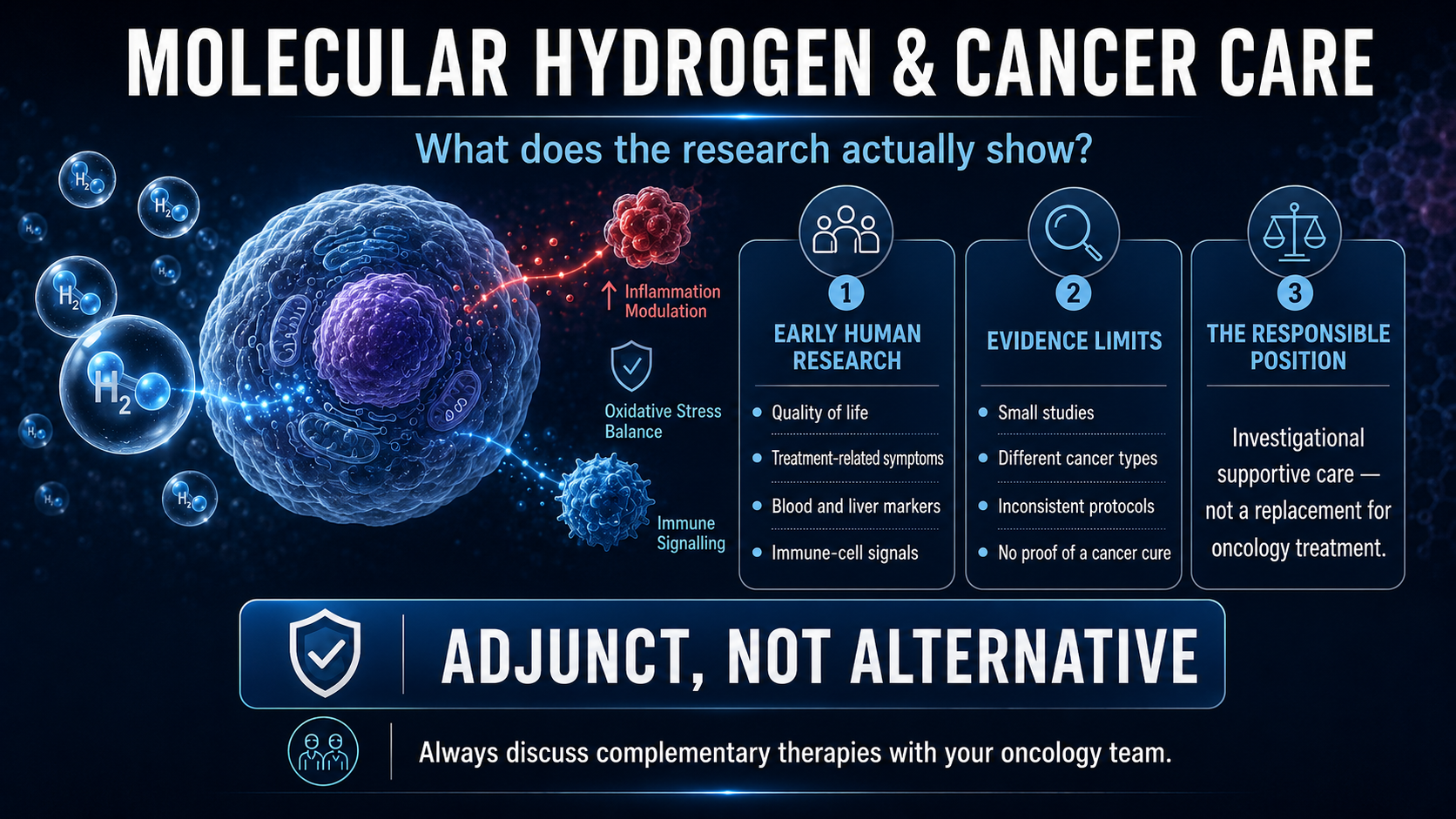
At present, the most defensible role for molecular hydrogen in oncology is as an investigational supportive approach discussed openly with the treating team.
Research priorities include:
-
treatment-related quality of life;
-
fatigue and symptom burden;
-
selected organ and blood-cell toxicities;
-
feasibility during radiotherapy or chemoradiotherapy;
-
biological markers that may guide future trials.
This framing is less dramatic than describing hydrogen as a cure—but it is more useful, credible and respectful to patients.
For a broader evidence overview across health and wellbeing—not only cancer—see Hydrogen Therapy Benefits: What Does Scientific Research Really Show?. You can also explore research papers in our Scientific Library.
Frequently asked questions
Can molecular hydrogen cure cancer?
No. There is no reliable clinical evidence that molecular hydrogen cures cancer. It is not an approved replacement for conventional cancer treatment.
Can hydrogen shrink tumours?
Laboratory studies and isolated case reports have described anti-tumour effects or tumour regression, but these cannot establish effectiveness in patients. Controlled clinical evidence is insufficient.
Can hydrogen reduce chemotherapy or radiotherapy side effects?
Small studies have reported encouraging findings involving quality of life, liver-function measures, blood counts or treatment-associated symptoms. These findings require confirmation in larger, well-controlled trials.
Is hydrogen safe to use during chemotherapy?
There is not enough evidence to give a universal answer for every drug and cancer type. Anyone receiving chemotherapy must discuss hydrogen use with their oncologist before starting.
Is hydrogen inhalation better than hydrogen-rich water for cancer support?
The two methods produce different exposures, and studies have used both. There is no high-quality evidence proving that one method produces better cancer outcomes. Neither should be self-prescribed as a cancer treatment.
Could hydrogen interfere with radiotherapy?
Small studies have not shown obvious loss of radiotherapy response in the particular settings examined, but they are not large enough to exclude interactions across all cancers and treatment protocols. Oncology approval is essential.
Should I stop conventional treatment to try hydrogen therapy?
No. Delaying or replacing evidence-based cancer treatment can reduce the chance of successful treatment and survival. Hydrogen, if considered at all, should only be an adjunct discussed with the oncology team.
The bottom line
Molecular hydrogen is a scientifically interesting field with early human research in cancer supportive care. Studies have reported potential signals involving quality of life, treatment-related symptoms, liver-function measures, blood counts and immune markers.
But the evidence remains preliminary. Small samples, inconsistent study designs, limited controls and a lack of independent large-scale trials prevent strong conclusions about tumour control, treatment efficacy or survival.
Molecular hydrogen should therefore be described accurately: not as a cancer cure, but as an investigational adjunct that may warrant further clinical research.
Patients deserve both hope and honesty. The safest approach is coordinated care in which every complementary intervention is disclosed to—and evaluated by—the oncology team.
Medical disclaimer
This article is for general education only. It is not medical advice and is not intended to diagnose, treat, cure or prevent cancer or any other disease. Molecular hydrogen is not a substitute for surgery, chemotherapy, radiotherapy, immunotherapy, targeted therapy, prescribed medicines or professional oncology care. Speak with your oncologist before using hydrogen-rich water, hydrogen inhalation or any complementary intervention during cancer treatment.
References
-
National Cancer Institute. Complementary and Alternative Medicine.
-
Mohd Noor MNZM, et al. A systematic review of molecular hydrogen therapy in cancer management. Asian Pacific Journal of Cancer Prevention. 2023;24(1):37–47.
-
Kang KM, et al. Effects of drinking hydrogen-rich water on the quality of life of patients treated with radiotherapy for liver tumors. Medical Gas Research. 2011;1:11.
-
Yang Q, et al. Protective effect of hydrogen-rich water on liver function of colorectal cancer patients treated with mFOLFOX6 chemotherapy. Molecular and Clinical Oncology. 2017.
-
Chen JB, et al. Hydrogen therapy can be used to control tumor progression and alleviate the adverse events of medications in patients with advanced non-small cell lung cancer. Medical Gas Research. 2020;10(2):75–80.
-
Akagi J, Baba H. Hydrogen gas restores exhausted CD8+ T cells in patients with advanced colorectal cancer to improve prognosis. Oncology Reports. 2019;41(1):301–311.
-
Hirano S, et al. Protective effects of hydrogen gas inhalation on radiation-induced bone marrow damage in cancer patients. Medical Gas Research. 2021;11(3):104–109.
-
Chitapanarux I, et al. Pilot feasibility and safety study of hydrogen gas inhalation in locally advanced head and neck cancer patients. OncoTargets and Therapy. 2024;17:863–870.