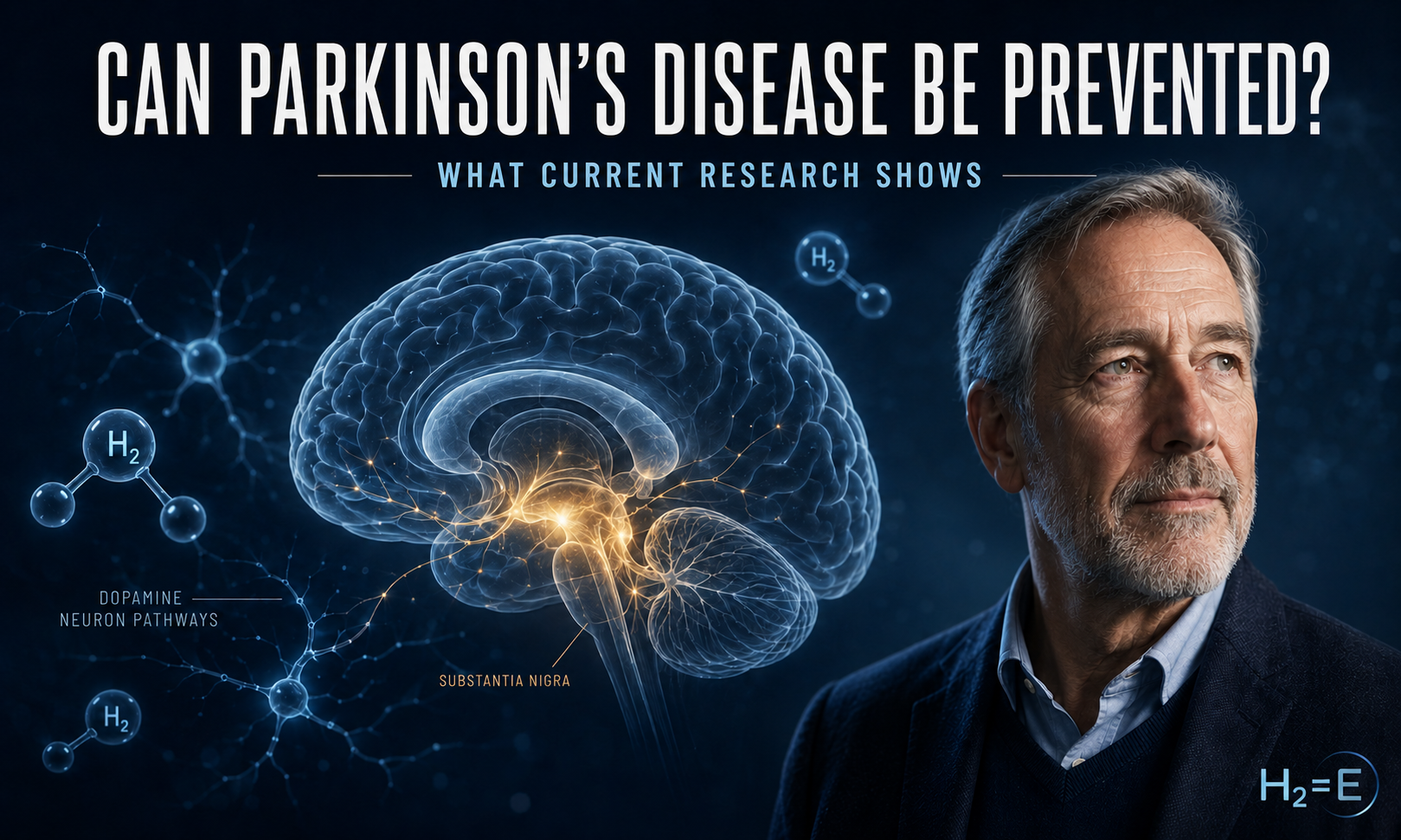
Can Parkinson’s disease be prevented? At present, the honest answer is that there is no proven way to guarantee that someone will not develop Parkinson’s.
Parkinson’s is a complex neurological condition. Age, genetics, environmental exposures and other biological factors may all contribute to a person’s risk, but researchers do not yet fully understand why one person develops the condition while another does not.
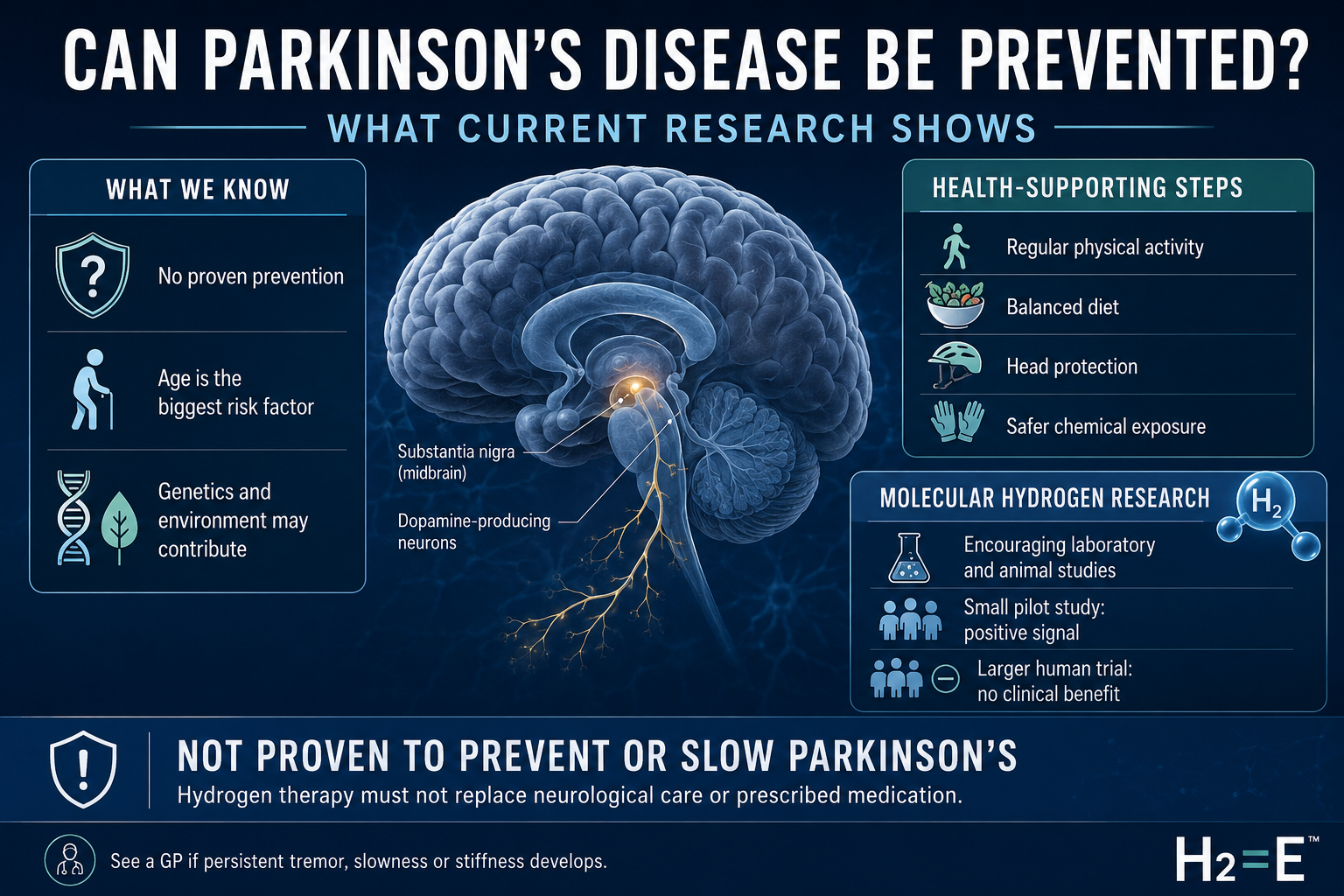
Healthy habits such as regular exercise, a balanced diet and avoiding unnecessary exposure to harmful chemicals support general brain and cardiovascular health. However, they cannot promise protection from Parkinson’s.
Molecular hydrogen (H₂) has also been investigated because of its possible effects on oxidative stress, inflammation and cellular signalling. Laboratory and animal studies have produced interesting results, but human trials have been mixed.
This article explains what is known about Parkinson’s risk, what people can reasonably do to protect their overall health, and what the research really says about molecular hydrogen.
What Is Parkinson’s Disease?
Parkinson’s disease is a progressive neurological condition associated with the loss or impaired function of nerve cells in an area of the brain called the substantia nigra.
These nerve cells produce dopamine, a chemical messenger involved in regulating movement. As dopamine levels decline, movement can become slower and more difficult to coordinate.
The three main movement symptoms are:
- Tremor or involuntary shaking
- Slowness of movement
- Muscle stiffness or rigidity
Parkinson’s can also produce non-movement symptoms, including:
- Sleep problems
- Loss of smell
- Constipation
- Depression or anxiety
- Fatigue
- Pain
- Balance difficulties
- Changes in speech
- Memory or thinking problems
Symptoms and progression vary considerably between individuals.
The NHS overview of Parkinson’s disease explains that the exact reason nerve cells are lost remains unclear. Most experts believe that a combination of genetic and environmental factors is involved.
Parkinson’s Disease in the UK
According to the latest figures from Parkinson’s UK:
- Approximately 166,000 people in the UK have a Parkinson’s diagnosis.
- Around 28,000 people were expected to be diagnosed during 2025.
- Someone in the UK is diagnosed approximately every 20 minutes.
- The average age at diagnosis is 69.
- Approximately 1 in 16 people living with Parkinson’s were diagnosed before age 50.
- Around 59% of people diagnosed in the UK are men.
- Parkinson’s UK expects the diagnosed population to reach approximately 173,000 by 2030.
These figures come from the latest Parkinson’s UK statistics.
The rising number of people living with Parkinson’s is influenced substantially by population growth and ageing. It does not necessarily mean that one particular food, chemical or modern lifestyle factor is responsible.
What Causes Parkinson’s Disease?
There is no single established cause in most cases.
Researchers believe Parkinson’s develops through a complex interaction between:
- Ageing
- Genetic susceptibility
- Environmental exposures
- Cellular stress
- Mitochondrial dysfunction
- Protein processing
- Inflammatory processes
- Other factors that have not yet been identified
Age is the strongest known risk factor. However, Parkinson’s is not an inevitable consequence of ageing, and younger people can also develop it.
Genetic factors
Certain genetic variants are associated with Parkinson’s, including changes involving genes such as:
- LRRK2
- GBA1
- SNCA
- PRKN
- PINK1
- PARK7
Having a genetic variant does not always mean that someone will develop Parkinson’s. Penetrance—the likelihood that a genetic difference will ultimately produce the condition—varies between genes and individuals.
For example, Parkinson’s UK reports that approximately 1% of UK cases are explained by a difference in the LRRK2 gene. Some genetic causes are more common in people diagnosed at a younger age.
Genetic counselling may be appropriate for people with young-onset Parkinson’s or a strong family history, but testing is not routinely necessary for everyone.
Environmental factors
Research has investigated possible associations with:
- Long-term unsafe pesticide exposure
- Certain industrial solvents
- Heavy metals in some occupational settings
- Air pollution
- Repeated head injuries
An association does not necessarily establish direct causation.
Exposure level, duration, genetics and other health factors may influence risk. It is therefore misleading to say that ordinary tap water, frying pans, microplastics or a particular cooking oil directly causes Parkinson’s.
Parkinson’s UK provides a balanced summary of the research into environmental factors and Parkinson’s.
Risk Factors Are Not the Same as Causes
A risk factor changes the statistical likelihood of developing a condition. It does not mean that the condition will definitely occur.
For example:
- A person can have several risk factors and never develop Parkinson’s.
- Someone without any recognised risk factors can still be diagnosed.
- An association found in an observational study may be influenced by other variables.
- Symptoms can begin developing biologically years before diagnosis, complicating studies of lifestyle and risk.
This is why claims that one food, supplement, toxin or lifestyle habit “causes” Parkinson’s should be treated with caution.
Similarly, avoiding one suspected risk factor cannot guarantee prevention.
Can Lifestyle Reduce the Risk of Parkinson’s?
Researchers are exploring whether some lifestyle factors may influence Parkinson’s risk or the age at which symptoms become apparent.
However, there is no scientifically established Parkinson’s-prevention programme.
The following measures are sensible because they support overall health—even though they cannot guarantee prevention.
Stay physically active
Regular activity supports cardiovascular health, balance, strength, metabolic health and brain function.
Observational research has associated higher physical-activity levels with a lower risk of Parkinson’s in some populations. Studies are also investigating whether increased activity could delay the appearance of symptoms in people considered at higher risk.
For people already living with Parkinson’s, exercise can be an important part of managing mobility, balance and quality of life when tailored to individual needs.
A balanced programme might include:
- Walking
- Cycling
- Swimming
- Resistance training
- Balance exercises
- Mobility work
- Activities requiring coordination
People with health conditions should obtain advice appropriate to their ability and medical circumstances.
Eat a balanced diet
There is no single diet proven to prevent Parkinson’s.
A Mediterranean-style eating pattern is frequently studied because it emphasises:
- Vegetables
- Fruit
- Whole grains
- Pulses
- Nuts and seeds
- Olive oil
- Fish
- Minimally processed foods
This pattern is associated with broader cardiovascular and metabolic benefits, although its specific ability to prevent Parkinson’s remains uncertain.
Highly restrictive diets, extreme carbohydrate restriction or replacing prescribed medication with food-based approaches are not supported Parkinson’s-prevention strategies.
Protect against head injuries
Head injuries have been associated with an increased risk of neurological disease, although researchers cannot always determine whether an injury directly causes Parkinson’s or accelerates an existing biological process.
Reasonable protective measures include:
- Wearing a helmet when cycling
- Using appropriate workplace protection
- Following safety rules in contact sports
- Reducing fall hazards
- Wearing a seat belt
- Seeking assessment after a significant head injury
Reduce hazardous occupational exposure
People working with pesticides, solvents, heavy metals or industrial chemicals should follow workplace safety guidance.
This includes:
- Wearing the recommended protective equipment
- Following handling and storage instructions
- Using appropriate ventilation
- Avoiding unnecessary skin or respiratory exposure
- Reporting spills and unsafe working conditions
- Attending relevant occupational-health assessments
There is no reason for the average person to panic about ordinary day-to-day contact with trace substances. Research concerns generally involve particular chemicals, unsafe concentrations or prolonged exposure.
Support cardiovascular and metabolic health
Managing blood pressure, blood glucose, cholesterol, sleep and physical fitness is beneficial for general brain health.
This includes:
- Not smoking
- Maintaining regular activity
- Following a nutritious diet
- Sleeping adequately
- Limiting alcohol
- Attending routine health checks
- Taking prescribed medication correctly
Smoking has been associated with a lower Parkinson’s incidence in observational research, but it causes cancer, cardiovascular disease and many other serious conditions. It should never be recommended as a Parkinson’s-prevention method.
Caffeine has also been associated with lower Parkinson’s incidence in some studies, but this does not establish it as a preventive treatment. High caffeine consumption can worsen anxiety, palpitations, reflux and sleep.
Why Are Oxidative Stress and Mitochondria Being Studied?
Mitochondria are cellular structures that help convert nutrients into usable energy.
During normal energy production, cells generate reactive oxygen species. These molecules participate in healthy signalling, but excessive or poorly controlled oxidative processes can contribute to cellular damage.
The brain is particularly metabolically active, and dopamine-producing neurons may be vulnerable to several forms of cellular stress.
Researchers studying Parkinson’s have therefore examined:
- Mitochondrial dysfunction
- Oxidative damage
- Neuroinflammation
- Impaired protein clearance
- Alpha-synuclein accumulation
- Lysosomal function
- Dopamine metabolism
- Genetic changes affecting cellular resilience
Oxidative stress is part of the Parkinson’s research picture, but it is not a complete explanation of the disease.
It is also inaccurate to claim that oxidative stress simply causes glucose to become trapped in the bloodstream or forces amyloid precursor protein out of cells, producing Parkinson’s. Those mechanisms do not reflect the established biology of the condition.
Molecular Hydrogen and Parkinson’s Disease
Molecular hydrogen is being investigated because laboratory research suggests it may influence oxidative balance, inflammatory signalling and cellular stress responses.
Hydrogen is a very small molecule that can be administered through:
- Hydrogen-rich water
- Hydrogen inhalation
- Hydrogen-rich saline in research settings
If you are unfamiliar with H₂, read our guide explaining what molecular hydrogen therapy is.
Much of the early Parkinson’s research involved cellular and animal models.
These studies investigated whether hydrogen-rich water could reduce the loss of dopamine-producing neurons after animals were exposed to chemicals used to create Parkinson’s-like damage.
Some experiments produced encouraging findings. However, an experimental toxin model is not the same as naturally occurring Parkinson’s disease in humans.
Animal studies can help identify possible mechanisms and justify further research, but they cannot demonstrate that hydrogen prevents Parkinson’s in people.
What Did the First Human Hydrogen-Water Trial Find?
A small 2013 pilot study investigated hydrogen-rich water in people already diagnosed with Parkinson’s.
Participants drank one litre per day of hydrogen-rich water or placebo water for 48 weeks while continuing their usual levodopa treatment.
The study included only 17 people in its final analysis:
- Nine in the hydrogen-water group
- Eight in the placebo group
The researchers reported a statistically significant difference in total Unified Parkinson’s Disease Rating Scale scores between the groups.
The hydrogen-water group showed an average improvement, while the placebo group worsened.
The results attracted considerable interest, but the study was far too small to establish effectiveness. Small trials are more vulnerable to chance findings, differences between participants and overestimation of treatment effects.
You can review the 2013 pilot study through PubMed.
What Did the Larger Multicentre Trial Find?
Researchers subsequently conducted a much larger randomised, double-blind multicentre trial.
This study included 178 people with Parkinson’s across 14 Japanese hospitals. Participants drank hydrogen-rich water or placebo water for 72 weeks.
Unlike the pilot trial, the larger study did not find a significant benefit from hydrogen water.
The researchers reported no meaningful between-group improvements in:
- Total Parkinson’s rating-scale scores
- Individual sections of the rating scale
- Hoehn and Yahr disease stage
- Parkinson’s-related quality of life
The study found that hydrogen water was safe under the tested conditions, but it did not demonstrate clinical effectiveness.
The results are available through PubMed.
This larger neutral trial is essential when discussing the evidence. Highlighting only the earlier positive pilot study would provide an incomplete and misleading impression.
What Does Hydrogen-Inhalation Research Show?
Hydrogen inhalation has also been studied in small groups of people with Parkinson’s.
A 2019 crossover study involved 20 participants who inhaled a low-concentration hydrogen–air mixture or placebo for 10 minutes twice daily.
The intervention did not significantly improve clinical Parkinson’s measurements. The researchers reported a change in a urinary oxidative marker, but the clinical meaning of that finding was uncertain.
A later randomised, double-blind pilot study also concluded that hydrogen inhalation was tolerated but did not produce beneficial clinical effects in the participants studied.
The later trial’s conclusion can be reviewed in the published hydrogen-inhalation study.
Current human evidence therefore does not establish hydrogen inhalation as an effective treatment for Parkinson’s.
Can Molecular Hydrogen Prevent Parkinson’s?
No human clinical trial has demonstrated that molecular hydrogen prevents Parkinson’s disease.
Existing human studies have primarily involved people who already had Parkinson’s. These trials cannot answer whether taking hydrogen years earlier would prevent the condition.
A genuine prevention trial would require:
- A clearly defined higher-risk population
- Large participant numbers
- Long-term follow-up
- A suitable placebo
- Reliable measurement of hydrogen exposure
- Predefined diagnostic outcomes
- Careful monitoring of confounding factors
Such evidence is not currently available.
Molecular hydrogen should therefore be described as an investigational research topic—not a proven preventive agent.
Can Hydrogen Slow Parkinson’s Progression?
Current evidence does not demonstrate that hydrogen water or inhalation slows Parkinson’s progression.
The early pilot trial suggested a possible clinical effect, but the subsequent larger multicentre study did not reproduce it.
This does not necessarily mean that every possible hydrogen concentration, route or protocol has been fully investigated. It means that there is currently no reliable basis for promising that hydrogen will slow the condition.
Researchers may continue examining:
- Different administration routes
- Hydrogen concentrations
- Treatment timing
- Biomarkers
- Genetic subgroups
- Combination approaches
Until persuasive human evidence emerges, hydrogen should not replace established neurological care.
For a wider discussion of the evidence and its limitations, see our guide to hydrogen therapy benefits and current research.
Established Parkinson’s Treatment
There is currently no cure for Parkinson’s, but treatment can help manage symptoms and maintain quality of life.
NHS and NICE-supported care may include:
- Levodopa and other Parkinson’s medication
- Physiotherapy
- Occupational therapy
- Speech and language therapy
- Exercise support
- Nutritional advice
- Mental-health care
- Treatment of sleep and other non-movement symptoms
- Deep-brain stimulation for selected patients
Medication timing can be particularly important. People with Parkinson’s should not stop, delay or change medication without advice from their specialist team.
Molecular hydrogen is not included in established NHS or NICE Parkinson’s treatment recommendations.
When Should Someone See a GP?
Speak to a GP if you or someone close to you develops persistent symptoms such as:
- Tremor
- Slower movement
- Muscle stiffness
- Changes in walking
- Reduced arm swing
- Balance difficulties
- Smaller handwriting
- A quieter voice
- Persistent loss of smell
- Sleep movements or unusual dream enactment
- Unexplained changes in coordination
These symptoms can have many possible causes and do not automatically mean Parkinson’s.
There is no single definitive test for Parkinson’s. Diagnosis is based largely on symptoms, neurological examination, medical history and specialist assessment.
Earlier assessment can help identify the cause and provide appropriate support.
Frequently Asked Questions
Can Parkinson’s disease be completely prevented?
No proven method can currently guarantee prevention. Researchers are investigating genetic, environmental and lifestyle factors, but the causes are complex and incompletely understood.
Does Parkinson’s run in families?
Most people with Parkinson’s do not have a straightforward inherited form. Certain genetic variants can increase risk or directly cause the condition in a small proportion of cases.
Can diet prevent Parkinson’s?
No diet has been proven to prevent Parkinson’s. A Mediterranean-style balanced diet supports broader cardiovascular and metabolic health and is a sensible general-health choice.
Does exercise prevent Parkinson’s?
Observational studies suggest physical activity may be associated with lower risk, but this does not prove that exercise prevents Parkinson’s. Regular activity still offers substantial benefits for general health.
Does hydrogen water help Parkinson’s?
A very small pilot trial reported favourable findings, but a much larger multicentre trial did not demonstrate benefit. Hydrogen water is not an established Parkinson’s treatment.
Can hydrogen inhalation slow Parkinson’s?
Small human trials have not shown meaningful clinical benefits. There is currently insufficient evidence that hydrogen inhalation slows Parkinson’s progression.
Should someone with Parkinson’s stop medication when using hydrogen?
No. Parkinson’s medication should never be stopped, delayed or changed without guidance from the treating specialist.
Are oxidative-stress supplements proven to prevent Parkinson’s?
No antioxidant supplement has been proven to prevent Parkinson’s. High supplement doses can also interact with medication or cause adverse effects.
Can Parkinson’s Disease Be Prevented? Key Takeaways
When asking “Can Parkinson’s disease be prevented?”, the evidence supports a careful answer:
- There is currently no proven way to guarantee prevention.
- Age is the strongest known risk factor.
- Genetics, environment and other biological processes may contribute.
- Risk factors are not the same as direct causes.
- Exercise, a healthy diet and avoiding hazardous exposure support overall health.
- Smoking should never be used as a prevention strategy.
- Oxidative stress and mitochondrial dysfunction are important research areas, but they do not provide a complete explanation.
- Animal hydrogen studies have produced encouraging findings.
- A small human hydrogen-water pilot trial reported improvement.
- A larger multicentre trial did not confirm a clinical benefit.
- Small hydrogen-inhalation studies have not demonstrated meaningful improvement.
- No human evidence shows that molecular hydrogen prevents Parkinson’s.
- Hydrogen should not replace medication, neurological care or supportive therapies.
The molecular-hydrogen research remains scientifically interesting, but curiosity must be balanced with the complete evidence.
People living with Parkinson’s deserve clear information that distinguishes promising laboratory findings from proven human treatment.
To understand the wider evidence behind H₂, read our guide to Hydrogen Therapy Benefits
Disclaimer
This article is provided for general educational purposes only. It does not constitute medical advice, diagnosis, treatment or a recommendation to use molecular hydrogen.
Molecular hydrogen has not been proven to prevent Parkinson’s disease, slow its progression or replace established care.
Anyone experiencing possible Parkinson’s symptoms should contact a GP. People already diagnosed should discuss supplements, hydrogen therapy and treatment changes with their neurologist or Parkinson’s specialist team.