
Masters M50 National Long Jump Champion Andy Morey Shares His Recovery Experience
“In my age group, I’m among the top four sprinters in the country. After an athletics competition, I would normally experience muscle soreness and stiffness for three or four days. When I use a 3,000 ml/min hydrogen/oxygen machine for an hour after returning home, I feel that it reduces my stiffness and aching by around 50%.
“I’ve competed at a high level from an early age, so I know my body well and can usually tell when something I add to my routine is making a meaningful difference. For me, hydrogen inhalation has become an important part of my recovery protocol.”
— Andy Morey, Masters athlete (M50)
The photograph shows Andy Morey receiving the gold medal for the long jump at the 2025 UK National Indoor Championships.
Andy’s comments describe his personal experience. Individual responses vary, and a testimonial is not evidence that everyone will experience the same result.
Hydrogen inhalation for athletic recovery is attracting increasing interest among athletes, coaches, physiotherapists and wellness professionals.
Intense exercise challenges the muscles, mitochondria and cardiovascular system. This process is essential for adaptation, but it can also produce temporary fatigue, muscle discomfort, inflammation and changes in oxidative balance.
Molecular hydrogen (H₂) is now being investigated for its possible influence on some of these processes. Early studies have explored whether inhaling an H₂-containing gas before or after exercise could support recovery, reduce certain markers of exercise-induced stress or help maintain performance during repeated physical activity.
The results are intriguing, but the research remains preliminary. Hydrogen inhalation has not been proven to increase athletic performance, prevent injury or extend human lifespan.
This article examines what the science currently shows, where the evidence remains uncertain and why researchers are interested in the relationship between molecular hydrogen, recovery and healthy ageing.
What Is Molecular Hydrogen Inhalation?
Molecular hydrogen is a colourless and odourless gas composed of two hydrogen atoms, represented chemically as H₂.
During hydrogen inhalation, an H₂-containing gas is delivered through a nasal cannula or suitable mask. Depending on the equipment, the output may consist of hydrogen mixed with air or a hydrogen–oxygen gas mixture.
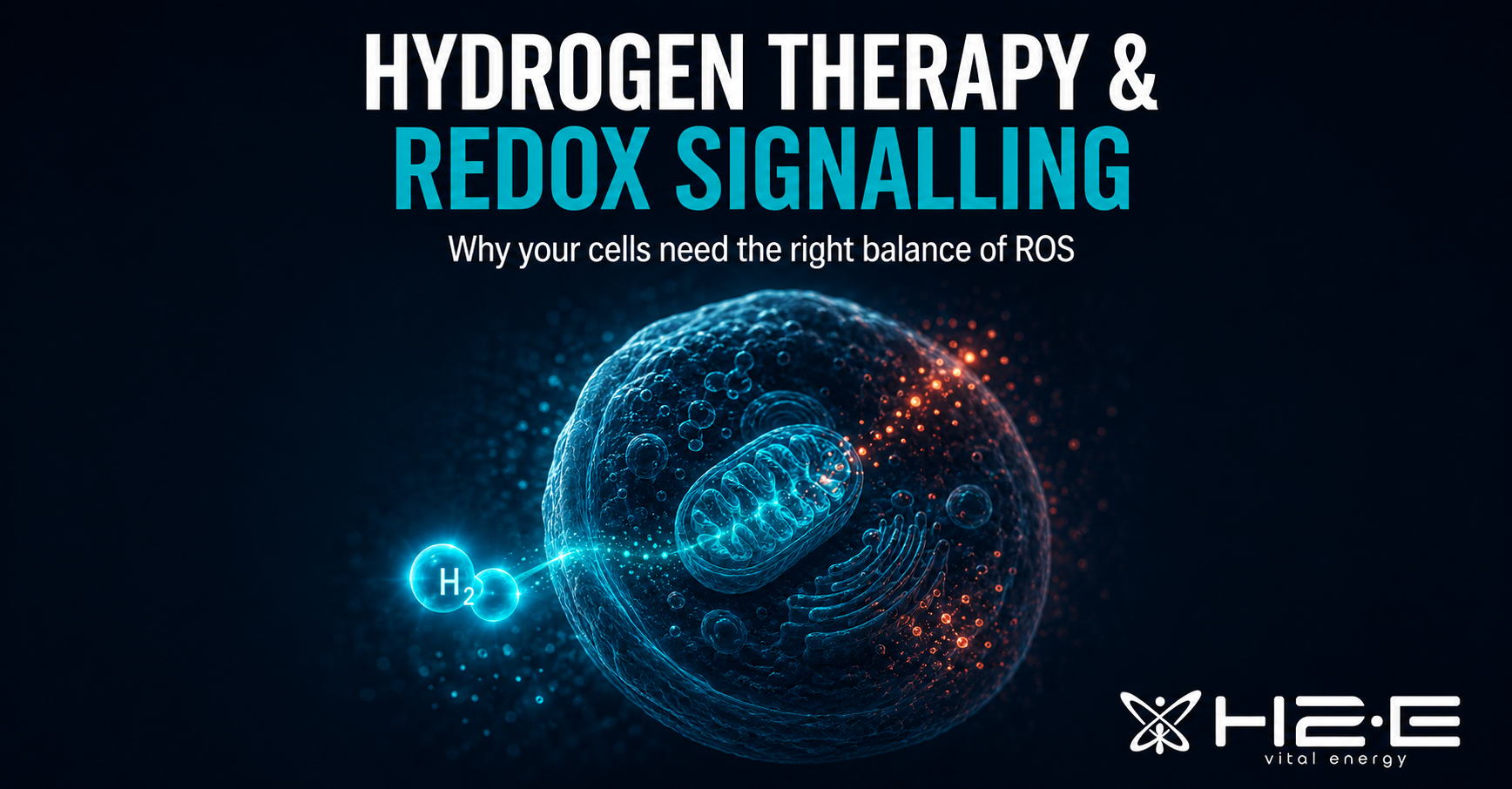
Because hydrogen is an extremely small molecule, it can diffuse rapidly through biological tissues. Researchers are investigating its potential effects on cellular signalling, oxidative balance, inflammation and mitochondrial function.
Molecular hydrogen should not be confused with hydrogen peroxide. They are chemically different substances with very different properties.
If you are new to this subject, begin with our complete guide explaining what hydrogen therapy is and how it works.
Why Exercise Recovery Matters
Exercise temporarily disrupts the body’s normal balance.
During strenuous or unfamiliar activity, working muscles require significantly more energy. Mitochondria increase energy production, oxygen consumption rises and muscle fibres experience mechanical and metabolic stress.
The recovery process may involve:
- Replenishing muscle glycogen
- Repairing damaged muscle fibres
- Restoring fluid and electrolyte balance
- Regulating inflammatory signalling
- Returning oxidative processes towards balance
- Adapting to the training stimulus
- Restoring nervous-system function
- Obtaining sufficient sleep
These responses are not inherently harmful. In fact, controlled physiological stress is part of how exercise stimulates adaptation and improved fitness.
The goal of recovery should therefore not be to eliminate every reactive oxygen species or inflammatory response. Some of these signals are necessary for the body to adapt to training.
Researchers are interested in whether molecular hydrogen could help regulate excessive exercise-induced stress without completely suppressing the beneficial signals involved in adaptation.
Hydrogen Inhalation for Athletic Recovery: Why Is It Being Studied?
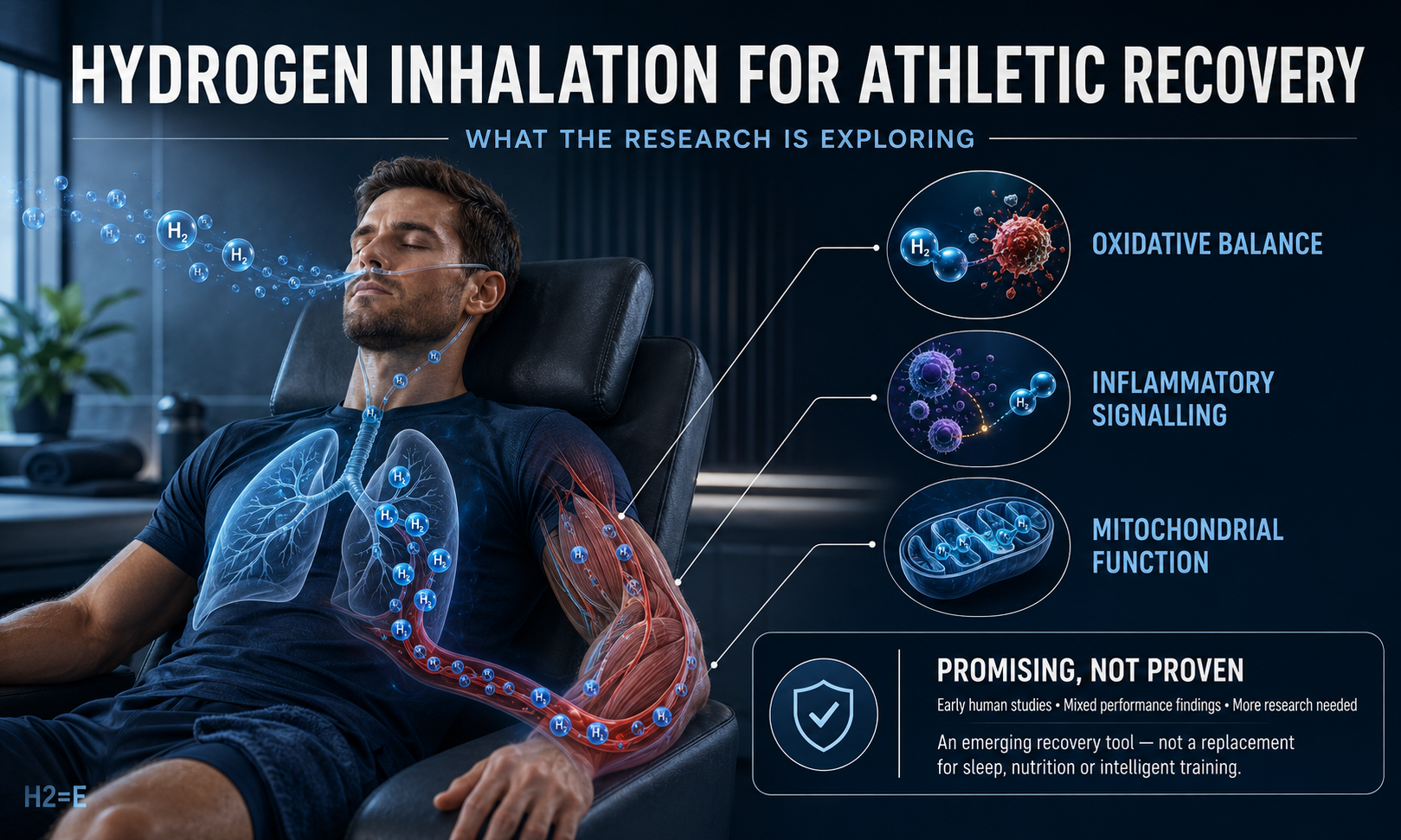
Research into hydrogen inhalation for athletic recovery currently centres on several interconnected biological processes.
Oxidative balance
Exercise increases the production of reactive oxygen species. At appropriate levels, these molecules participate in normal signalling and adaptation. When production temporarily exceeds the body’s ability to regulate it, oxidative stress may occur.
Molecular hydrogen has been investigated for its possible influence on oxidative-stress pathways. However, descriptions of hydrogen as a simple or universal antioxidant may be an oversimplification.
Its biological effects may involve changes in cellular signalling and gene expression rather than simply neutralising every reactive molecule directly.
Inflammatory signalling
Strenuous exercise can produce a temporary inflammatory response as the body begins repairing and adapting muscle tissue.
Research has examined whether molecular hydrogen might influence inflammatory mediators. Any effect would need to be carefully balanced because inflammation also plays an important role in normal recovery and adaptation.
Mitochondrial function
Mitochondria generate most of the energy required for muscle contraction.
Molecular hydrogen researchers are studying whether H₂ may influence mitochondrial stress responses, cellular energy regulation and the mechanisms that protect or remove damaged mitochondria.
These proposed mechanisms remain under investigation and should not be interpreted as proof that hydrogen inhalation improves mitochondrial function in every person.
Perceived fatigue
Fatigue is influenced by multiple factors, including muscle metabolism, hydration, sleep, glycogen availability, nervous-system activity and psychological state.
Some studies have reported changes in fatigue following molecular-hydrogen supplementation. However, the results are inconsistent, and studies have used different delivery methods, concentrations and exercise protocols.
What Did the Post-Exercise Inhalation Study Find?
One frequently discussed human study investigated a hydrogen-rich gas mixture during recovery after exercise.
Participants completed exercise testing and then inhaled either a hydrogen-rich gas mixture or a control gas during the recovery period. The researchers reported that hydrogen-rich gas inhalation was associated with lower measures of systemic oxidative damage and improved performance during a subsequent exercise test.
The results suggest that post-exercise inhalation may deserve further investigation. However, important limitations must be considered:
- The study was small.
- A single experiment cannot establish a reliable treatment effect.
- Findings may not apply to all athletes or types of exercise.
- Laboratory performance does not always translate into meaningful sporting improvement.
- The optimal concentration, timing and session duration remain unknown.
You can review the study through PubMed.
The findings are encouraging, but they do not prove that hydrogen inhalation will improve recovery or performance for every athlete.
What Does the Wider Exercise Research Show?
A meta-analysis examining molecular-hydrogen supplementation and exercise-related fatigue found moderate evidence of a possible fatigue-reducing effect. However, it did not find consistent evidence that molecular hydrogen improved aerobic capacity.
This distinction matters.
A person might report feeling less fatigued without showing a measurable increase in maximal aerobic performance. Similarly, a change in a blood biomarker does not necessarily translate into faster recovery, improved competition results or reduced injury risk.
The researchers also noted variation between studies in:
- Administration method
- Hydrogen concentration
- Timing
- Exercise type
- Participant fitness
- Outcome measurements
- Study quality
The analysis can be reviewed through PubMed.
Overall, current evidence is better described as promising but inconclusive.
What Does Recent Research Add?
A 2026 randomised, double-blind crossover study examined a 60-minute molecular-hydrogen inhalation session in 20 physically active young women at rest.
The researchers did not find significant changes in heart-rate-variability measurements. They observed a small reduction in average blood oxygen saturation compared with placebo, although the authors concluded that the difference was not clinically significant.
This is useful because responsible research must consider neutral and potentially unexpected findings—not only positive outcomes.
The study does not tell us whether hydrogen improves post-exercise recovery, because participants were assessed at rest. However, it illustrates why larger studies involving different populations, exercise protocols and inhalation conditions are necessary.
You can read the 2026 randomised controlled study on PubMed.
Could Molecular Hydrogen Support Muscle Recovery?
Muscle recovery includes several distinct processes:
- Repairing exercise-related muscle disruption
- Reducing delayed-onset muscle soreness
- Restoring strength and power
- Replenishing energy stores
- Regulating inflammation
- Returning to normal movement and performance
A therapy that changes one blood marker does not necessarily improve all these outcomes.
Early molecular-hydrogen research has measured variables including oxidative-stress markers, lactate, creatine kinase, inflammation, muscle discomfort, fatigue and subsequent exercise performance.
Results vary considerably between studies. Some report favourable changes, while others find small, mixed or non-significant effects.
At present, there is not enough high-quality evidence to conclude that hydrogen inhalation for athletic recovery reliably reduces muscle soreness, accelerates tissue repair or prevents sporting injuries.
It should be considered an investigational wellness approach—not a substitute for established recovery practices.
Hydrogen Inhalation and Longevity
Athletic recovery and healthy ageing overlap in several important ways.
Maintaining muscle mass, cardiovascular fitness, mobility and metabolic health can support quality of life as people age. Regular physical activity is already one of the most evidence-based strategies for healthy ageing.
Researchers are interested in molecular hydrogen because several processes examined in hydrogen studies are also associated with ageing, including:
- Oxidative imbalance
- Persistent low-grade inflammation
- Mitochondrial dysfunction
- Metabolic dysregulation
- Reduced cellular resilience
- Declining recovery capacity
However, no convincing human evidence currently demonstrates that hydrogen inhalation extends lifespan.
Most longevity-related claims are based on proposed mechanisms, cell research, animal studies or indirect human outcomes. These findings may help researchers develop hypotheses, but they cannot establish that hydrogen makes people live longer.
A responsible description is that molecular hydrogen is being investigated for its possible role within healthy-ageing and recovery research.
For a closer examination of this subject, read our article on molecular hydrogen therapy and longevity.
Hydrogen Inhalation vs Hydrogen Water for Athletes
Molecular hydrogen can be administered through inhalation or dissolved in water.
Hydrogen-rich water is portable and easy to incorporate into hydration. However, the amount of H₂ dissolved in a practical serving of water is relatively small, and the concentration can decrease after preparation or opening.
Hydrogen inhalation provides continuous access to an H₂-containing gas during a planned session. It can present a much greater theoretical quantity of molecular hydrogen, although the amount produced is not the same as the amount inhaled or absorbed.
Neither route has been proven superior for every recovery or performance objective.
| Feature | Hydrogen inhalation | Hydrogen-rich water |
|---|---|---|
| Delivery | Through a cannula or mask | Consumed as water |
| Exposure | Continuous during a session | Delivered when consumed |
| Portability | Requires equipment | Generally more portable |
| Hydrogen quantity | Potentially much higher | Limited by water concentration |
| Research | Growing but still limited | More small exercise studies available |
| Best established use | Not yet established | Not yet established |
For a complete comparison, read hydrogen inhalation vs hydrogen water.
When Might Athletes Use Hydrogen Inhalation?
Research protocols have used hydrogen at different times:
- Before exercise
- During exercise
- Immediately after exercise
- During the longer recovery period
- Repeatedly over several days or weeks
There is currently no universally established protocol for athletes.
Post-exercise use is of particular research interest because it allows molecular hydrogen to be investigated during the recovery period without interfering directly with training or competition.
However, ideal concentration, flow rate, session length and frequency have not been established through large clinical trials.
Athletes should not assume that a longer session or a higher machine output will necessarily produce a better result.
What Hydrogen Inhalation Cannot Replace
Hydrogen inhalation should complement—not replace—the foundations of athletic recovery.
These include:
- Sufficient sleep
- Appropriate protein and energy intake
- Adequate hydration
- Replacing electrolytes when needed
- Planned recovery days
- Progressive training
- Mobility and rehabilitation work
- Treatment of underlying injuries
- Professional coaching
- Medical assessment when symptoms persist
No wellness technology can compensate for chronic sleep deprivation, inadequate nutrition, overtraining or an untreated injury.
For most athletes, improving these foundations is likely to produce a more reliable benefit than adding an experimental recovery intervention.
Is Hydrogen Inhalation Safe for Athletes?
Published research has generally described molecular-hydrogen inhalation as well tolerated under the specific concentrations and controlled conditions studied.
A human study investigating prolonged inhalation of 2.4% hydrogen in air reported no clinically significant adverse effects in healthy adults under the research conditions. However, those findings should not be applied automatically to every machine, concentration or gas mixture. The study is available through PubMed.
Hydrogen is flammable, and hydrogen-generating equipment must be designed and operated correctly. Users should:
- Follow the manufacturer’s instructions
- Keep equipment away from flames, smoking and ignition sources
- Use the correct water and accessories
- Ensure adequate ventilation
- Avoid modifying the equipment
- Never treat wellness equipment as emergency oxygen equipment
- Seek medical advice when underlying health conditions are present
If a machine produces a hydrogen–oxygen mixture, its combined flow rate should not be described as an identical volume of pure hydrogen.
Competitive athletes should also verify the rules applying to any therapy, equipment or substance used within their sport.
Who Should Seek Medical Advice First?
Speak with a qualified healthcare professional before beginning hydrogen inhalation if you:
- Have a diagnosed respiratory or cardiovascular condition
- Use supplemental oxygen
- Are pregnant or breastfeeding
- Are recovering from surgery
- Take prescribed medication for a serious condition
- Experience unexplained shortness of breath
- Have dizziness, chest pain or abnormal oxygen saturation
- Are undergoing medical rehabilitation
Hydrogen inhalation should never delay assessment of a suspected injury, breathing problem or medical emergency.
Frequently Asked Questions
Does hydrogen inhalation improve athletic performance?
A small number of studies have reported potentially favourable exercise or recovery findings, but the evidence is not strong or consistent enough to conclude that hydrogen inhalation reliably improves athletic performance.
Can hydrogen inhalation reduce muscle soreness?
This remains uncertain. Research has examined fatigue, oxidative-stress markers and recovery outcomes, but there is insufficient evidence to guarantee reduced delayed-onset muscle soreness.
Should hydrogen be inhaled before or after exercise?
Studies have used different timings, and no optimal protocol has been established. Post-exercise inhalation is one area of research interest, but more comparative trials are needed.
Is molecular hydrogen a replacement for oxygen therapy?
No. Molecular-hydrogen equipment is not a substitute for prescribed medical oxygen or emergency respiratory treatment.
Can hydrogen inhalation increase lifespan?
There is currently no convincing human evidence showing that hydrogen inhalation extends lifespan. Its possible relationship with healthy ageing remains investigational.
Can professional athletes use hydrogen inhalation?
Athletes should consult their medical and performance teams and verify the rules of their governing body. Hydrogen inhalation should not be assumed to provide a proven competitive advantage.
Hydrogen Inhalation for Athletic Recovery: Key Takeaways
The research into hydrogen inhalation for athletic recovery is interesting, but it remains at an early stage.
Current evidence suggests:
- Molecular hydrogen is being studied in relation to oxidative balance, inflammation, mitochondrial signalling and fatigue.
- One small study reported potentially favourable post-exercise recovery and subsequent-performance findings.
- Wider analyses suggest possible fatigue-related effects but no consistent improvement in aerobic capacity.
- Results differ between studies because protocols, concentrations and participants vary.
- Changes in biomarkers do not automatically mean better sporting performance.
- Hydrogen inhalation has not been proven to prevent injury or accelerate tissue repair.
- There is no convincing evidence that it extends human lifespan.
- Established recovery foundations remain more important.
- Larger, independent and well-controlled trials are needed.
Molecular hydrogen may eventually become a useful part of the recovery conversation. For now, it is best understood as an emerging research area and a potential adjunct to—not a replacement for—sleep, nutrition, hydration, intelligent training and professional healthcare.
If you are considering a home or professional inhalation system, you can explore our range of molecular hydrogen machines.
Disclaimer
This article is provided for general educational purposes only and does not constitute medical advice, diagnosis or treatment.
Molecular-hydrogen inhalation remains an active area of scientific research. It has not been proven to treat sporting injuries, guarantee enhanced performance or extend human lifespan.
Always consult an appropriately qualified healthcare professional before beginning a new therapy, particularly if you have an existing health condition, use supplemental oxygen, take prescribed medication or are recovering from an injury.