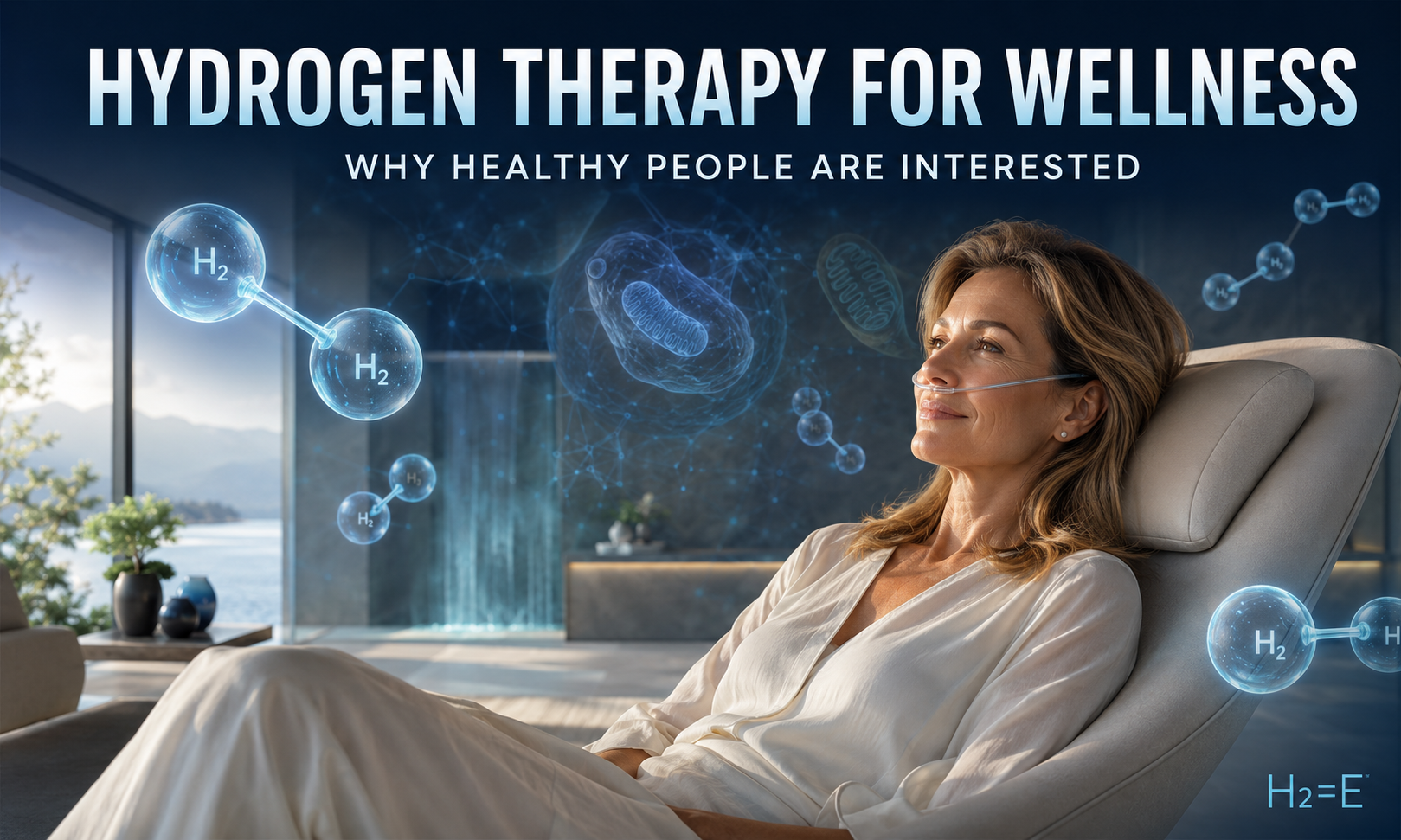
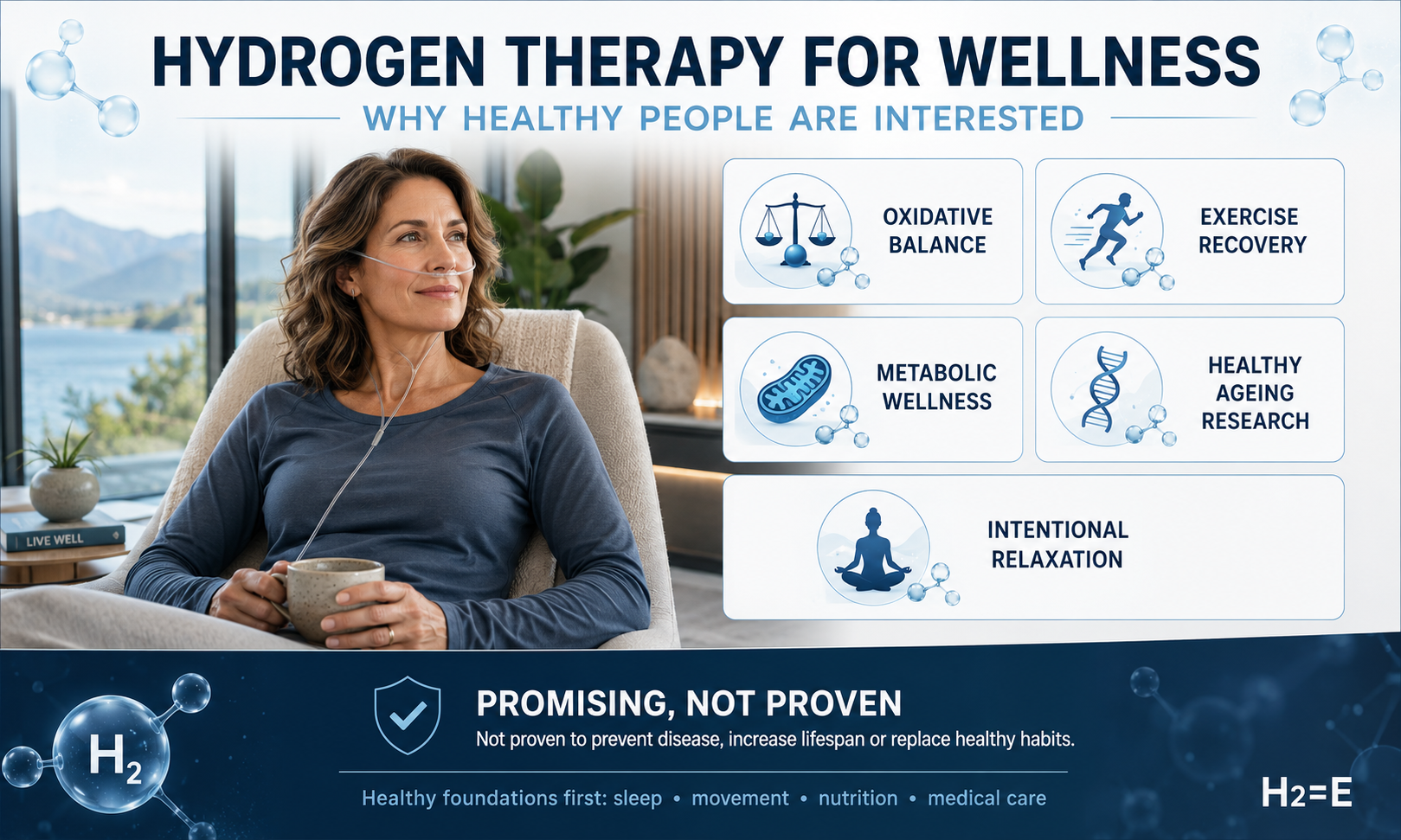
Hydrogen therapy for wellness is attracting interest from people who are not necessarily ill but want to take a more proactive approach to their wellbeing.
Many people already use exercise, nutritious food, quality sleep, meditation, sauna, cold exposure or supplements as part of their personal wellness routine. Molecular hydrogen (H₂) is now being explored as another possible addition to this growing field.
Researchers are investigating molecular hydrogen in relation to oxidative balance, inflammatory signalling, cellular stress, exercise, fatigue and metabolic health.
However, molecular hydrogen should not be presented as a guaranteed method of preventing disease, increasing energy or slowing ageing. The evidence remains preliminary, and many studies are small or involve particular medical populations.
So why are healthy people interested in hydrogen therapy—and what does the research actually show?
What Is Hydrogen Therapy?
Hydrogen therapy involves introducing molecular hydrogen into the body, usually by:
- Inhaling an H₂-containing gas
- Drinking hydrogen-rich water
- Using hydrogen-rich saline in research or medical settings
- Applying hydrogen-rich water topically or through bathing
Molecular hydrogen consists of two hydrogen atoms and is written chemically as H₂. It is the smallest gas molecule and can diffuse rapidly through biological tissues.
Researchers are investigating whether H₂ may influence cellular signalling involved in oxidative balance, inflammation and stress responses.
Molecular hydrogen should not be confused with hydrogen peroxide. They are chemically different substances with very different properties.
If you are new to the subject, begin with our complete guide explaining what hydrogen therapy is and how molecular hydrogen works.
Why Would a Healthy Person Consider Hydrogen Therapy?
Wellness is about more than the absence of diagnosed disease.
A person may feel generally healthy while still wanting to support:
- Recovery after exercise
- Energy-management habits
- Healthy ageing
- Resilience during periods of physical stress
- Everyday relaxation
- Metabolic health
- A proactive wellness routine
This is where interest in hydrogen therapy for wellness has developed.
People are not necessarily using it to treat an illness. Instead, they may view it as an emerging wellness practice that can sit alongside established lifestyle foundations.
Importantly, molecular hydrogen cannot replace those foundations. Sleep, movement, nutrition, social connection, stress management and appropriate healthcare remain far more firmly supported by evidence.
1. Interest in Oxidative Balance
Oxidative stress occurs when the production of reactive molecules exceeds the body’s ability to regulate them effectively.
Reactive oxygen species are not always harmful. At normal levels, they participate in cellular signalling, immune defence and adaptation to exercise.
Problems can arise when oxidative processes become excessive or poorly regulated.
Molecular hydrogen was originally investigated because researchers proposed that it might interact with highly reactive molecules. More recent research suggests that its possible effects could be more complex, potentially involving cellular signalling, antioxidant enzymes and gene expression.
Hydrogen should therefore not be described as a universal antioxidant that simply eliminates all free radicals. That explanation is attractive but probably too simplistic.
A study involving healthy adults investigated hydrogen-rich water and reported changes in some measures associated with oxidative stress and immune function. However, it was a relatively small study and does not establish that hydrogen water prevents disease.
You can review the healthy-adult hydrogen-water study on PubMed.
2. Inflammatory Signalling
Inflammation is part of the body’s normal defence and repair system.
Short-term inflammation helps the body respond to infection, injury and exercise. Persistent or poorly regulated inflammatory activity, however, is associated with numerous health conditions.
Researchers have investigated whether molecular hydrogen might influence inflammatory signalling pathways and cytokines.
Some laboratory and small human studies have reported changes in inflammatory markers. These findings are interesting, but they should not be interpreted as proof that hydrogen therapy prevents inflammatory disease.
A change in a laboratory marker does not automatically mean that a person feels better, becomes healthier or avoids future illness.
The most responsible conclusion is that molecular hydrogen’s possible effect on inflammatory signalling remains an active research area.
3. Exercise and Physical Recovery
Exercise temporarily challenges muscles, mitochondria and the cardiovascular system.
This stress is necessary for adaptation, but demanding exercise can also produce fatigue, muscle soreness and temporary changes in oxidative and inflammatory markers.
Researchers have examined molecular hydrogen in relation to:
- Exercise-related fatigue
- Repeated physical performance
- Muscle soreness
- Lactate response
- Oxidative-stress markers
- Recovery between exercise sessions
Some small trials have produced favourable findings. Others have found limited, mixed or non-significant effects.
For example, one controlled study concluded that eight days of hydrogen-rich water alone might not be sufficient to accelerate recovery from muscle soreness or fatigue following high-intensity training. This is an important reminder that not every hydrogen study produces a positive result. The study is available through PubMed.
Hydrogen therapy should not replace:
- Adequate protein and energy intake
- Hydration
- Sufficient sleep
- Progressive training
- Recovery days
- Physiotherapy
- Medical assessment of an injury
It is better viewed as an investigational adjunct to a well-designed recovery routine.
4. Everyday Fatigue and Energy
Claims that molecular hydrogen “increases energy” should be treated carefully.
Cellular energy is produced primarily through mitochondrial processes, but everyday fatigue can have many possible causes:
- Inadequate sleep
- Stress
- Nutritional deficiencies
- Thyroid disorders
- Anaemia
- Infection
- Medication
- Depression or anxiety
- Overtraining
- Metabolic or cardiovascular disease
Some molecular-hydrogen studies have reported changes in subjective fatigue or exercise-related fatigue. However, this does not prove that hydrogen therapy generally increases energy in healthy people.
A meta-analysis found moderate evidence that molecular-hydrogen supplementation might help alleviate fatigue, but it did not demonstrate a consistent improvement in aerobic capacity. Study methods and participant groups also varied. The analysis can be reviewed on PubMed.
Persistent or unexplained fatigue should always be discussed with a healthcare professional instead of being managed solely with wellness therapies.
5. Metabolic Wellness
Metabolic health involves processes such as:
- Blood-glucose regulation
- Insulin sensitivity
- Lipid metabolism
- Blood pressure
- Body composition
- Liver health
Small human studies have investigated hydrogen-rich water in people with metabolic risk factors.
A six-month randomised pilot trial examined high-concentration hydrogen-rich water in adults with metabolic syndrome. The study reported changes in several measured outcomes, but it was a pilot study and requires confirmation in larger, independent trials.
You can examine the metabolic-syndrome hydrogen-water trial on PubMed.
Hydrogen therapy should not replace established metabolic-health measures such as:
- Regular physical activity
- A balanced diet
- Weight management where appropriate
- Blood-pressure monitoring
- Diabetes screening
- Prescribed medication
- Professional medical care
There is currently insufficient evidence to recommend molecular hydrogen as a proven preventive treatment for metabolic disease.
6. Healthy Ageing and Cellular Resilience
Molecular hydrogen is frequently discussed in the longevity and healthy-ageing community.
Researchers are interested because several processes studied in molecular-hydrogen research are also associated with ageing:
- Mitochondrial changes
- Oxidative imbalance
- Low-grade inflammation
- Reduced metabolic flexibility
- Declining recovery capacity
- Cellular stress
This creates an interesting scientific hypothesis, but it does not prove that hydrogen therapy slows ageing or increases lifespan.
There is currently no convincing human evidence demonstrating that molecular-hydrogen inhalation or hydrogen-rich water makes people live longer.
Healthy ageing is supported far more reliably by:
- Regular resistance and cardiovascular exercise
- Maintaining muscle mass
- A nutritious diet
- Avoiding smoking
- Limiting alcohol
- Quality sleep
- Social connection
- Vaccination
- Screening and preventive healthcare
Molecular hydrogen may eventually find a place within healthy-ageing research, but it should not be marketed as an established anti-ageing treatment.
7. Creating a Planned Wellness Routine
One practical reason some people enjoy hydrogen inhalation is that it creates a dedicated period to stop and rest.
A planned session may encourage someone to:
- Sit quietly
- Step away from work
- Practise slow breathing
- Listen to music
- Read
- Meditate
- Allow time for recovery
These behavioural benefits should not be confused with proven physiological effects of hydrogen itself. Nevertheless, creating space for intentional rest can be a valuable part of a wellness routine.
The experience may therefore involve two separate elements:
- Exposure to molecular hydrogen, which remains under scientific investigation.
- A period of deliberate relaxation, which may have its own wellbeing value.
Hydrogen Inhalation or Hydrogen-Rich Water?
The two most common approaches to personal molecular-hydrogen use are inhalation and hydrogen-rich water.
Hydrogen inhalation
Hydrogen inhalation delivers an H₂-containing gas continuously through a nasal cannula or suitable mask.
Potential practical advantages include:
- Continuous delivery during the session
- Adjustable session duration
- No need to drink large quantities of water
- Suitability for a planned home or wellness-centre routine
It requires appropriate equipment, correct operation and adherence to safety instructions.
Hydrogen-rich water
Hydrogen-rich water contains molecular hydrogen dissolved in drinking water.
Potential practical advantages include:
- Portability
- Convenience
- Combination with hydration
- No nasal cannula
- Easy incorporation into daily routines
Hydrogen gradually escapes from water after preparation or opening, so concentration and storage conditions matter.
For a more detailed explanation, read our comparison of hydrogen inhalation versus hydrogen-rich water.
What Does Research in Healthy People Show?
Research involving healthy participants has examined outcomes including:
- Exercise performance
- Fatigue
- Muscle recovery
- Oxidative-stress markers
- Immune markers
- Resting physiology
- Safety and tolerability
The overall picture is mixed.
Some trials report favourable changes, while others find small, neutral or inconsistent outcomes. Many studies include relatively few participants and use different hydrogen concentrations, delivery methods and treatment periods.
A 2026 randomised crossover study involving 20 physically active young women investigated a 60-minute molecular-hydrogen inhalation session at rest.
The researchers found no significant changes in heart-rate-variability measures. They observed a small reduction in average blood oxygen saturation compared with placebo, although they concluded that it was not clinically significant.
This does not show that hydrogen inhalation is harmful or beneficial overall. It demonstrates why neutral findings and unexpected measurements are important when assessing an emerging therapy.
You can read the 2026 healthy-participant study on PubMed.
Can Hydrogen Therapy Prevent Disease?
There is currently insufficient evidence to claim that molecular hydrogen prevents disease in healthy people.
Researchers may study biological processes associated with disease risk, but influencing a biomarker is not the same as proving disease prevention.
Demonstrating prevention generally requires large, long-term trials comparing disease outcomes between treated and untreated groups. This level of evidence is not currently available for molecular-hydrogen wellness use.
The phrase “preventive health” should therefore be used cautiously.
A more accurate description is:
Healthy people are exploring molecular hydrogen as an investigational wellness practice, while researchers continue to examine its biological effects.
Is Hydrogen Therapy Safe for Healthy People?
Published studies have generally described molecular hydrogen as well tolerated under the specific conditions investigated.
One study examined prolonged exposure to air containing 2.4% hydrogen in healthy adults and reported no clinically significant adverse effects under the controlled research conditions. The results are available through PubMed.
However, a study of one concentration cannot establish the safety of every machine, gas mixture, flow rate or session protocol.
Hydrogen is flammable, so equipment quality and correct use are essential. Users should:
- Follow the manufacturer’s instructions
- Keep the machine away from flames and ignition sources
- Use the specified water
- Maintain adequate ventilation
- Keep the equipment upright
- Avoid modifying the machine
- Follow cleaning and maintenance instructions
- Never use wellness equipment as emergency oxygen equipment
People with respiratory or cardiovascular conditions, pregnant individuals, those using supplemental oxygen and anyone undergoing medical treatment should seek professional advice before beginning hydrogen inhalation.
What Hydrogen Therapy Cannot Replace
Hydrogen therapy should never replace the foundations of good health:
- Nutritious food
- Regular physical activity
- Sufficient sleep
- Appropriate hydration
- Emotional wellbeing
- Social connection
- Preventive screening
- Vaccination
- Dental care
- Prescribed medication
- Professional medical treatment
A sophisticated wellness device cannot compensate for smoking, chronic sleep deprivation, an untreated medical condition or consistently poor nutrition.
The most sensible approach is to establish these foundations first and consider emerging wellness technologies only as possible additions.
Frequently Asked Questions
Do I need to be ill to use molecular hydrogen?
No. Some healthy people use hydrogen-rich water or inhalation as part of a wellness routine. However, that does not mean it has been proven to prevent illness or improve health in every user.
Does hydrogen therapy increase energy?
Some studies have investigated fatigue, but there is insufficient evidence to guarantee increased energy. Persistent tiredness should be medically assessed because it can have many underlying causes.
Can hydrogen therapy improve concentration or memory?
Evidence supporting improved cognition in healthy people is currently insufficient. Claims that hydrogen reliably enhances focus, memory or cognitive performance should be treated cautiously.
Does molecular hydrogen reduce inflammation?
Laboratory and small human studies have reported changes in certain inflammatory markers. This does not establish hydrogen therapy as a treatment or preventive intervention for inflammatory disease.
Can healthy people use hydrogen inhalation every day?
Studies use widely different concentrations and schedules, so there is no universally established daily protocol. Follow the equipment instructions and seek professional advice where appropriate.
Is hydrogen therapy an anti-ageing treatment?
No. Molecular hydrogen is being investigated in healthy-ageing research, but it has not been proven to slow human ageing or extend lifespan.
Is hydrogen therapy a substitute for supplements?
Not necessarily. Hydrogen is a gas rather than a vitamin or mineral. Whether a person needs supplements should be based on diet, health status, laboratory results and professional advice.
Hydrogen Therapy for Wellness: Key Takeaways
Interest in hydrogen therapy for wellness is growing, but responsible expectations are essential.
Current evidence suggests:
- Molecular hydrogen is being investigated in relation to oxidative balance, inflammatory signalling, fatigue, exercise and metabolic health.
- Some small human trials have reported favourable findings.
- Other studies have produced neutral or mixed results.
- There is insufficient evidence that hydrogen prevents disease.
- It has not been proven to increase lifespan or reverse ageing.
- Changes in biomarkers do not automatically translate into meaningful health improvements.
- Hydrogen therapy should complement—not replace—healthy lifestyle habits and medical care.
- Larger, independent and longer-term human studies are needed.
Healthy people may choose to explore molecular hydrogen because they are interested in emerging wellness technologies. The most credible approach is to remain curious without presenting scientific possibilities as medical certainties.
Disclaimer
This article is provided for general educational purposes only and does not constitute medical advice, diagnosis or treatment.
Molecular hydrogen remains an active area of research. It has not been proven to prevent disease, guarantee greater energy, improve cognition or extend human lifespan.
Always consult an appropriately qualified healthcare professional before beginning a new therapy, particularly if you have an existing medical condition, use supplemental oxygen, take prescribed medication, are pregnant or are receiving medical treatment.