Hydrogen therapy is attracting growing interest as a non-invasive wellness approach. Molecular hydrogen is being studied in relation to fatigue, exercise recovery, oxidative stress, inflammatory regulation, metabolic health and healthy ageing.
As interest grows, one question matters more than any list of potential benefits:
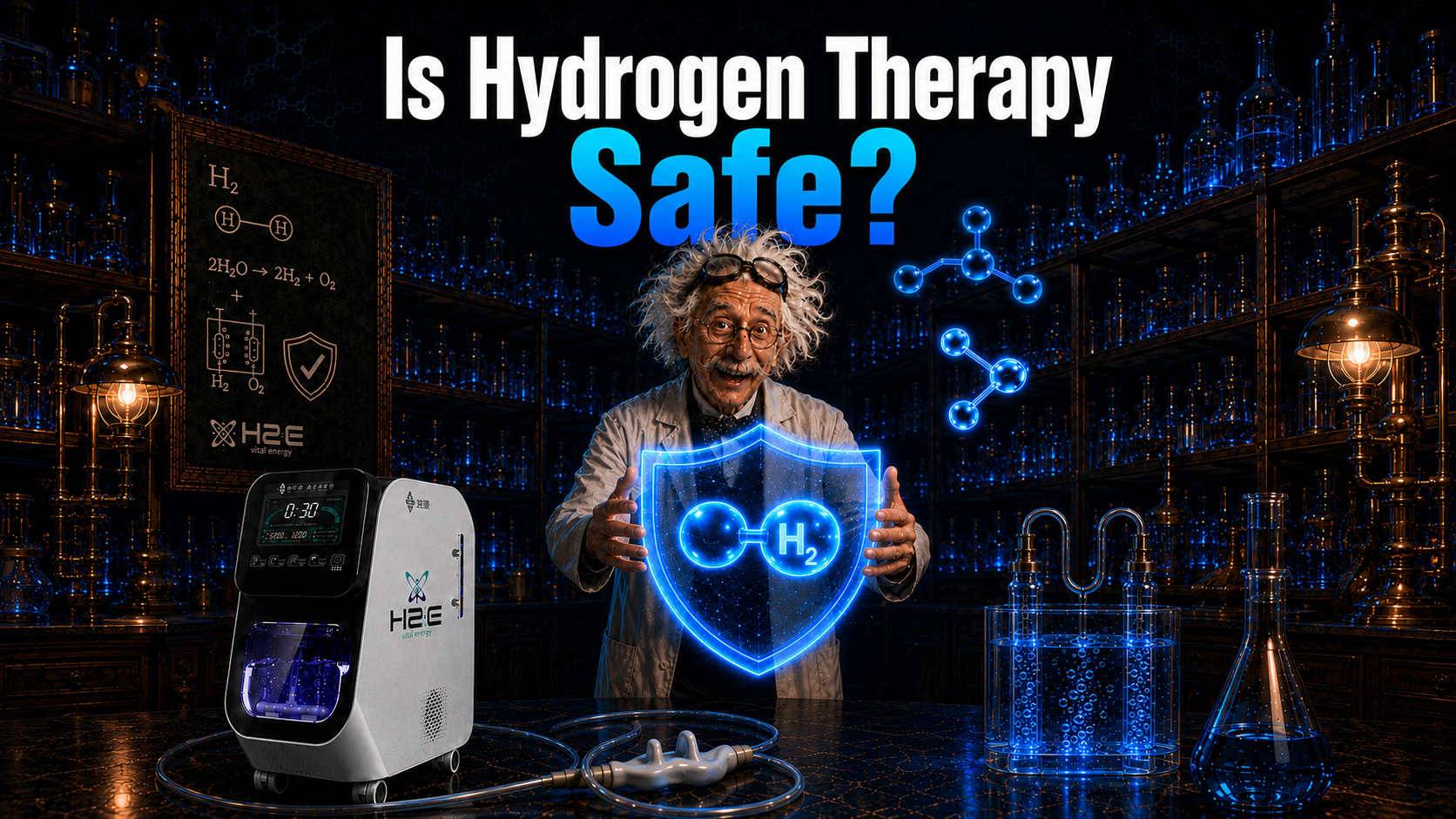
Is hydrogen therapy safe?
Published human studies have generally found molecular hydrogen to be well tolerated when delivered through controlled methods such as hydrogen-rich water or properly administered inhalation. A clinical review covering dozens of human trials reported very few adverse reactions, and a dedicated study of prolonged 2.4% hydrogen inhalation in healthy adults found no clinically significant adverse effects.
That is reassuring—but it is not the whole answer.
The safety of hydrogen therapy has two separate parts:
- Biological safety: How does the human body tolerate molecular hydrogen?
- Equipment and environmental safety: Is the hydrogen produced, contained and delivered using a properly designed device in a suitable environment?
These questions must not be confused. A gas can be biologically well tolerated at a studied concentration while still requiring strict precautions because it is flammable. A therapy can appear safe in controlled research without every machine, dose, duration or home setup being equally safe.
This guide examines what human research tells us, what it does not yet tell us, possible side effects, who should seek professional guidance and how to use hydrogen equipment responsibly.
What Is Molecular Hydrogen?
Molecular hydrogen, written as H₂, consists of two hydrogen atoms bonded together. It is a colourless, odourless and tasteless gas.
The main delivery methods used in hydrogen therapy are:
- hydrogen inhalation, in which H₂-containing gas is breathed through a nasal cannula or suitable mask;
- hydrogen-rich water, in which dissolved molecular hydrogen is consumed in drinking water.
Other formats studied in research include hydrogen-rich saline, baths and topical preparations.
Molecular hydrogen should not be confused with:
- hydrogen peroxide (H₂O₂), a reactive chemical used in disinfecting and bleaching products;
- hydrogen sulphide (H₂S), a toxic gas that smells of rotten eggs;
- medical oxygen therapy, prescribed for particular clinical needs;
- alkaline water, defined mainly by its pH rather than its dissolved H₂ content.
Hydrogen peroxide and hydrogen sulphide must never be used as substitutes for molecular hydrogen therapy.
For a full introduction, read What Is Hydrogen Therapy?.
The Short Answer: Is Hydrogen Therapy Safe?
The most evidence-based answer is:
Molecular hydrogen has generally been well tolerated in published human studies, but safe use depends on the dose, delivery method, equipment, environment and individual medical circumstances.
This wording matters.
It would be too strong to say hydrogen therapy is completely risk-free. No wellness intervention, medical procedure or electrical device is risk-free in every circumstance. Long-term data also remain more limited than short-term data.
It would be equally inaccurate to portray molecular hydrogen as inherently toxic. The body is naturally exposed to hydrogen generated by intestinal microorganisms, and administered H₂ is rapidly distributed and largely eliminated through exhalation.
Human trials have used hydrogen-rich water and inhaled H₂ across different populations, often without reporting serious treatment-related adverse events. However:
- many studies are small;
- protocols vary considerably;
- safety reporting is not equally detailed in every publication;
- vulnerable groups are under-represented;
- data from one concentration or method cannot automatically be applied to another;
- the absence of reported harm does not prove that every possible long-term risk has been excluded.
The right conclusion is reassuring but responsible: the safety profile appears favourable under studied and controlled conditions, while appropriate precautions remain essential.
Biological Tolerability vs Physical Gas Safety
This is the most important distinction in the entire article.
Biological tolerability
This refers to what happens when an appropriate amount of molecular hydrogen enters the body. Researchers look for:
- symptoms;
- changes in vital signs;
- abnormal blood results;
- respiratory effects;
- neurological effects;
- treatment-related adverse events;
- reasons participants stop the intervention.
Published studies have generally found few serious concerns attributable to H₂.
Physical gas safety
Hydrogen is flammable. According to chemical-safety data, hydrogen can form flammable or explosive mixtures in air at concentrations of approximately 4% to 75% by volume when an ignition source is present.
This does not mean a properly used hydrogen therapy machine will cause a fire. It means device engineering, ventilation, gas flow, leakage control and the removal of ignition sources matter.
The UK Health and Safety Executive’s general framework for flammable substances emphasises preventing dangerous atmospheres, minimising releases, providing ventilation and avoiding ignition sources. Professional clinics and workplaces must also consider their legal risk-assessment responsibilities.
Therefore:
- H₂ can have a favourable biological safety profile, and
- H₂ still requires responsible physical handling.
Both statements can be true at the same time.
What Do Human Safety Studies Show?
Clinical reviews
A 2023 review examined 81 clinical trials represented across 64 published human studies. The authors reported that very few adverse reactions had emerged from the clinical literature and that studies generally described hydrogen therapy as feasible and well tolerated.
Reviews provide a helpful overview, but they depend on the quality of the studies included. If smaller trials do not monitor or report adverse events consistently, a review cannot fully correct that limitation.
Key Safety Study: Prolonged Hydrogen Inhalation for Up to 72 Hours
Featured Human Safety Study
In 2021, Cole and colleagues published Safety of Prolonged Inhalation of Hydrogen Gas in Air in Healthy Adults—one of the most useful direct human safety studies in the molecular-hydrogen field.
Eight healthy adults inhaled 2.4% hydrogen in medical air through a high-flow nasal cannula at 15 litres per minute. Exposure lasted 24 hours for two participants, 48 hours for two participants and 72 hours for four participants.
All eight participants completed the study without early termination, and the researchers reported no clinically significant adverse events associated with hydrogen inhalation.
This study deserves particular attention because safety was not simply a secondary observation. The researchers deliberately monitored participants for possible harm during unusually prolonged, continuous exposure in a hospital setting.
Safety assessments included:
- regularly measured blood pressure, heart rate, oxygen saturation and respiratory rate;
- participant- and nurse-reported symptoms;
- pulmonary-function testing;
- 12-lead electrocardiograms;
- neurological examinations;
- Mini-Mental State Examination scores;
- blood tests assessing haematological, kidney, liver, pancreatic and cardiac markers.
Reported adverse events were reviewed by two clinicians who were external to the study team and by an independent Data and Safety Monitoring Board. This additional review strengthened the reliability of the safety assessment.
The study found no clinically significant changes in vital signs, lung-function tests, cognition, neurological examinations, electrocardiogram measurements or laboratory indicators of organ injury. Small increases in haematocrit and platelet counts were observed, but the investigators considered them clinically insignificant.
Why This Study Matters
Most wellness sessions last considerably less than 24 hours. Demonstrating that monitored exposure continued for as long as 72 hours without clinically significant adverse events provides a meaningful human safety signal for 2.4% hydrogen inhalation under the conditions studied.
It also goes further than relying on testimonials or assuming safety because hydrogen is naturally produced in the gut. The participants were observed systematically, multiple body systems were assessed and the findings were reviewed independently.
What the Study Does Not Prove
Strong evidence should always be presented with its boundaries. This was a small phase-one, single-arm study rather than a large randomised trial. The eight participants were healthy adults aged 18–30, so the results cannot automatically be extended to children, pregnancy, older frail adults or people with serious heart or lung disease.
The findings also apply specifically to:
- 2.4% hydrogen in medical air;
- delivery through a high-flow nasal cannula at 15 litres per minute;
- a controlled hospital environment;
- exposure lasting between 24 and 72 hours;
- healthy young adults.
The study does not establish that every concentration, hydrogen-and-oxygen mixture, machine, cannula setup or home environment is equally safe. Nor does biological tolerability remove hydrogen’s physical flammability risk.
The most accurate conclusion is the one supported by the researchers: 2.4% inhaled hydrogen appeared safe and well tolerated in these eight healthy adults, with no clinically significant adverse effects detected during exposure of up to 72 hours. Larger studies in more diverse populations are still needed.
Hydrogen-and-oxygen inhalation studies
Some clinical studies have used gas mixtures containing hydrogen and oxygen. Trials have reported that these interventions were generally tolerated, although adverse events have occurred in medically unwell study populations.
Interpreting those events requires care. A symptom in a clinical trial is not automatically caused by hydrogen. Participants may already have serious illness, and comparison groups may experience similar events.
For example, a randomised study of hydrogen-and-oxygen inhalation in hospitalised patients reported adverse events, but commonly recorded events were also seen with oxygen treatment. This supports the need for controlled comparisons rather than assuming that every event during treatment was caused by H₂.
Hydrogen-rich water studies
Human trials have examined daily hydrogen-rich water use for periods ranging from days to months.
A 24-week randomised trial in people with metabolic syndrome did not identify a clear pattern of serious harm attributable to high-concentration hydrogen-rich water.
A six-month randomised pilot study in older adults also used hydrogen-rich water without identifying major safety concerns related to the intervention.
These studies contribute useful longer-duration information, but six months is not the same as many years. Large post-market datasets and long-term independent studies would strengthen confidence further.
Why Is Molecular Hydrogen Generally Well Tolerated?
Several characteristics may contribute to its favourable tolerability.
It is a simple, small molecule
H₂ contains no complex chemical structure that must be extensively metabolised. It diffuses quickly across membranes and tissues.
Unused hydrogen is rapidly eliminated
After inhalation or consumption, hydrogen does not appear to accumulate indefinitely in the body. Much of it is eliminated through exhalation.
The body encounters hydrogen naturally
Gut microorganisms can produce hydrogen during the fermentation of carbohydrates. This does not make every external dose automatically safe, but it shows that H₂ is not completely foreign to human biology.
It does not behave like a stimulant
Molecular hydrogen is not caffeine, an amphetamine or a conventional energy stimulant. It is not expected to create the same pattern of stimulation, dependency or withdrawal.
Clinical studies have reported relatively few adverse reactions
Across published human research, serious treatment-related adverse events have not emerged as a common signal.
These points are reassuring. They should not be transformed into the absolute claim that “more is always better.” Dose, concentration and exposure still matter.
Are There Side Effects?
No consistent, common side-effect pattern has been firmly established for molecular hydrogen therapy.
Some studies and users have reported minor or temporary symptoms, but it can be difficult to determine whether these are caused by H₂, the delivery method, an underlying condition, expectations, dehydration, prolonged sitting or another factor.
Possible complaints reported around wellness sessions may include:
- mild headache;
- light-headedness;
- temporary tiredness;
- nausea or digestive discomfort;
- dry nose or throat from cannula use;
- irritation from poorly fitted tubing;
- discomfort from remaining in one position.
These symptoms should not automatically be called a “detox reaction.” That phrase can encourage people to ignore genuine warning signs.
If a person develops an unexpected symptom:
- stop the session;
- move to fresh air if inhalation is being used;
- check the equipment and connections;
- seek medical advice if the symptom is persistent, severe or concerning.
Chest pain, fainting, severe breathlessness, facial drooping, speech difficulty, sudden weakness or a serious allergic-type reaction require urgent medical assessment.
Can Hydrogen Cause Too Much Antioxidant Activity?
The body needs reactive oxygen species for normal immune function, exercise adaptation and cell signalling. This raises a sensible question: could hydrogen interfere with useful oxidative signals?
Early research proposed that H₂ may act selectively rather than broadly suppressing every reactive species. Later studies suggest it may work partly by regulating signalling and endogenous defence systems.
That possibility is one reason H₂ is scientifically interesting. However, the dose-response relationship is not fully resolved.
We do not yet have enough evidence to say:
- every dose is equally beneficial;
- extremely long sessions are superior;
- higher machine output always produces a better biological response;
- hydrogen cannot influence useful adaptations under any circumstances.
People using hydrogen around exercise should avoid assuming that maximum exposure is automatically ideal. Research protocols differ, and “more” is not a substitute for evidence.
Is Hydrogen Inhalation Safe?
Hydrogen inhalation has generally been well tolerated in controlled human research, but it requires more operational care than drinking hydrogen-rich water.
The main safety questions are:
- What gas does the machine produce?
- What is the hydrogen concentration?
- Does it produce hydrogen alone or a hydrogen-and-oxygen mixture?
- What is the output flow?
- How is pressure controlled?
- How is gas routed to the user?
- Are suitable water traps, separators or other safety features present?
- Is the room properly ventilated?
- Are ignition sources excluded?
- Is the machine maintained according to its instructions?
These are not details to improvise.
Concentration matters
A safety study at 2.4% hydrogen in air cannot automatically validate a machine producing a much higher-concentration stream or a different hydrogen-and-oxygen mixture.
The final concentration inhaled by a person can also differ from the concentration at the machine outlet because room air is drawn in around a nasal cannula. This is one reason outlet flow alone does not describe the total inhaled dose.
Consumers should not attempt to calculate or modify concentrations themselves. The machine should be used only as designed.
Flow rate matters
A higher millilitre-per-minute figure is not automatically safer or more effective. Output should be considered alongside gas composition, delivery method, session length and manufacturer guidance.
The delivery interface matters
Cannulas and masks should be compatible with the device. Gas outlets must not be blocked or altered. Tubing should not be kinked, compressed, cut or connected to improvised equipment.
Ventilation matters
Hydrogen disperses rapidly because it is very light, but the room still needs appropriate ventilation. A machine should not be operated in a sealed cupboard, tiny unventilated room or other unsuitable enclosed space.
Ignition control matters
Keep operating equipment away from:
- smoking and vaping;
- candles;
- gas hobs and pilot lights;
- open fires;
- lighters and matches;
- sparks;
- unsuitable heaters;
- hot work or tools that create ignition sources.
Do not use hydrogen equipment while cooking over a flame or beside a working fireplace.
Hydrogen Machine Safety Checklist
The following principles provide a practical starting point. The manual for the exact machine always takes priority.
Before the first session
- Read the full operating instructions.
- Confirm what gas the machine produces.
- Identify every port, tube, water trap and connector.
- Learn what the alarms, indicators and automatic shut-offs mean.
- Confirm which type of water the reservoir requires.
- Position the machine on a stable, dry surface.
- Check that ventilation is adequate.
- Remove flames, cigarettes and other ignition sources.
- Make sure children and pets cannot interfere with the device.
Before each use
- Inspect the power cable and plug.
- Confirm that tubing is clean, intact and correctly connected.
- Check that no outlet is blocked.
- Make sure the water level is within the permitted range.
- Empty or position the water trap according to the instructions.
- Verify that the machine is not leaking water.
- Use a clean personal cannula.
- Confirm there is no unusual smell, heat, noise or error warning.
Molecular hydrogen has no smell. An unusual odour should not be accepted as normal hydrogen.
During use
- Keep the machine upright and unobstructed.
- Do not cover ventilation grilles.
- Do not move the machine by pulling the tubing.
- Do not smoke, vape or light a candle.
- Keep liquids away from electrical parts.
- Do not add oils, medicines, herbs or aromatic substances to the gas pathway.
- Do not leave a vulnerable user unsupervised.
- Stop if the machine alarms, overheats, leaks or behaves unexpectedly.
After use
- Switch off the device according to the correct sequence.
- Disconnect or store the cannula as instructed.
- Check the water trap.
- Wipe external surfaces with an approved method.
- Keep ports protected from dust.
- Record maintenance if the equipment is used in a clinic.
- Store the machine away from heat, moisture and children.
Water Quality Is a Safety and Maintenance Issue
Many electrolysis-based hydrogen machines require high-quality distilled water with very low total dissolved solids. The exact requirement depends on the device.
Tap water, mineral water and unsuitable purified water may contain:
- calcium;
- magnesium;
- salts;
- chlorine;
- metals;
- organic contaminants;
- small particles.
These substances can contribute to scale, electrode contamination, reduced performance or damage to internal components.
Use only the water specified by the manufacturer. If a TDS pen is recommended, use it according to the instructions and understand the acceptable range for the exact model.
Important distinctions:
- Water placed in a hydrogen-inhalation machine’s internal reservoir may be intended for electrolysis, not drinking.
- Do not drink water from the machine reservoir unless the device is specifically designed and approved to dispense drinking water.
- Do not assume that every bottle labelled “distilled” meets the machine’s required purity.
- Do not add electrolytes, minerals, flavouring, tea, medication or supplements to the machine reservoir.
If the device rejects the water or shows a purity warning, do not bypass the warning.
Is Hydrogen-Rich Water Safe?
Hydrogen-rich water has also generally been well tolerated in human studies.
The H₂ dissolves temporarily in ordinary drinking water and gradually escapes after preparation. It does not turn water into hydrogen peroxide.
Safety still depends on the whole product:
- the original water must be suitable for drinking;
- the container and internal components must be food-safe;
- the device should be cleaned correctly;
- tablets should come from a reputable source and be used according to their instructions;
- any minerals or ingredients in a tablet must be considered separately from H₂;
- the water should not be stored in a way that encourages contamination.
The safety profile of molecular hydrogen does not automatically prove the safety of every additive, bottle material or hydrogen-producing tablet.
People on fluid restrictions—for example, because of significant kidney or heart disease—should not increase water intake without professional advice.
Can Hydrogen Replace Oxygen?
No.
Hydrogen is not a substitute for prescribed oxygen therapy. A person with low blood oxygen, chronic lung disease or an acute respiratory problem needs appropriate medical evaluation.
Some hydrogen machines produce a hydrogen-and-oxygen mixture through electrolysis, but that does not make the device equivalent to a regulated medical oxygen system.
Do not:
- disconnect prescribed oxygen to use hydrogen;
- combine a hydrogen machine with oxygen equipment unless specifically designed and clinically authorised;
- alter tubing between different respiratory devices;
- use a hydrogen wellness machine to manage an acute breathing emergency.
Breathing difficulty, blue lips, confusion or low oxygen readings may require urgent medical attention.
Who Should Speak to a Healthcare Professional First?
Professional guidance is particularly important for:
- pregnant or breastfeeding people;
- children;
- people with significant heart or lung disease;
- people using prescribed oxygen, CPAP, non-invasive ventilation or other respiratory equipment;
- anyone undergoing cancer treatment;
- people recovering from recent surgery, heart attack or stroke;
- people with uncontrolled epilepsy or serious neurological illness;
- those with significant kidney or liver disease;
- people taking multiple medicines or participating in another clinical treatment;
- anyone with unexplained or worsening symptoms.
This does not mean H₂ is known to be harmful in all these groups. It means safety evidence is less complete, individual circumstances vary and coordination matters.
Is Hydrogen Therapy Safe During Pregnancy?
There is not enough high-quality human research to establish a routine hydrogen-therapy protocol during pregnancy or breastfeeding.
Animal research cannot replace pregnancy-specific human safety data. Because fetal development is a sensitive period, the absence of known harm is not the same as proof of safety.
Pregnant or breastfeeding people should discuss hydrogen therapy with an appropriately qualified healthcare professional before use.
Marketing should not claim that hydrogen prevents pregnancy complications or improves fetal development without reliable clinical evidence.
Is Hydrogen Therapy Safe for Children?
Children are not simply smaller adults. Their breathing patterns, body size, development and ability to describe symptoms differ.
Clinical evidence in healthy children is limited, and home devices may not have paediatric protocols.
Children should never:
- operate a hydrogen machine alone;
- play with tubing or cannulas;
- receive an adult flow or session length simply adjusted by guesswork;
- use hydrogen instead of medical treatment;
- be left unattended around operating equipment.
Any use in a child should be discussed with an appropriate healthcare professional and follow device-specific guidance.
There is no reliable clinical evidence that hydrogen therapy treats Down syndrome or reverses its genetic cause. Experimental research involving newborn oxygen deprivation is not established routine care and must never replace urgent neonatal treatment.
Is Hydrogen Therapy Safe for Older Adults?
Older adults have participated in hydrogen-rich water and inhalation research, and published studies have generally reported good tolerability.
Age alone does not determine whether someone is suitable. More important considerations include:
- frailty;
- breathing problems;
- cardiovascular stability;
- swallowing difficulties;
- medication burden;
- cognitive impairment;
- fall risk;
- ability to use equipment safely.
A seated session may be physically comfortable, but tubing can create a trip hazard. People with memory problems may need supervision to prevent accidental disconnection or machine misuse.
Hydrogen Therapy and Medication
No broad pattern of major drug interactions has been established, but interaction research is limited.
This is an important difference:
- “No interaction has been proven” does not mean
- “Every possible interaction has been ruled out.”
Hydrogen may influence biological pathways and metabolic markers. If a person’s glucose, blood pressure or symptoms change while using any new intervention, medication needs should be reviewed by the prescribing clinician—not adjusted independently.
Never stop:
- insulin or diabetes medication;
- blood-pressure medication;
- anticoagulants;
- seizure medication;
- cancer treatment;
- psychiatric medication;
- steroids;
- heart medication
because of hydrogen therapy without medical direction.
Hydrogen Therapy During Cancer Treatment
Hydrogen has been investigated as a possible supportive intervention during some conventional treatments, particularly in relation to oxidative stress, fatigue and quality of life.
This area requires exceptional caution.
Cancer biology is complex. Treatments may deliberately use oxidative mechanisms to damage tumour cells, and laboratory findings do not always predict what will happen in a human tumour. Some theoretical and preclinical questions remain about timing and interactions.
Therefore:
- hydrogen must not be presented as an anti-cancer cure;
- it must not replace surgery, radiotherapy, chemotherapy, immunotherapy or prescribed medication;
- anyone considering H₂ during cancer treatment should discuss it with the oncology team;
- timing, dose and treatment type may matter;
- testimonials are not a substitute for clinical evidence.
“Supportive” means potentially helping wellbeing or treatment tolerance under appropriate supervision. It does not mean treating the cancer itself.
Is It Safe to Sleep During Hydrogen Inhalation?
Do not assume that an awake-session device is automatically suitable for unattended or overnight use.
During sleep, a user may not notice:
- a disconnected cannula;
- kinked tubing;
- a machine alarm;
- overheating;
- water entering the line;
- an unexpected symptom;
- a ventilation problem.
Only use a machine during sleep if the manufacturer explicitly permits it, the environment meets the required safety conditions and an appropriate protocol has been established. Do not improvise overnight use.
Can You Use Hydrogen Therapy Every Day?
Daily use has appeared in some clinical research, especially hydrogen-rich water studies. However, there is no universal schedule proven ideal for every person and every goal.
Safe frequency depends on:
- delivery method;
- concentration and flow;
- session duration;
- machine design;
- health status;
- purpose of use;
- professional advice where appropriate.
Do not extend sessions or increase output simply because a shorter or lower protocol appeared well tolerated in a study.
Long-term safety data are growing but remain less extensive than short-term data. Regular users should continue to evaluate whether the therapy is appropriate rather than assuming indefinite use requires no review.
How to Choose a Safer Hydrogen Machine
Safety should be evaluated before output, appearance or marketing claims.
Ask the supplier:
What gas does the machine produce?
Confirm whether the output is hydrogen, a hydrogen-and-oxygen mixture or separated gas streams.
Is the stated output clearly defined?
Determine whether the number refers to hydrogen alone or total mixed gas.
What safety systems are built in?
Look for clear information about pressure control, water management, alarms, automatic shut-offs and suitable gas pathways.
What water is required?
The supplier should provide an exact and understandable answer.
Are instructions and training available?
A premium machine should come with more than a confusing diagram. Setup, operation, cleaning and troubleshooting should be explained.
Is UK-based support available?
Responsive support matters when a user encounters an alarm, damaged tube, water-quality problem or maintenance question.
Is there a meaningful warranty?
Understand the duration, coverage and process for technical support.
Are the health claims responsible?
A seller who guarantees cures or advises customers to stop medication is demonstrating poor safety culture, regardless of the machine’s appearance.
Red Flags to Avoid
Be cautious if a product or provider:
- guarantees treatment of a long list of diseases;
- describes every unpleasant symptom as detoxification;
- provides no clear operating manual;
- will not explain the gas composition;
- encourages users to modify tubing or internal parts;
- recommends tap or mineral water against manufacturer instructions;
- dismisses ventilation or fire precautions;
- suggests smoking near an operating machine is acceptable;
- advises combining the unit with medical oxygen equipment without authorisation;
- recommends stopping prescribed treatment;
- provides no warranty or technical support;
- uses testimonials as the only safety evidence.
Trust is built through transparency, not exaggerated certainty.
What to Do if Something Goes Wrong
If the machine alarms, overheats, leaks or behaves unexpectedly:
- Stop the session.
- Switch off the machine using the normal safe procedure if possible.
- Keep flames and sparks away.
- Ventilate the area.
- Do not open or repair internal components unless you are authorised and trained.
- Contact the supplier or qualified technician.
If a person feels unwell:
- Stop hydrogen delivery.
- Move to fresh air.
- Remove the cannula.
- Assess the symptoms.
- Seek medical advice when appropriate.
For severe breathlessness, chest pain, collapse, sudden neurological symptoms or another emergency, call emergency services.
Frequently Asked Questions
Is molecular hydrogen toxic?
Published human studies generally describe H₂ as well tolerated at the doses and methods studied. This does not prove that every concentration, device or exposure is risk-free.
Can hydrogen inhalation damage the lungs?
Controlled studies, including prolonged 2.4% inhalation in healthy adults, have not identified clinically significant lung harm. Evidence is still limited for every concentration and for people with severe respiratory disease.
Can a hydrogen machine explode?
Hydrogen is flammable when it reaches certain concentrations in air and encounters an ignition source. Proper device engineering, correct operation, ventilation and keeping the machine away from flames and sparks are essential.
Is hydrogen-rich water safe to drink?
Hydrogen-rich water has generally been well tolerated in studies. The base water, container and any tablet ingredients must also be safe. People with fluid restrictions should seek medical guidance.
Does hydrogen therapy have side effects?
No consistent common side-effect pattern has been established. Minor symptoms can occur, and unexpected symptoms should not automatically be dismissed as detoxification.
Can I use tap water in my hydrogen machine?
Only if the exact manufacturer explicitly permits it. Many inhalation machines require high-quality distilled water with very low total dissolved solids.
Can I add electrolytes to the machine water?
Do not add electrolytes, minerals, flavouring, medicines or supplements to an inhalation machine reservoir unless the manufacturer explicitly requires a specified substance.
Can I use hydrogen next to a candle or gas fire?
No. Keep hydrogen-generating equipment away from open flames, smoking, vaping, sparks and other ignition sources.
Can I leave the machine running unattended?
Follow the exact manufacturer’s instructions. As a general safety principle, do not leave operating equipment unattended or allow children or vulnerable users to use it without appropriate supervision.
Is hydrogen therapy safe with medication?
No major general interaction pattern has been established, but evidence is incomplete. Do not stop or alter medication without consulting the prescribing professional.
Final Thoughts: A Favourable Safety Profile Requires Responsible Use
Current human research provides a reassuring overall picture. Molecular hydrogen has generally been well tolerated through both inhalation and hydrogen-rich water, and serious treatment-related adverse events have not emerged as a common signal.
But “well tolerated” is not the same as “no precautions required.”
Hydrogen is flammable. Concentration matters. Machine design matters. Ventilation matters. Correct water, tubing, cleaning, maintenance and supervision matter. Individual health circumstances matter too.
The most responsible conclusion is:
Hydrogen therapy appears to have a favourable safety profile when used under studied conditions with suitable equipment and sensible precautions, but it should never be treated casually or presented as risk-free.
At H2=E, we believe premium technology must be accompanied by clear education, careful setup and ongoing support. Safety is not a single feature inside a machine—it is the complete system of equipment quality, user knowledge and responsible practice.
Explore molecular hydrogen with clarity and confidence.
Discover our range of premium home-use hydrogen therapy machines or book a consultation with Antony for guidance on setup, operation and responsible use.
Suggested Internal Links
- What Is Hydrogen Therapy? —
/what-is-hydrogen-therapy/ - Hydrogen Therapy Benefits —
/hydrogen-therapy-benefits/ - What Is Molecular Hydrogen? —
/what-is-molecular-hydrogen/ - Hydrogen Inhalation Explained —
/hydrogen-inhalation-explained/ - Hydrogen Machine Buyer’s Guide —
/hydrogen-machine-buyers-guide/
Only activate links to articles already published. Keep future article titles as plain text until their pages are live.
Safety Studies and Authoritative Further Reading
- Featured Study: Safety of Prolonged Inhalation of Hydrogen Gas in Air in Healthy Adults
Eight healthy adults inhaled 2.4% hydrogen in medical air through a high-flow nasal cannula at 15 litres per minute for 24, 48 or 72 hours. Every participant completed the study, with no clinically significant adverse events or meaningful changes in vital signs, lung function, neurological testing, electrocardiograms or laboratory markers of organ injury. The authors emphasised that the small study supports further research but does not establish the safety of every concentration or population.
Read the full study - Molecular Hydrogen Therapy—A Review of Clinical Studies and Outcomes
This 2023 review assessed 81 clinical trials represented across 64 human-study publications and discussed reported tolerability and adverse reactions.
Read the full review - Effectiveness and Safety of Hydrogen Inhalation in Adults With Hypertension
A 2024 real-world study evaluated hydrogen inhalation as an additional intervention and reported on safety and adverse events.
Read the full study - Hydrogen/Oxygen Therapy in Hospitalised Patients: Randomised Clinical Trial
This controlled trial reported clinical outcomes and adverse events during hydrogen-and-oxygen inhalation compared with oxygen therapy.
Read the full study - Pilot Feasibility and Safety Study of Hydrogen Gas Inhalation
This 2024 pilot study specifically evaluated feasibility and treatment-related adverse events in a clinical population.
Read the full study - H₂ Inhalation in Patients With Moderate COVID-19: Safety and Tolerability
This phase I investigation evaluated the tolerated duration and safety of controlled H₂ inhalation over several days.
View the study on PubMed - Twenty-Four Weeks of High-Concentration Hydrogen-Rich Water
A randomised controlled trial that provides useful longer-duration human safety information alongside metabolic outcomes.
View the study on PubMed - Six Months of Hydrogen-Rich Water in Older Adults
A randomised pilot trial providing longer-duration tolerability data in adults over 70.
View the study on PubMed - Hydrogen: Chemical and Physical Safety Information
The US National Library of Medicine’s PubChem entry includes physical properties and the approximate flammable limits of hydrogen in air.
View the PubChem safety information - UK Health and Safety Executive: Dangerous Substances and Explosive Atmospheres
Authoritative UK guidance explaining risk assessment, release control, ventilation and ignition-source management for flammable substances in workplaces.
Read the HSE guidance
Medical and Safety Disclaimer
This article is for educational and informational purposes only and is not medical, engineering, electrical or fire-safety advice. H2=E does not claim that molecular hydrogen diagnoses, treats, cures or prevents any disease. Published studies generally report favourable tolerability, but evidence varies by dose, delivery method, population and duration. Always follow the instructions for the exact device and seek appropriately qualified medical or technical advice when needed. Hydrogen-generating equipment must be kept away from flames, smoking, sparks and unsuitable enclosed spaces. Hydrogen therapy should not replace professional medical assessment, prescribed medication, oxygen therapy or conventional treatment.