Medical disclaimer: This article provides general education, not personalised medical advice. No supplement or hydrogen protocol has been proven to stop ageing or guarantee a longer life. Speak with a qualified healthcare professional before changing medication or introducing supplements, especially if you have a health condition, take prescribed medicines, are pregnant or breastfeeding, have impaired kidney or liver function, or are preparing for surgery.
A longevity health stack with molecular hydrogen should not begin with a shopping list. It should begin with the interventions most consistently associated with living longer in good health: not smoking, appropriate medical prevention, regular movement, maintaining muscle and fitness, nutritious food, restorative sleep and strong human connection.
Only after those foundations are in place does it make sense to consider targeted supplements or emerging tools such as molecular hydrogen.
This ordering matters. A supplement cannot compensate for untreated high blood pressure. An hour on a hydrogen machine cannot replace resistance training. A sophisticated sleep tracker cannot create sleep if bedtime is continually sacrificed. And a large “anti-ageing stack” may add cost, interactions and false reassurance without adding meaningful benefit.
The goal is not immortality. It is healthspan: preserving physical function, cognition, independence and quality of life for as many years as possible.
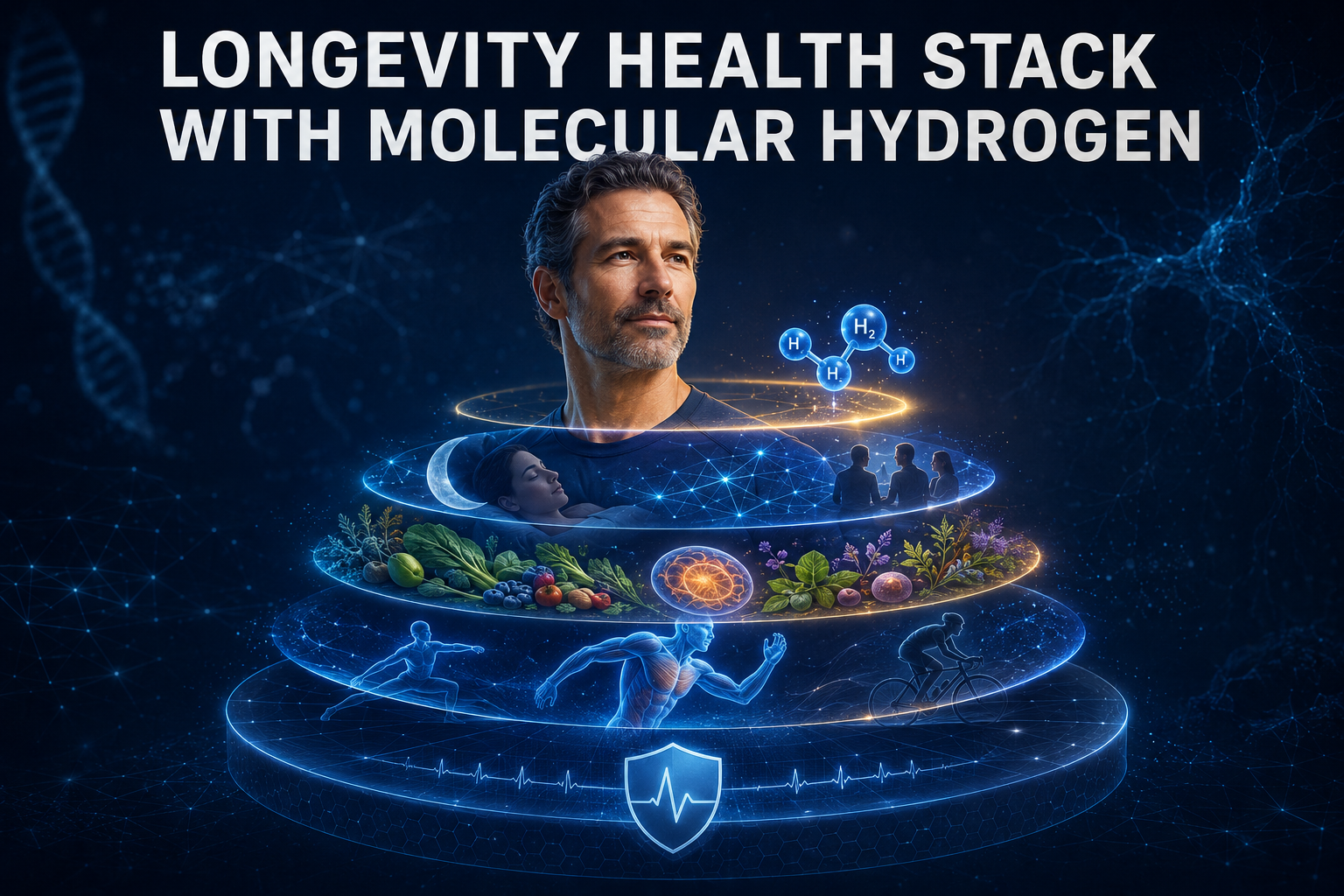
This guide presents a practical five-layer framework. Each layer supports the next, and molecular hydrogen is placed where the human evidence currently belongs—as an optional research-led addition, not the foundation.
The longevity pyramid at a glance
| Layer | Priority | Examples | Evidence position |
|---|---|---|---|
| 1. Medical prevention | Identify and reduce established risks | Blood pressure, lipids, glucose, screening, vaccination, medication review | Foundational |
| 2. Movement and muscle | Preserve capacity and resilience | Aerobic activity, resistance training, balance, daily movement | Foundational |
| 3. Nutrition and metabolic health | Supply energy and nutrients while maintaining metabolic function | Minimally processed diet, protein, fibre, healthy weight trajectory | Foundational |
| 4. Sleep, relationships and recovery | Support brain, emotional and physiological health | Regular sleep, stress skills, social connection, purpose | Foundational |
| 5. Targeted and emerging tools | Address a defined need or research question | Correcting deficiencies, selected supplements, molecular hydrogen | Individual/optional |
The base of the pyramid has the broadest evidence and the greatest potential impact. The top should remain smaller.
Layer 1: medical prevention and risk-factor control
One of the least glamorous longevity strategies is also one of the most valuable: finding important health risks before they cause irreversible harm.
High blood pressure, abnormal cholesterol, diabetes, kidney disease, atrial fibrillation, some cancers and osteoporosis can progress with few early symptoms. A person may feel well while risk accumulates.
A prevention plan should be personalised by age, sex, family history, medical history and country-specific guidance. It may include:
-
Blood-pressure assessment
-
Cholesterol and cardiovascular-risk review
-
Blood glucose or HbA1c where appropriate
-
Weight and waist trend interpreted in context
-
Kidney and liver assessment when clinically indicated
-
Cancer screening appropriate to age and risk
-
Bone-health and fracture-risk assessment
-
Dental, vision and hearing care
-
Vaccination review
-
Medication and supplement review
-
Evaluation of symptoms such as fatigue, breathlessness, sleepiness, pain or cognitive change
Medication is not a failure
Longevity culture sometimes presents medication as evidence that lifestyle has failed. That is misleading. Lifestyle and medicine are complementary. Treating hypertension, diabetes, osteoporosis or elevated cardiovascular risk may be far more consequential than adding an experimental supplement.
Do not stop a prescribed medicine to make a stack look “natural”. Discuss benefits, adverse effects and alternatives with the clinician responsible for your care.
Know what you are trying to improve
Before adding any intervention, define the target. Is it blood pressure? Strength? Sleep quality? A laboratory-confirmed deficiency? Exercise recovery? General curiosity?
If the goal cannot be named, measured or reviewed, the intervention may not belong in the stack.
Layer 2: movement, muscle and cardiorespiratory fitness
Physical activity is one of the closest things longevity science has to a multi-system intervention. It supports cardiovascular health, insulin sensitivity, bone, mood, sleep, mobility and independence.
World Health Organization guidance recommends that adults aim for 150–300 minutes of moderate-intensity aerobic activity each week, or 75–150 minutes of vigorous activity, plus muscle-strengthening work on at least two days. Older adults should also include balance-focused activity, particularly when fall risk or mobility is a concern.
These are population targets, not an all-or-nothing threshold. Moving from very little activity to a little more can be meaningful. People with symptoms, chronic disease or a long period of inactivity may need clinical assessment and a gradual plan.
Strength is a longevity asset
Ageing is commonly associated with loss of muscle mass, strength and power. The consequences extend beyond appearance: reduced reserve can make illness, surgery, falls and ordinary daily tasks harder to recover from.
A useful resistance programme trains the major movement patterns:
-
Squat or sit-to-stand
-
Hinge
-
Push
-
Pull
-
Carry
-
Calf and ankle strength
-
Trunk stability
The best exercises depend on experience, joints, balance, equipment and medical history. Technique and progressive loading matter more than choosing exotic movements.
Aerobic fitness and everyday movement
Structured cardio might include brisk walking, cycling, swimming, rowing or intervals adapted to ability. Daily activity also matters: walking for errands, taking stairs, gardening and breaking up long periods of sitting all contribute.
Aim to build a body that can:
-
Walk comfortably and briskly
-
Rise from a chair without using the arms where possible
-
Carry useful loads
-
Climb stairs
-
Recover after exertion
-
Maintain balance during everyday tasks
These capabilities are practical measures of healthspan.
Layer 3: nutrition and metabolic health
There is no single universal longevity diet. Healthy dietary patterns differ across cultures, preferences and medical needs, but they tend to share several characteristics:
-
A wide variety of vegetables and fruit
-
Legumes, nuts, seeds and whole grains where tolerated
-
Adequate protein from appropriate sources
-
Unsaturated fats in place of excessive saturated or trans fats
-
Limited highly processed food and sugary drinks
-
Portions aligned with energy needs
-
Alcohol minimised or avoided
Whole foods provide combinations of protein, fibre, vitamins, minerals and phytochemicals that are difficult to reproduce in capsules.
Protein supports function—not immortality
Adequate protein helps maintain muscle, particularly when combined with resistance training. Needs vary with body size, age, activity, energy intake, kidney function and illness. Spreading protein across meals may be more practical than consuming nearly all of it at dinner.
Higher intake is not automatically better. People with kidney disease or complex medical conditions require individual guidance from a doctor or registered dietitian.
Fibre and the microbiome
Fibre-rich foods support bowel health, satiety, cholesterol regulation and a diverse microbial ecosystem. Increase fibre gradually and drink enough fluid, especially if current intake is low.
No commercial microbiome test currently provides a complete personal longevity diet. Digestive symptoms, unintended weight loss, persistent constipation, diarrhoea or bleeding require appropriate assessment rather than endless probiotic experimentation.
Metabolic health is more than body weight
Body composition, waist distribution, blood pressure, blood lipids, glucose regulation, fitness and strength provide more information than scale weight alone.
Aggressive dieting can reduce muscle as well as fat, especially without adequate protein and resistance exercise. For healthy ageing, preserving function matters.
Layer 4: sleep, social connection and recovery
Longevity conversations often celebrate measurable technologies while underestimating sleep and relationships.
Sleep is active biology
Sleep supports attention, memory, emotional regulation, immune function and metabolic health. Most adults benefit from a consistent schedule and enough opportunity to sleep, but individual requirements vary.
A practical sleep foundation includes:
-
Regular wake and bedtime
-
Morning daylight exposure
-
Daytime physical activity
-
A cool, dark and quiet bedroom
-
Reduced late-evening alcohol
-
Caffeine timed early enough not to disrupt sleep
-
A repeatable wind-down routine
Persistent loud snoring, gasping, witnessed breathing pauses, severe daytime sleepiness, insomnia or restless legs deserve assessment. Sleep apnoea is not solved by magnesium, a wearable score or hydrogen inhalation.
Relationships are part of health
Social isolation and loneliness are associated with poorer physical, cognitive and mental-health outcomes. Connection cannot be reduced to a biomarker, but it belongs in a serious longevity plan.
Useful forms of connection may include:
-
Family and friendships
-
Faith or community groups
-
Volunteering
-
Shared meals
-
Team activities
-
Caring for others
-
Learning with other people
Purpose does not need to be grand. Feeling needed, contributing and having reasons to engage with the day can support wellbeing and healthier routines.
Recovery is not the absence of challenge
The body adapts to manageable stress: exercise, learning and other challenges can build capacity. Recovery allows that adaptation to occur.
The aim is not to eliminate every free radical, inflammatory signal or stress response. These processes also perform useful functions. This is one reason indiscriminate high-dose antioxidant supplementation is not a scientifically coherent longevity strategy.
Our comparison of how different antioxidants work explains why more antioxidant activity is not always better.
Layer 5: targeted supplements and emerging tools
Only after the first four layers are addressed should the stack expand—and even then, every item needs a job.
Supplements are most defensible when they:
-
Correct a diagnosed or likely deficiency
-
Meet a recognised life-stage need
-
Address limited dietary intake
-
Have evidence for a specific clinical purpose
-
Are recommended by an appropriate clinician
They are least defensible when chosen because an influencer’s stack is impressive, an animal study used the phrase “anti-ageing” or a blood test was sold with an expensive bundle of products.
A simple supplement decision filter
For each product, write down:
-
The exact reason for taking it
-
The evidence relevant to someone like you
-
The dose and formulation
-
Known side effects and interactions
-
How success will be measured
-
The review or stop date
If these questions cannot be answered, pause before adding it.
Where molecular hydrogen fits in a longevity stack
Molecular hydrogen (H₂) is a small gas that can diffuse rapidly through biological membranes. It is being investigated for possible effects on redox signalling, inflammatory pathways, mitochondrial responses and cellular adaptation to stress.
These areas overlap with biological processes studied in ageing, which makes H₂ scientifically interesting. But overlap is not proof of extended lifespan.
What human longevity evidence exists?
A small six-month randomised pilot trial studied 40 adults aged 70 or older who received hydrogen-rich water or a control drink. Researchers reported changes in several molecular and phenotypic biomarkers, including a reported increase in brain telomere length in the hydrogen group.
The study is hypothesis-generating, not proof that hydrogen slows human ageing. Important limitations include:
-
Only 40 participants
-
A six-month duration
-
Multiple measured outcomes
-
Biomarkers rather than lifespan or major clinical events
-
Hydrogen-rich water—not hydrogen inhalation
-
Findings requiring independent replication
Telomere length is biologically interesting but is not a simple “biological age score”, and changing it does not automatically mean a person will live longer or avoid disease.
No human trial has established that drinking hydrogen-rich water or inhaling hydrogen gas extends lifespan.
What molecular hydrogen may reasonably be called
Based on current evidence, H₂ is best described as:
-
An emerging redox-modulating intervention
-
A subject of human, animal and laboratory research
-
An optional wellness practice for informed adults who understand the uncertainty
-
A possible complement to—not replacement for—healthy behaviours and healthcare
It should not be described as:
-
A proven anti-ageing treatment
-
A way to reverse biological age
-
A substitute for exercise, sleep or medication
-
A guaranteed mitochondrial repair therapy
-
A proven method of extending human life
Hydrogen water versus inhalation
Delivery method matters. Hydrogen-rich water provides a discrete amount of dissolved H₂ that begins escaping after preparation. Inhalation provides continuing gas exposure during a session. Concentrations, total dose, timing and tissue exposure are not interchangeable.
A study using hydrogen-rich water cannot validate a particular inhalation session or machine output. The field does not yet have a universally proven “longevity dose”.
For practical risk information, see Is Hydrogen Therapy Safe? Research, Side Effects and Essential Guidance.
Common longevity supplements: evidence before enthusiasm
Vitamin D
Vitamin D supports bone and muscle health. In the UK, the NHS advises most adults to consider 10 micrograms (400 IU) daily during autumn and winter; some people at higher risk of deficiency may need year-round supplementation.
More is not necessarily better. Excess vitamin D can cause hypercalcaemia and kidney or heart problems. Higher dosing should be guided by clinical circumstances and, where appropriate, testing.
Vitamin K2 is not automatically required with every vitamin-D supplement. It can interact seriously with warfarin and other vitamin-K antagonist medicines.
Omega-3 fatty acids
EPA and DHA can be obtained from oily fish, while appropriate supplement or prescription doses can lower triglycerides. Evidence does not justify treating ordinary fish-oil capsules as a universal anti-ageing intervention.
Product quality and actual EPA/DHA content vary. Concentrated products may affect bleeding risk or interact with treatment, so medication and surgical context matter.
Magnesium
Magnesium supports normal nerve, muscle and enzyme function and is present in legumes, nuts, seeds, leafy greens and whole grains.
Supplementation makes most sense when intake is inadequate or a clinical reason exists. Excess supplemental magnesium commonly causes diarrhoea and can interfere with medicines including some antibiotics, bisphosphonates and levothyroxine. Impaired kidney function requires particular caution.
Coenzyme Q10
CoQ10 participates in mitochondrial energy transfer and lipid-phase redox activity. Statins can reduce circulating CoQ10, but trials of supplements for statin-associated muscle symptoms have produced mixed findings.
CoQ10 may be appropriate in selected clinical situations; it has not been shown to be a general lifespan-extending supplement. It may interact with warfarin and medicines affecting blood pressure or glucose.
Creatine
Creatine is not only for bodybuilders. Combined with resistance training, it can support strength and lean mass in some adults, including older people. Research into cognition is developing.
Benefits depend on training, diet, dose and population. Creatine does not replace exercise, and people with kidney disease or complex health conditions should seek individual advice.
Experimental longevity compounds
Products such as NMN, GlyNAC and spermidine are widely marketed ahead of definitive outcome data.
NMN and NAD⁺
Nicotinamide mononucleotide is a precursor used to make NAD⁺, which participates in energy metabolism and cellular signalling. Small short-term trials suggest oral NMN can change NAD-related metabolites and selected functional or metabolic measures.
It has not been shown to extend human life, prevent age-related disease or remain beneficial and safe at high doses for decades.
GlyNAC
Glycine and N-acetylcysteine provide precursors for glutathione synthesis. Small trials in older adults have reported changes in glutathione status, oxidative-stress measures and selected functional outcomes.
The evidence is preliminary. GlyNAC does not broadly “detoxify” the body, and NAC can cause gastrointestinal effects and interact with medicines such as nitroglycerin.
Spermidine
Spermidine is a naturally occurring polyamine found in foods including wheat germ, mushrooms and legumes. It is studied in relation to autophagy and cellular quality control.
Observational research cannot prove that a supplement extends life. A 12-month randomised trial in older adults with subjective cognitive decline did not find a significant benefit for its primary cognitive outcome.
Experimental does not mean useless. It means uncertainty should be made visible.
What not to put in a longevity stack
A disciplined stack also has an exclusion list:
-
Megadose vitamins without a defined indication
-
Duplicate ingredients across several products
-
Hormones obtained without appropriate assessment and monitoring
-
Prescription drugs used off-label solely because they are fashionable in longevity circles
-
“Detox” products claiming to remove years of toxins
-
Products with proprietary blends that conceal doses
-
Supplements replacing investigation of unexplained symptoms
-
Anything continued indefinitely without review
More complexity means more opportunities for adverse effects, interactions and confusion about what is helping.
A practical 12-week longevity reset
Instead of buying an entire stack, use the first 12 weeks to strengthen the base.
Weeks 1–2: establish the baseline
-
Record blood pressure if appropriate.
-
Review screening and routine healthcare.
-
List every medicine and supplement with its dose.
-
Track sleep, daily steps and two or three meaningful symptoms.
-
Note current strength and function—for example, a comfortable walk and repeated chair stands.
Weeks 3–6: build the movement layer
-
Add two manageable full-body strength sessions each week.
-
Increase walking or aerobic activity gradually.
-
Break up long sitting periods.
-
Add balance work if appropriate.
Weeks 7–9: improve food and sleep
-
Build meals around protein and varied plant foods.
-
Increase fibre gradually.
-
Reduce sugary drinks and frequently consumed ultra-processed snacks.
-
Establish a consistent wake time and morning light routine.
Weeks 10–12: review optional additions
-
Remove unnecessary duplicate supplements.
-
Correct documented gaps with professional guidance.
-
If considering molecular hydrogen, define the purpose and understand that no longevity protocol is established.
-
Introduce only one optional intervention at a time.
At week 12, assess adherence, wellbeing, strength, fitness, sleep and relevant clinical measures. Continue what is useful; revise what is not.
A simple longevity dashboard
You do not need dozens of biomarkers. A small dashboard might include:
-
Blood pressure and clinically relevant laboratory measures
-
Smoking status and alcohol intake
-
Weekly aerobic and strength activity
-
Walking capacity or another functional measure
-
Sleep duration, regularity and daytime alertness
-
Dietary consistency rather than daily perfection
-
Social contact and meaningful activity
-
Medicines and supplements with review dates
Wearables can add information, but they should not turn normal biological variation into anxiety. Measurements are tools, not identity.
Frequently asked questions
What is a longevity health stack?
A longevity health stack is a coordinated set of behaviours, healthcare measures and optional interventions intended to support long-term health and function. A credible stack prioritises medical prevention, exercise, nutrition, sleep and relationships before supplements.
Can molecular hydrogen extend human lifespan?
There is no human clinical evidence proving that hydrogen water or hydrogen inhalation extends lifespan. A small pilot study reported changes in selected ageing-related biomarkers, but biomarkers cannot establish longer life.
Is molecular hydrogen anti-ageing?
Molecular hydrogen is being investigated for redox, inflammatory and mitochondrial effects that overlap with ageing biology. “Anti-ageing treatment” would overstate current evidence. “Emerging redox-modulating intervention” is more accurate.
What are the most important longevity supplements?
There is no universal list. The most useful supplement is often the one that corrects a genuine deficiency or meets a specific need. Vitamin D, omega-3, magnesium, creatine or CoQ10 may suit some people but not everyone.
Should everyone over 50 take the same stack?
No. Needs vary according to diet, activity, menopause or hormonal status, medical history, kidney and liver function, medication, test results and personal goals.
How many supplements are too many?
There is no fixed number. Concern increases when ingredients overlap, purposes are vague, interactions have not been checked or nothing has a review date. The smallest effective stack is usually easier and safer to manage.
What is the best first step for healthy ageing?
Choose the most important gap. For one person that may be stopping smoking; for another, treating blood pressure, beginning resistance training, improving sleep or reconnecting socially. Start with the change most likely to improve health—not the product with the most exciting marketing.
The bottom line
A longevity health stack with molecular hydrogen should be built from the bottom up.
The base is medical prevention. Above that sit movement and muscle, nutrition and metabolic health, sleep and recovery, and human connection. Targeted supplements may fill genuine gaps. Molecular hydrogen may be explored as an optional emerging intervention by informed adults who understand that it has not been proven to slow ageing or extend life.
The best stack is not the longest, most expensive or most technologically impressive. It is the one that:
-
Addresses your largest real risks
-
Preserves strength and independence
-
Fits your life well enough to continue
-
Avoids unnecessary interactions
-
Makes uncertainty visible
-
Is reviewed and simplified over time
Longevity is not one compound. It is the accumulated effect of what you repeatedly do—and what you wisely choose not to do.
References
-
World Health Organization. Guidelines on physical activity and sedentary behaviour. 2020. https://www.who.int/publications/i/item/9789240015128
-
World Health Organization Regional Office for Europe. Everyday actions for better health: WHO recommendations. Updated 2025. https://www.who.int/europe/news-room/fact-sheets/item/everyday-actions-for-better-health-who-recommendations
-
National Institute on Aging. What Do We Know About Healthy Aging? https://www.nia.nih.gov/health/healthy-aging/what-do-we-know-about-healthy-aging
-
National Institute on Aging. Health Benefits of Exercise and Physical Activity. Updated 2025. https://www.nia.nih.gov/health/exercise-and-physical-activity/health-benefits-exercise-and-physical-activity
-
National Institute on Aging. Loneliness and Social Isolation: Tips for Staying Connected. Updated 2024. https://www.nia.nih.gov/health/loneliness-and-social-isolation/loneliness-and-social-isolation-tips-staying-connected
-
Bian Z, et al. Genetic predisposition, modifiable lifestyles, and their joint effects on human lifespan. BMJ Evidence-Based Medicine. 2024. PubMed PMID: 38684374.
-
Nguyen XMT, et al. Impact of 8 lifestyle factors on mortality and life expectancy among United States veterans. American Journal of Clinical Nutrition. 2024. PubMed PMID: 38065710.
-
LeBaron TW, et al. The effects of 6-month hydrogen-rich water intake on molecular and phenotypic biomarkers of aging in older adults: a randomized controlled pilot trial. Experimental Gerontology. 2021;155:111574. PubMed PMID: 34601077.
-
NHS. Vitamins and minerals: Vitamin D. https://www.nhs.uk/conditions/vitamins-and-minerals/vitamin-d/
-
NIH Office of Dietary Supplements. Magnesium: Fact Sheet for Health Professionals. https://ods.od.nih.gov/factsheets/Magnesium-HealthProfessional/
-
NIH Office of Dietary Supplements. Omega-3 Fatty Acids: Fact Sheet for Health Professionals. https://ods.od.nih.gov/factsheets/Omega3FattyAcids-HealthProfessional/
-
Schwarz C, et al. Effects of spermidine supplementation on cognition and biomarkers in older adults with subjective cognitive decline: a randomised clinical trial. JAMA Network Open. 2022;5(4). PubMed PMID: 35616942.