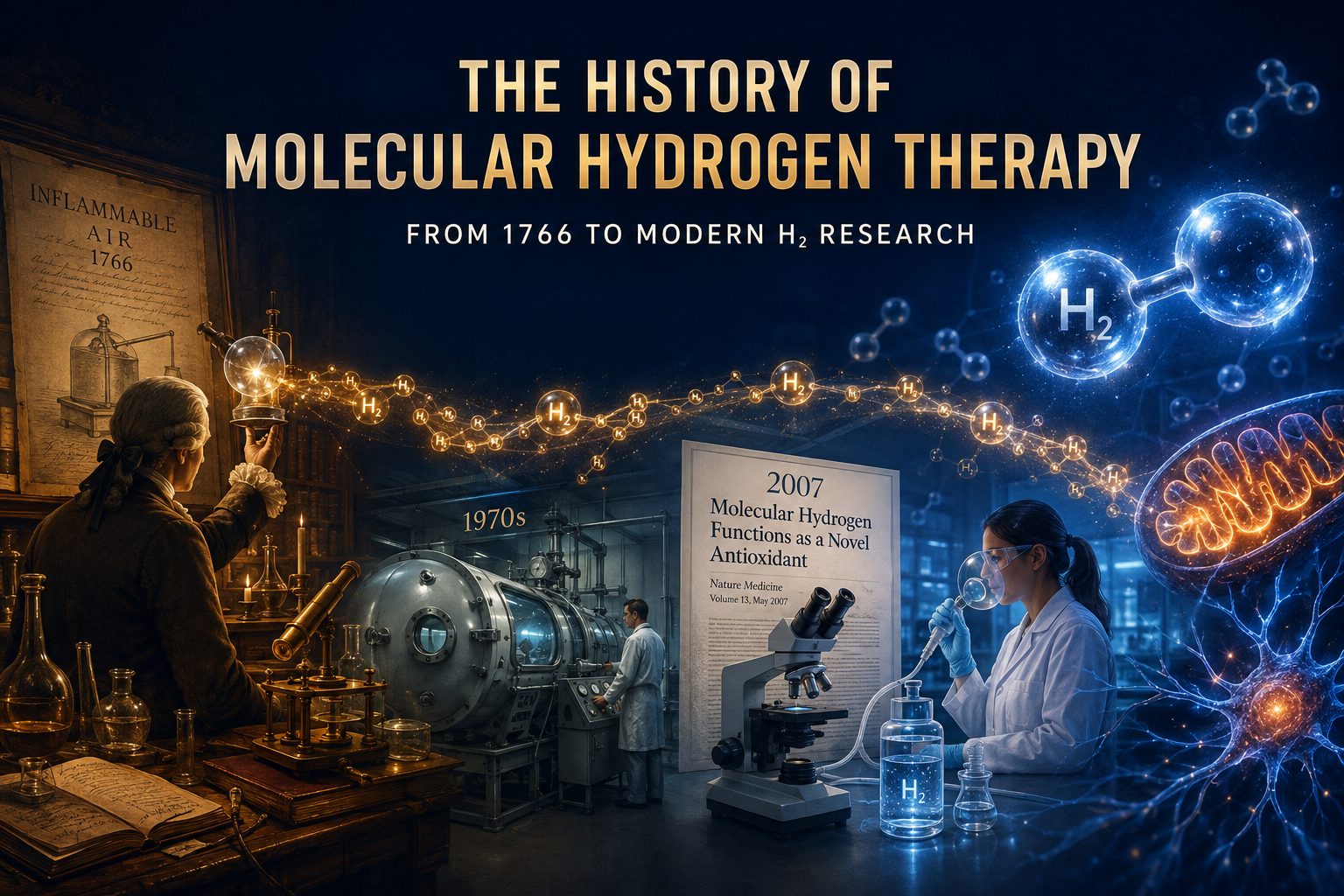
The history of molecular hydrogen therapy is not a simple story of one discovery becoming an established treatment. It is a scientific journey spanning centuries: the identification of hydrogen as a distinct gas, experiments under extreme pressure, an unusual cancer study in mice, deep-diving research, a landmark neuroscience paper and a rapidly expanding—but still developing—body of human evidence.
Today, molecular hydrogen (H₂) is studied in forms including hydrogen-rich water, controlled gas inhalation and hydrogen-rich saline. Researchers have investigated its possible influence on oxidative stress, inflammatory signalling, mitochondrial function and cellular stress responses.
Interest has grown considerably since 2007, but the field remains uneven. Some human trials report encouraging results; others find no significant benefit. Most proposed medical uses are still investigational, and molecular hydrogen is not an approved treatment for most conditions in the UK.
Understanding that distinction is essential to understanding the history itself.
Molecular hydrogen in one minute
Molecular hydrogen is written as H₂ because it consists of two hydrogen atoms bonded together. It is a colourless, odourless, tasteless and highly flammable gas.
H₂ should not be confused with:
Hydrogen ions (H⁺), which influence acidity and pH
Hydrogen peroxide (H₂O₂), a reactive compound with different biological effects
Hydrogen sulfide (H₂S), another signalling gas with its own toxicology
The hydrogen in water (H₂O), which is chemically bound to oxygen rather than present as dissolved H₂ gas
In hydrogen-rich water, H₂ gas is dissolved temporarily in the liquid. In inhalation research, a measured hydrogen-containing gas mixture is breathed under controlled conditions.
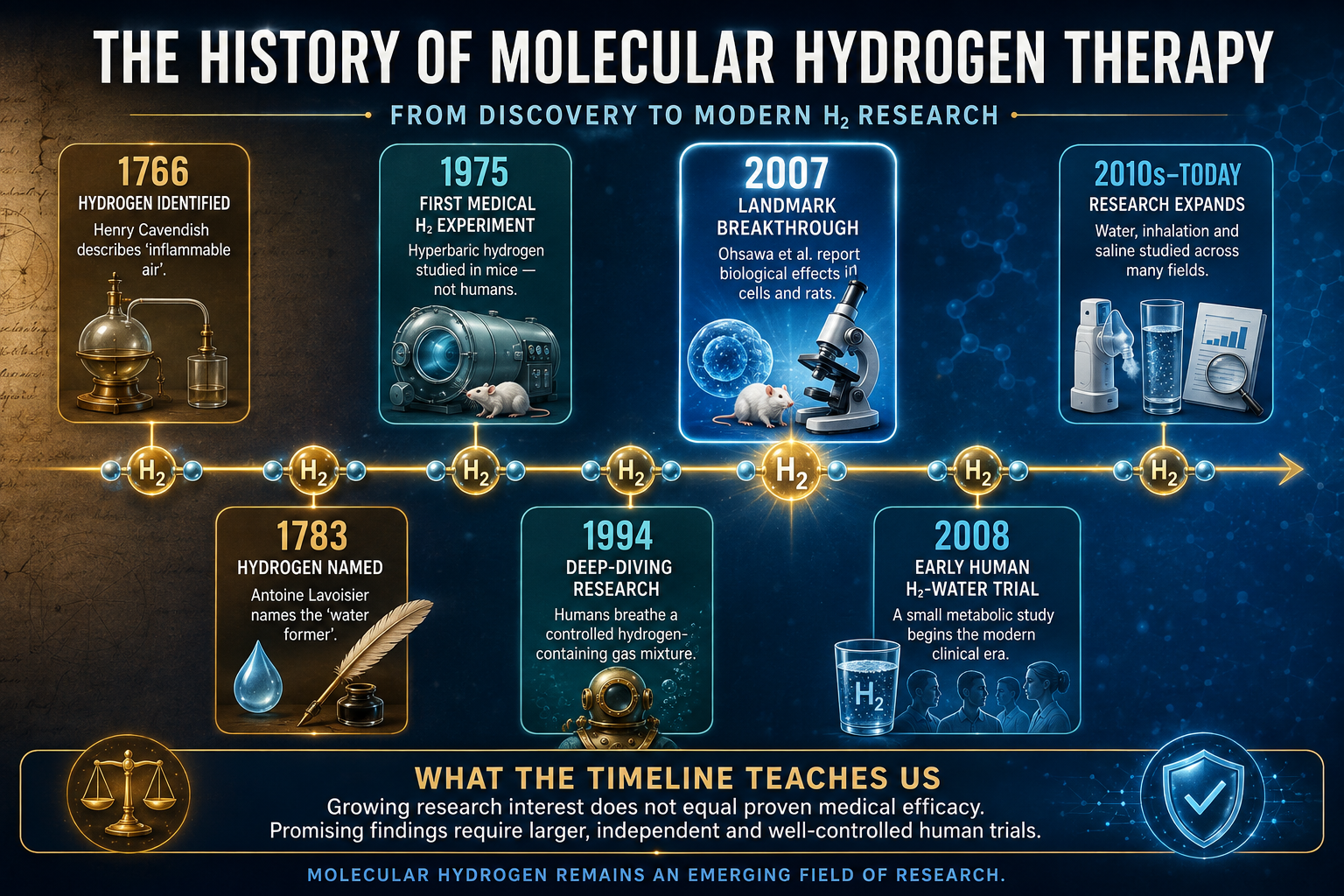
History of molecular hydrogen therapy: timeline at a glance
| Year | Milestone | Why it matters |
|---|---|---|
| 1766 | Henry Cavendish describes “inflammable air” | Hydrogen is recognised as a distinct substance |
| 1783 | Antoine Lavoisier names hydrogen | Establishes its modern chemical identity |
| 1975 | Dole, Wilson and Fife publish a hyperbaric-hydrogen mouse study | First widely cited medical H₂ experiment |
| 1994 | Humans breathe a hydrogen-helium-oxygen mixture during a 500-metre dive | Demonstrates controlled human exposure in an extreme diving context, not medical efficacy |
| 2007 | Ohsawa and colleagues publish a landmark Nature Medicine paper | Triggers modern biological and medical interest in H₂ |
| 2008 | A small human trial studies hydrogen-rich water in type 2 diabetes and impaired glucose tolerance | One of the earliest modern clinical studies of H₂ water |
| 2010–2011 | More pilot trials and multiple administration routes emerge | The field broadens beyond acute animal models |
| 2010s | Publications expand across neurological, metabolic, cardiovascular and inflammatory research | Rapid research growth, but with variable evidence quality |
| 2020s | Larger reviews, new trials and improved measurement standards appear | Attention shifts towards replication, dosing and clinically meaningful outcomes |
1766–1783: hydrogen becomes a recognised element
Hydrogen existed long before humans gave it a name, but the scientific story usually begins with English scientist Henry Cavendish. In 1766, he described the properties of what he called “inflammable air,” produced when certain metals reacted with acid.
French chemist Antoine Lavoisier later demonstrated that water could be formed through the combustion of this gas with oxygen. In 1783, he gave it the name hydrogène, from Greek roots meaning “water former.”
These discoveries established the chemistry of hydrogen. They did not involve health treatment, but they created the foundation for later work in energy, industry, diving physiology and eventually biology.
1975: the first widely cited medical hydrogen experiment
The modern medical timeline is often traced to a 1975 paper by Malcolm Dole, F. Ray Wilson and William P. Fife in the journal Science.
The researchers exposed mice with skin tumours to a hyperbaric mixture containing 97.5% hydrogen and 2.5% oxygen at eight atmospheres of pressure. They reported tumour regression and proposed that hydrogen might influence free-radical processes.
This was scientifically provocative, but it needs careful interpretation:
It was an animal experiment, not a human cancer trial.
It used an extreme hyperbaric environment unlike modern home hydrogen inhalation.
It did not establish molecular hydrogen as a cancer treatment.
Its findings did not lead immediately to a continuous programme of clinical development.
The paper is historically important because it asked whether hydrogen might be biologically active. It is not evidence that H₂ treats cancer in people.
The long gap: why did hydrogen research remain quiet?
For roughly three decades after the 1975 study, molecular hydrogen did not become a mainstream medical research field.
Several factors may help explain this:
Hydrogen was often considered biologically inert.
Its flammability created practical handling challenges.
The hyperbaric protocol was difficult to translate into ordinary medical care.
Researchers lacked a clear mechanism explaining how small amounts of H₂ might alter biology.
Other medical gases, including oxygen and nitric oxide, had more established clinical pathways.
Hydrogen nevertheless continued to be studied in specialised diving contexts.
1994: hydrogen-containing gas used in deep-diving research
Hydrogen has physical properties that make it interesting as a component of breathing mixtures for very deep diving. In 1994, researchers reported psychophysiological observations from humans during an open-sea dive to the equivalent of 500 metres using a hydrogen-helium-oxygen mixture.
This milestone is sometimes misrepresented as evidence that hydrogen therapy had already been proven safe. It demonstrated that trained divers could breathe a carefully engineered mixture under exceptional, closely supervised conditions. It did not establish the safety or efficacy of medical hydrogen inhalation for the general public.
Its historical value lies in showing that controlled human exposure to hydrogen-containing gas was technically possible.
2007: the paper that launched modern hydrogen medicine
The decisive turning point came in May 2007, when Ikuroh Ohsawa and colleagues published Hydrogen Acts as a Therapeutic Antioxidant by Selectively Reducing Cytotoxic Oxygen Radicals in Nature Medicine.
The team studied cells and a rat model of cerebral ischaemia-reperfusion injury. They reported that low-concentration hydrogen inhalation reduced brain injury and proposed that H₂ selectively interacted with highly reactive oxygen species, particularly hydroxyl radicals, without eliminating signalling molecules indiscriminately.
The study changed the field for three reasons:
It offered a plausible biological mechanism.
It used a relatively low concentration of inhaled hydrogen rather than an extreme hyperbaric protocol.
It appeared in a highly influential peer-reviewed medical journal.
The results were preclinical: cells and rats, not patients. Nevertheless, the paper gave researchers a practical framework for testing H₂ in other models and delivery routes.
Modern understanding has become more complex since then. Hydrogen may not act only by directly neutralising selected reactive species; researchers also investigate effects on redox signalling, gene expression, inflammatory pathways and the body’s own protective systems.
2008: one of the first modern human trials of hydrogen water
Human clinical research followed quickly. In 2008, Kajiyama and colleagues published a small study involving 30 people with type 2 diabetes and six with impaired glucose tolerance.
Participants drank 900 ml per day of hydrogen-rich water or control water for eight weeks in a randomised, double-blind, crossover design. The researchers reported favourable changes in selected lipid and oxidative-stress measures, although not every biomarker improved significantly.
This trial was important because it moved H₂ research from laboratory and animal models into a practical oral intervention. But it was small, short and exploratory. It generated hypotheses rather than establishing hydrogen water as a diabetes treatment.
The original H2=E article placed the beginning of human hydrogen-water research around 2010. The 2008 publication shows that the modern clinical phase began slightly earlier.
2010–2011: metabolic and mitochondrial pilot studies
Further human studies appeared over the next few years.
In 2010, a small open-label pilot study examined hydrogen-rich water in people with potential metabolic syndrome. Participants drank 1.5–2 litres daily for eight weeks, and the researchers reported changes in antioxidant capacity and selected metabolic markers. With only 20 participants and no placebo group, it could not establish cause and effect.
In 2011, researchers studied hydrogen-enriched water in people with mitochondrial myopathies and inflammatory myopathies. The publication combined an open-label trial with a small randomised, double-blind, placebo-controlled crossover trial. Results suggested possible effects in certain measures, but the study was preliminary.
These early trials illustrate a recurring theme in H₂ research: interesting signals emerging from small studies that require larger, independent confirmation.
How the routes of molecular hydrogen expanded
As research accelerated, investigators explored different ways to deliver H₂.
Hydrogen-rich water
Drinking water containing dissolved H₂ became popular in research because it is simple and non-invasive. Concentration, packaging, temperature and the time between production and consumption matter because hydrogen readily escapes from an open container.
Hydrogen gas inhalation
Inhalation allows continuing exposure during a session. Research protocols vary greatly in hydrogen concentration, gas composition, flow and duration. Because hydrogen is flammable, correctly engineered equipment and strict fire-safety controls are essential.
Hydrogen-rich saline
Many preclinical studies—and some clinical investigations—have used saline containing dissolved H₂. Injection or intravenous administration is a medical procedure and should never be improvised outside an appropriate clinical or research environment.
Topical and other experimental routes
Researchers have also investigated hydrogen baths, topical preparations, eye drops and approaches intended to alter intestinal H₂ production. These routes have distinct exposure profiles and evidence bases.
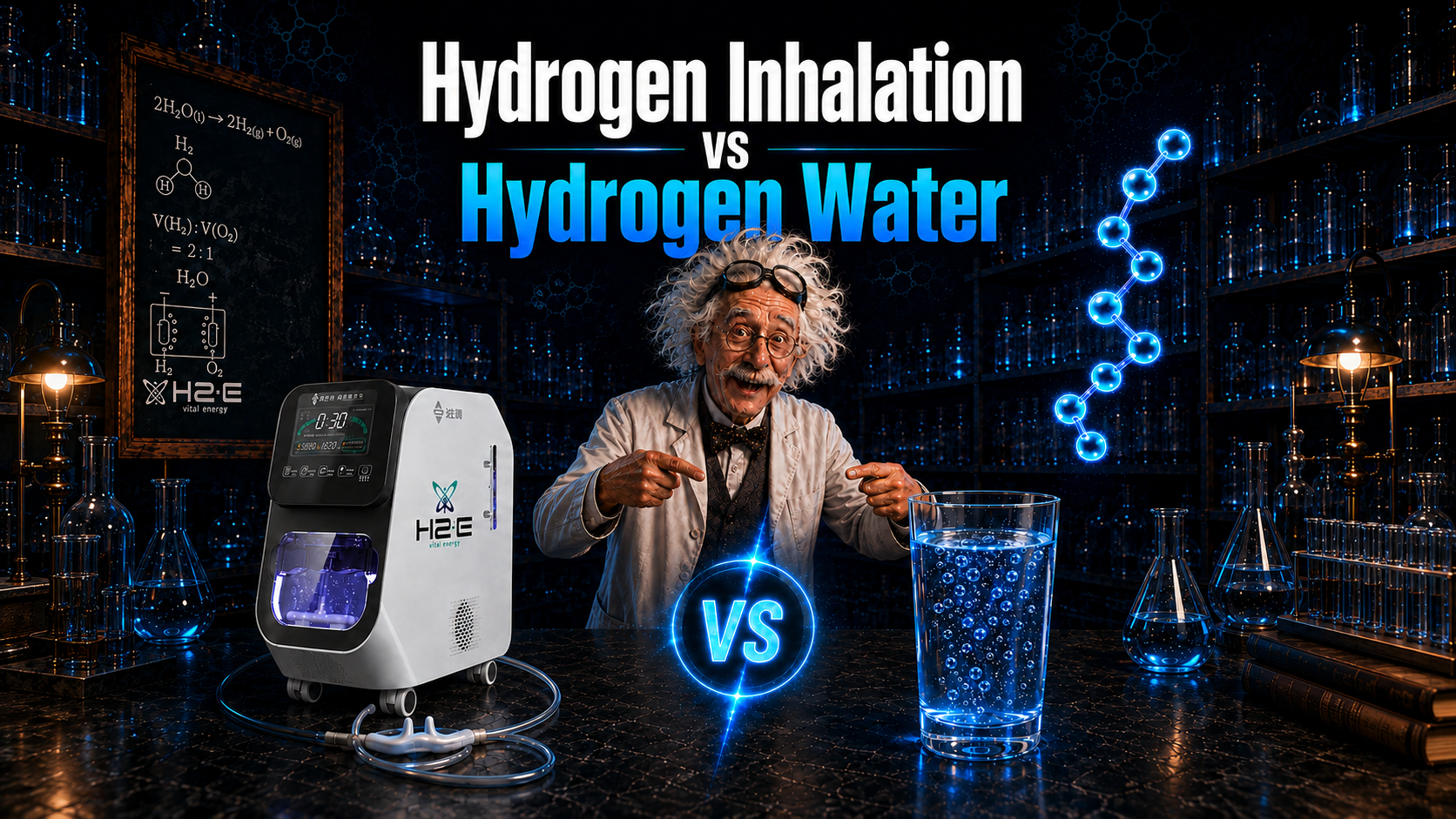
Results from one method cannot automatically be transferred to another. Our guide to hydrogen inhalation versus hydrogen water explains the practical differences in more detail.
The 2010s: rapid expansion across medical research
Following the 2007 paper, publication activity rose sharply. Researchers tested H₂ in experimental models and small human trials involving areas such as:
Neurological and neurodegenerative conditions
Metabolic health
Cardiovascular function
Exercise and recovery
Inflammatory and immune-mediated conditions
Ischaemia-reperfusion injury
Critical illness and organ protection
A 2023 bibliometric analysis identified 1,126 PubMed-indexed publications relating to medical hydrogen up to July 2021 and found a clear upward publication trend from 2007 onwards.
That number shows scientific activity—not 1,126 proven treatments. It includes laboratory research, animal experiments, reviews, commentary and human studies of very different quality. Counting publications without separating study designs can create a misleading impression of certainty.
For a condition-specific claim, the right question is not “How many hydrogen papers exist?” but “How many rigorous human trials tested this exact intervention and outcome—and were the results replicated?”
Important lessons from positive and negative trials
The history of a young field is shaped by disappointing results as well as successes.
For example, a tiny 2013 pilot trial of hydrogen water in Parkinson’s disease reported an encouraging change in symptom scores. A much larger multicentre trial published in 2018 did not reproduce the benefit. A later hydrogen-inhalation pilot also found no significant clinical improvement.
This does not invalidate all hydrogen research. It demonstrates why small early trials must be replicated before a benefit is treated as established.
The same discipline should apply to every condition. Biomarker improvements, animal protection and personal testimonials cannot substitute for meaningful clinical outcomes in adequately powered controlled trials.
How scientific thinking about H₂ has evolved
The language of the field has changed over time.
Early model: a selective radical scavenger
The 2007 paper emphasised direct interaction with highly reactive oxygen species. This helped distinguish H₂ from conventional antioxidants that might interfere broadly with useful redox signalling.
Modern model: modulation of biological signalling
Researchers now explore a wider network of possibilities, including:
Regulation of endogenous antioxidant pathways
Changes in inflammatory signalling
Effects on mitochondrial stress responses
Altered gene and protein expression
Possible interactions with cellular quality-control systems
The precise primary molecular target remains debated. When a mechanism is uncertain, it is safer to say H₂ may influence redox and inflammatory pathways than to claim it simply “donates electrons” or neutralises every free radical.
Where does the evidence stand today?
The most balanced assessment is that molecular hydrogen is an active and expanding research field with:
A substantial preclinical literature
A growing collection of human studies
Generally encouraging short-term tolerability under studied protocols
Considerable variation in dose, route and trial design
Many small studies and relatively few large confirmatory trials
No universal proof that H₂ treats the wide range of conditions sometimes claimed online
Molecular hydrogen is not a replacement for diagnosis, prescribed medication, emergency treatment or evidence-based care. “Promising” and “proven” are not synonyms.
Our evidence overview of hydrogen therapy benefits looks more closely at what human studies currently support and where uncertainty remains.
The future of molecular hydrogen research
For molecular hydrogen to progress from an interesting intervention to an evidence-based clinical tool, future studies need to improve several areas.
Standardised exposure
Trials should report actual H₂ concentration, delivery method, flow rate where relevant, session duration, storage conditions and quality-control measurements.
Larger independent trials
Results are more convincing when replicated by teams independent of the original investigators and product manufacturers.
Meaningful outcomes
Changes in biomarkers can help explain biology, but patients ultimately need improvements in symptoms, function, quality of life or major clinical outcomes.
Longer follow-up
Many existing trials are short. Longer studies are needed to understand durability, adherence and safety with repeated use.
Better identification of responders
It is possible that any future benefit may depend on condition, disease stage, baseline oxidative stress, route or dose. Trials should be designed to investigate rather than assume these differences.
Publication of negative findings
Negative and neutral trials are essential. Without them, the scientific record can exaggerate apparent effectiveness.
The H2=E journey within this history
H2=E began working with molecular hydrogen technology in 2017, a decade after the landmark Ohsawa paper helped launch the modern research era.
Our role is not to claim that every experimental application has been proven. It is to help people understand the technology, use equipment responsibly and distinguish emerging research from established medicine.
As the field evolves, responsible communication will be as important as technological development. Trust is built by discussing promising findings, limitations and negative trials with equal honesty.
Frequently asked questions
When was molecular hydrogen therapy first studied?
The first widely cited medical experiment was published in 1975. It exposed mice with skin tumours to hyperbaric hydrogen and oxygen. It was a preclinical animal study and did not establish hydrogen as a human cancer treatment.
Why was the 2007 hydrogen study important?
Ohsawa and colleagues reported that low-concentration inhaled H₂ reduced injury in cells and a rat model of cerebral ischaemia-reperfusion. The paper proposed a plausible antioxidant mechanism and triggered rapid growth in modern hydrogen research.
When did human hydrogen-water studies begin?
One of the earliest modern trials was published in 2008. It examined hydrogen-rich water in a small group of people with type 2 diabetes or impaired glucose tolerance.
Is molecular hydrogen therapy scientifically proven?
It depends on the specific claim. H₂ has a substantial experimental literature and a growing number of human studies, but evidence varies greatly by condition. It has not been proven as a universal treatment, cure or disease-prevention method.
Is hydrogen water the same as ordinary water?
Hydrogen-rich water is ordinary water with additional molecular hydrogen gas temporarily dissolved in it. The H₂ gradually escapes, so measured concentration and storage conditions matter.
Is hydrogen inhalation the same as drinking hydrogen water?
No. They deliver H₂ through different routes and produce different exposure patterns. Findings from one route cannot automatically be applied to the other.
How many molecular-hydrogen studies exist?
The number continually changes. A bibliometric analysis identified 1,126 relevant PubMed publications up to July 2021. This total included many types of research and should not be interpreted as 1,126 clinical trials or proven benefits.
Is molecular hydrogen approved as a medical treatment in the UK?
Molecular hydrogen is not generally approved by the MHRA as a treatment for the broad diseases and health benefits promoted online. A product or device should not be assumed to be a licensed medicine simply because scientific studies discuss H₂.
Conclusion: a promising history still being written
The history of molecular hydrogen therapy stretches from 18th-century chemistry to 20th-century hyperbaric experiments and the rapid expansion of biological research after 2007.
Its major milestones are genuinely fascinating. The 1975 mouse experiment asked a bold question. Deep-diving research demonstrated controlled human exposure in an exceptional setting. The 2007 Nature Medicine paper supplied a modern biological rationale. Early human trials then opened a much wider field of investigation.
But history also teaches caution. Early results do not always survive larger trials, publication counts do not equal clinical proof, and delivery methods cannot be treated as interchangeable.
Molecular hydrogen may yet find valuable roles in health and medicine. Determining those roles will require rigorous research, replication, standardisation and transparent reporting. The next chapter should be written by evidence rather than hype.
Medical disclaimer
This article is for general information only and does not provide medical advice, diagnosis or treatment. Molecular hydrogen is an emerging research field and is not a substitute for prescribed care. Speak with a qualified healthcare professional before using a complementary intervention, particularly if you have a medical condition, are pregnant or take medication.
Scientific references
Dole M, Wilson FR, Fife WP. Hyperbaric hydrogen therapy: a possible treatment for cancer. Science. 1975;190(4210):152–154. https://pubmed.ncbi.nlm.nih.gov/1166304/
Abraini JH, et al. Psychophysiological reactions in humans during an open sea dive to 500 m with a hydrogen-helium-oxygen mixture. Journal of Applied Physiology. 1994;76(3):1113–1118. https://pubmed.ncbi.nlm.nih.gov/8005852/
Ohsawa I, et al. Hydrogen acts as a therapeutic antioxidant by selectively reducing cytotoxic oxygen radicals. Nature Medicine. 2007;13(6):688–694. https://pubmed.ncbi.nlm.nih.gov/17486089/
Kajiyama S, et al. Supplementation of hydrogen-rich water improves lipid and glucose metabolism in patients with type 2 diabetes or impaired glucose tolerance. Nutrition Research. 2008;28(3):137–143. https://pubmed.ncbi.nlm.nih.gov/19083400/
Nakao A, et al. Effectiveness of hydrogen rich water on antioxidant status of subjects with potential metabolic syndrome—an open label pilot study. Journal of Clinical Biochemistry and Nutrition. 2010;46(2):140–149. https://pubmed.ncbi.nlm.nih.gov/20216947/
Ito M, et al. Open-label trial and randomized, double-blind, placebo-controlled, crossover trial of hydrogen-enriched water for mitochondrial and inflammatory myopathies. Medical Gas Research. 2011;1:24. https://pubmed.ncbi.nlm.nih.gov/22146674/
Ohta S. Molecular hydrogen as a preventive and therapeutic medical gas: initiation, development and potential of hydrogen medicine. Pharmacology & Therapeutics. 2014;144(1):1–11. https://pubmed.ncbi.nlm.nih.gov/24997136/
Ichihara M, et al. Beneficial biological effects and the underlying mechanisms of molecular hydrogen—comprehensive review of 321 original articles. Medical Gas Research. 2015;5:12. https://pubmed.ncbi.nlm.nih.gov/26483953/
Li H, et al. Trend of research on the medical use of molecular hydrogen: a bibliometric analysis. Medical Gas Research. 2023;13(4):212–218. https://pubmed.ncbi.nlm.nih.gov/37077121/
Johnsen HM, et al. Molecular Hydrogen Therapy—A Review on Clinical Studies and Outcomes. Molecules. 2023;28(23):7785. https://www.mdpi.com/1420-3049/28/23/7785