Hydrogen Therapy for Adults Over 60: What Does the Research Really Show?
Growing older does not mean giving up energy, mobility or independence. Many of the factors that shape how we age—physical activity, nutrition, sleep, social connection and management of long-term health conditions—remain within our influence well beyond 60.
Molecular hydrogen therapy is now attracting interest as another possible tool within this bigger healthy-ageing picture. Early laboratory work and a small number of human studies suggest that molecular hydrogen may influence oxidative stress, inflammation and cell-signalling pathways. However, the research is still developing, and hydrogen therapy has not been proven to slow ageing, prevent dementia or treat age-related disease.
So what do we genuinely know? This guide looks beyond the headlines to explain how hydrogen therapy works, what clinical studies involving older adults have found, where the evidence remains uncertain and how adults over 60 can approach it safely and realistically.
The short answer: Molecular hydrogen is a promising area of research, not an established anti-ageing treatment. It may be considered as a supportive wellness practice, but it should complement—not replace—exercise, good nutrition, restorative sleep, prescribed medication, health screening or medical care.
What is molecular hydrogen therapy?
Molecular hydrogen, written as H₂, is a colourless, odourless gas made from two hydrogen atoms. Because it is an exceptionally small molecule, it can diffuse rapidly through biological membranes and reach tissues throughout the body.
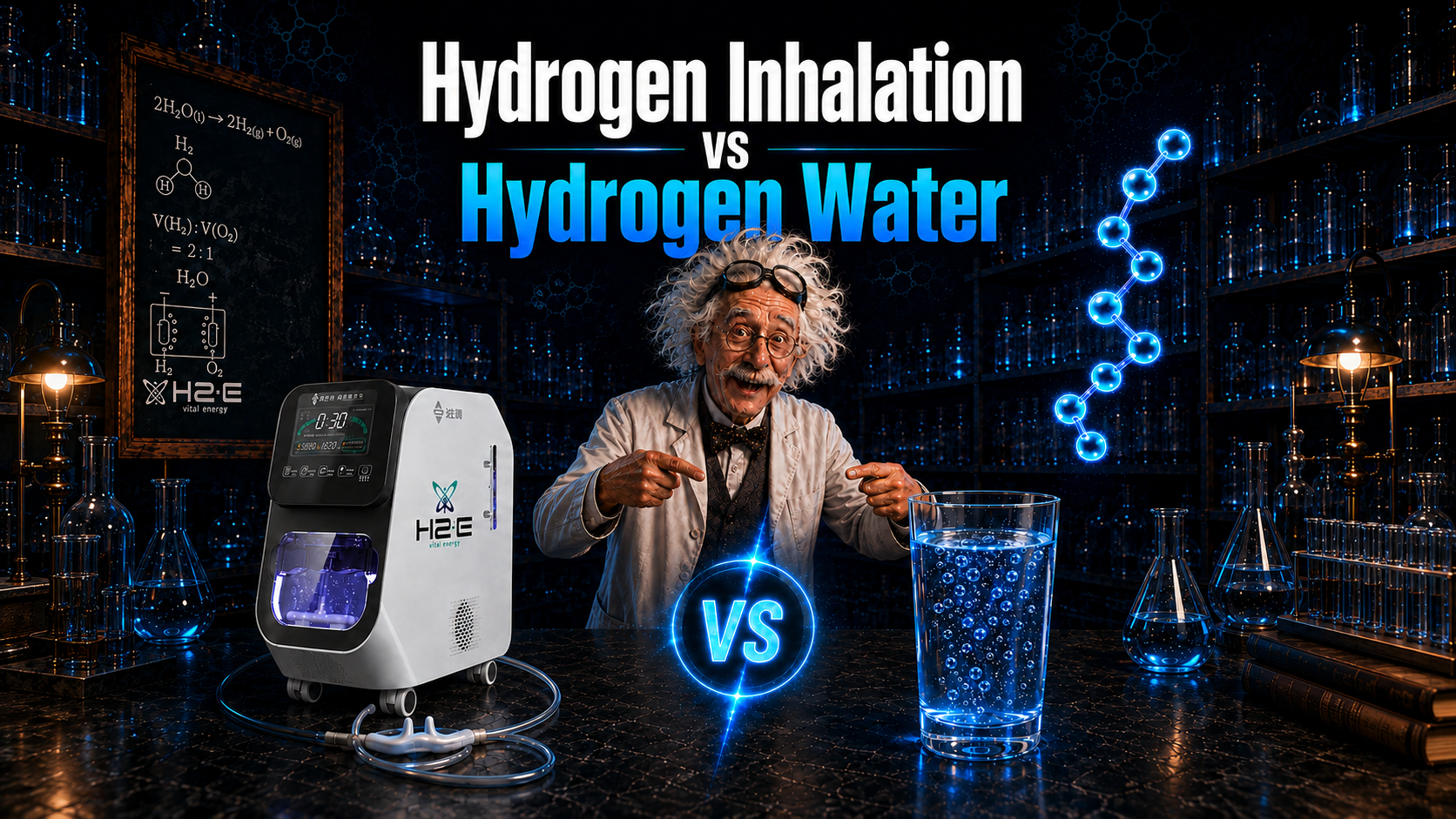
In research and wellness settings, molecular hydrogen is most commonly delivered in two ways:
-
Hydrogen-rich water: Water containing dissolved molecular hydrogen.
-
Hydrogen inhalation: Breathing a controlled hydrogen-containing gas mixture through a nasal cannula or mask.
Hydrogen baths and hydrogen-producing supplements also exist, but they have been studied less consistently and should not be assumed to provide the same exposure.
Hydrogen is often described as a “selective antioxidant.” That phrase comes from early research suggesting it may reduce certain highly reactive molecules without indiscriminately suppressing all oxidation. Today, researchers increasingly view hydrogen as a possible modulator of cell signalling, oxidative balance and inflammatory responses, rather than as a simple antioxidant that directly neutralises every harmful free radical.
This distinction matters. Oxidation is not always harmful: the body also uses controlled oxidative signals for immune defence, exercise adaptation and normal cell communication. The aim is not to eliminate oxidative activity, but to maintain balance.
Why is hydrogen therapy being studied in older adults?
Ageing is complex. It is not caused by one molecule or one biological pathway, and no single therapy can address every aspect of it. Nevertheless, several changes commonly associated with ageing help explain why scientists are interested in molecular hydrogen.
Oxidative balance
Cells continually produce reactive oxygen species as part of normal metabolism. The body has its own antioxidant and repair systems, but the balance between cellular stress and repair can change with age. Persistent oxidative damage has been associated with many chronic conditions, although oxidative stress is not itself a diagnosis and cannot explain every symptom.
Low-grade inflammation
Some people develop a persistent, low-grade inflammatory state as they age—sometimes called “inflammageing.” It may interact with metabolic health, cardiovascular disease, loss of muscle function and other age-related changes. Molecular hydrogen is being investigated for its possible effects on inflammatory signalling, but it is not an approved anti-inflammatory treatment.
Mitochondrial function
Mitochondria help cells convert nutrients into usable energy. Mitochondrial function can become less efficient with age, but fatigue in an older adult can have many causes, including anaemia, thyroid problems, medication effects, poor sleep, infection, heart or lung disease, depression and inadequate nutrition. New or persistent fatigue should therefore be medically assessed rather than automatically attributed to “ageing” or oxidative stress.
Mobility and recovery
Maintaining strength, balance and cardiovascular fitness is central to independence. Exercise has far stronger evidence for healthy ageing than hydrogen therapy does. The interesting research question is whether hydrogen could eventually serve as a supportive addition to movement or rehabilitation—not as a substitute for them.
What does the research in adults over 60 actually show?
Human evidence specifically involving older adults remains limited. Some findings are encouraging, but the studies vary greatly in population, delivery method, dose, duration and outcomes. Results from hydrogen-rich water cannot automatically be applied to inhalation, and results in one medical condition cannot be generalised to every older adult.
1. Six-month hydrogen-rich water pilot trial in adults aged 70+
A randomised controlled pilot study published in 2021 enrolled 40 adults aged 70 or older, with a mean age of 76. Participants received either 500 ml per day of hydrogen-rich water or control water for six months.
Researchers measured a very wide range of outcomes, including molecular biomarkers, brain metabolites, cognition, physical function, body composition, blood pressure, sleep and quality of life. Compared with control water, the hydrogen-rich water group showed statistically significant differences in telomere length, some brain metabolite measurements and chair-stand performance.
However, most of the other measured outcomes did not differ significantly between groups. This was a small pilot study with numerous endpoints, so it cannot establish that hydrogen water reverses biological ageing or produces broad clinical benefits. The results are best understood as signals that justify larger, independently replicated trials.
2. Hydrogen-oxygen inhalation alongside exercise for knee osteoarthritis
A 2025 randomised trial studied 121 older adults with knee osteoarthritis, whose average age was approximately 81. Both groups followed a 12-week home-based exercise and education programme. One group also used hydrogen-oxygen inhalation for 60 minutes daily during the first two weeks.
The hydrogen group showed some earlier improvement during the initial treatment period. However, at week 12 the difference between groups in the principal WOMAC score was not statistically significant, and there were no significant group differences in several functional and quality-of-life outcomes. The researchers concluded that sustained clinical benefit was not demonstrated.
The trial is valuable because it directly studied older adults and inhalation, but it does not show that hydrogen can replace exercise, physiotherapy or standard osteoarthritis care. If anything, it reinforces the importance of the exercise programme both groups received.
3. Blood pressure research in middle-aged and older adults
A small 2022 study examined a low-dose hydrogen-oxygen gas mixture in middle-aged and older adults with hypertension. It reported potentially favourable changes in blood-pressure-related measures. Nevertheless, one small study is not enough to establish hydrogen inhalation as a treatment for high blood pressure.
Anyone taking antihypertensive medication should continue it exactly as prescribed. Uncontrolled high blood pressure can damage the heart, blood vessels, kidneys and brain, often without noticeable symptoms.
View the hypertension study on PubMed
What potential benefits are researchers exploring?
It is reasonable to discuss potential benefits, provided they are not presented as guarantees.
Energy and physical function
Research is exploring whether molecular hydrogen can influence mitochondrial signalling, exercise-related oxidative stress, fatigue and recovery. The chair-stand result in the six-month pilot study is interesting, but there is not yet enough evidence to promise greater energy or improved stamina to all adults over 60.
If low energy is affecting daily life, the first step should be to identify possible medical, nutritional, psychological or sleep-related causes.
Joint comfort and mobility
Inflammation and oxidative stress are involved in osteoarthritis biology, which makes hydrogen a plausible research target. Yet the 2025 knee osteoarthritis trial did not demonstrate a sustained, clinically significant advantage at 12 weeks. Exercise, weight management where appropriate, physiotherapy, pain management and medical review remain the foundations of care.
Brain and cognitive health
Laboratory research has generated interest in hydrogen’s possible neuroprotective effects. Small human studies have also investigated brain metabolites and cognitive measures. This is preliminary research—not proof that molecular hydrogen prevents Alzheimer’s disease, restores memory or treats mild cognitive impairment.
The US National Institute on Aging recommends focusing on established measures such as managing blood pressure and chronic conditions, staying physically active, sleeping adequately, eating a nutritious diet, remaining socially connected and reviewing medications that may affect cognition.
Read the National Institute on Aging guidance on cognitive health
Cardiovascular and metabolic health
Researchers are investigating whether hydrogen may affect endothelial function, lipid metabolism, glucose regulation, blood pressure and inflammatory markers. The findings are not yet sufficient to claim that it prevents heart attacks, treats cardiovascular disease or replaces cholesterol, diabetes or blood pressure medication.
Oxidative and inflammatory balance
This is the most common scientific rationale for molecular hydrogen research. Even here, biomarker changes should not be confused with proven improvements in symptoms, function, disease progression or lifespan. A meaningful health outcome is more important than a laboratory number alone.
Hydrogen inhalation versus hydrogen-rich water after 60
Neither method can currently be called universally “best.” They deliver hydrogen differently and have not been compared adequately in large head-to-head trials.
| Feature | Hydrogen inhalation | Hydrogen-rich water |
|---|---|---|
| How it is used | Hydrogen-containing gas is breathed through a cannula or mask | Dissolved H₂ is consumed in water |
| Exposure | Can provide continuous exposure during a session | Exposure depends on concentration, container, storage and how quickly it is consumed |
| Research | Studied in several clinical contexts, but protocols vary | Used in a number of small human trials, including the 70+ pilot study |
| Practicality | Requires suitable, well-maintained equipment and good ventilation | Portable and simple, but hydrogen dissipates readily |
| Important limitation | Flow rate alone does not reveal the actual hydrogen dose | “Hydrogen water” products vary considerably in measured H₂ concentration |
For inhalation equipment, a figure such as ml/min may describe total gas output rather than pure hydrogen output. The actual exposure also depends on hydrogen concentration, oxygen concentration, delivery system, session length, breathing pattern and gas lost to the surrounding air. For that reason, a universal “therapeutic flow rate” cannot currently be prescribed from the published evidence.
Is hydrogen therapy safe for older adults?
Clinical studies have generally reported good short-term tolerability, but “generally well tolerated” is more accurate than “no side effects.” Long-term evidence remains limited, study protocols differ and older adults are more likely to have multiple diagnoses or medicines that require individual consideration.
Before starting hydrogen therapy, speak with a doctor or qualified healthcare professional if you:
-
have heart, lung, neurological, kidney or liver disease;
-
use supplemental oxygen or respiratory equipment;
-
are receiving cancer treatment or recovering from surgery;
-
take medication for blood pressure, diabetes or blood clotting;
-
have unexplained dizziness, breathlessness, chest pain, fainting or persistent fatigue;
-
have cognitive impairment that could affect safe equipment use; or
-
are considering hydrogen as a replacement for prescribed treatment.
Hydrogen gas is flammable at certain concentrations in air. A purpose-built machine should therefore incorporate appropriate engineering controls, operating instructions and ventilation requirements. Never smoke or use flames or ignition sources near hydrogen-generating equipment. Do not modify the device, connect it to oxygen equipment or combine therapies unless the manufacturer and relevant clinician specifically confirm that the setup is safe.
Hydrogen therapy should never delay urgent medical help. In the UK, call 999 for severe chest pain, signs of stroke, serious breathing difficulty, collapse or another life-threatening emergency.
How might hydrogen fit into a genuine healthy-ageing plan?
The most responsible way to view hydrogen therapy is as one possible supportive practice within a much broader plan.
1. Protect strength, balance and mobility
Regular aerobic, strength and balance activity helps older adults preserve physical function and independence. The appropriate starting level will differ for someone who is already active, recovering from illness or at risk of falls. A GP or physiotherapist can help tailor a safe programme.
Explore evidence-based activity guidance for older adults
2. Prioritise nourishing food and adequate protein
A varied diet supports muscle, bone, cardiovascular and immune health. Needs may change with illness, appetite, dental health and medication. Anyone losing weight unintentionally or struggling to eat should seek professional advice rather than relying on supplements alone.
3. Take sleep seriously
Older adults generally still need seven to nine hours of sleep. Persistent insomnia, loud snoring, daytime sleepiness or pauses in breathing may warrant assessment for a sleep disorder.
Read guidance on sleep and older adults
4. Keep health checks and medicines under review
Hearing, vision, blood pressure, vaccinations, dental health, bone health and medication reviews can all affect quality of life. Never stop or reduce a medicine because you feel better after a wellness therapy without speaking to the prescriber.
5. Stay socially and mentally engaged
Purpose, learning, friendship and community matter. Healthy ageing is not simply a collection of biomarkers; it is the ability to remain connected and participate in the life that matters to you.
Setting realistic expectations
A responsible provider should never promise that molecular hydrogen will reverse ageing, prevent dementia, rebuild cartilage, “strengthen” the immune system or cure a chronic disease.
A better approach is to:
-
Identify the personal goal—such as general wellbeing, recovery after activity or curiosity about emerging research.
-
Discuss relevant diagnoses, medicines and equipment use with an appropriate healthcare professional.
-
Choose a device with transparent specifications, clear safety information, training and after-sales support.
-
Keep all evidence-based treatment and healthy-ageing habits in place.
-
Monitor meaningful outcomes rather than expecting an instant sensation.
-
Reassess whether the time, cost and routine remain worthwhile.
Some people report feeling relaxed or refreshed during or after a session; others notice no immediate difference. Neither experience proves that ageing has slowed or a disease process has changed.
Frequently asked questions
Is hydrogen therapy proven to slow ageing?
No. A small pilot trial in adults aged 70 and over reported differences in selected ageing-related biomarkers and chair-stand performance, but most measured outcomes did not show significant between-group differences. Larger and independently replicated trials are needed before hydrogen can be described as an anti-ageing treatment.
Can hydrogen therapy improve memory or prevent dementia?
There is preliminary scientific interest, but no convincing evidence that hydrogen therapy prevents dementia or restores memory. New or worsening memory problems should be discussed with a healthcare professional because some contributing factors may be treatable.
Can it help arthritis?
A trial in older adults with knee osteoarthritis found some early improvement when hydrogen-oxygen inhalation was added to home exercise, but it did not demonstrate a sustained, clinically significant advantage at 12 weeks. It should not replace exercise, physiotherapy, medication or medical care.
Is inhalation stronger than hydrogen water?
Inhalation may deliver a larger or more continuous exposure in some setups, but “stronger” does not automatically mean more effective. There are not enough direct comparison trials to declare one method superior for healthy ageing.
How long should an older adult inhale hydrogen?
Research studies use different gas mixtures, flow rates and session lengths. There is no universally proven anti-ageing protocol. Follow the instructions for the specific device and seek personalised clinical guidance where health conditions or medicines are involved.
Can I use hydrogen therapy with medication?
Do not assume there can be no interaction simply because hydrogen is natural or has been well tolerated in studies. Continue prescribed medication and ask the relevant clinician or pharmacist about your individual circumstances—especially if your blood pressure, blood glucose, breathing or symptoms may change.
Is hydrogen therapy available through the NHS?
Molecular hydrogen therapy is not an established routine NHS treatment for healthy ageing. Private availability does not mean a therapy has been approved to treat a particular condition.
What should I look for in a home hydrogen machine?
Look for transparent gas-output specifications, hydrogen and oxygen concentrations, built-in safety controls, clear operating and cleaning instructions, warranty support, training and responsive after-sales service. Be cautious of sellers who rely on disease-cure claims or describe one flow rate as suitable for everyone.
The bottom line
Hydrogen therapy for adults over 60 is a genuinely interesting field, but it remains a new frontier, not a finished map. Early studies provide reasons to continue researching molecular hydrogen in relation to physical function, oxidative balance, inflammation and selected age-related conditions. They do not yet prove that it extends lifespan, reverses biological ageing or prevents chronic disease.
For someone who understands these limitations and has considered personal safety, hydrogen may be explored as a complementary wellness practice. The foundations of healthy ageing remain movement, strength, nutritious food, adequate sleep, meaningful relationships, preventive care and effective management of medical conditions.
If you would like to understand the differences between hydrogen inhalation and hydrogen-rich water, H2=E offers a free 20–30 minute consultation to discuss the technology, equipment specifications and practical questions. This consultation is educational and does not replace advice from your doctor or another qualified healthcare professional.
Suggested internal links: