Medical disclaimer: This article is for general information only and is not medical advice. Molecular hydrogen is not an approved treatment for autism and should not replace personalised medical, developmental, educational or psychological support. Speak to an appropriate healthcare professional before introducing any health intervention—especially for a child, during pregnancy, or alongside prescribed medication.
Autism is a lifelong form of neurodivergence that influences how a person experiences, communicates with and responds to the world. Autistic people are not broken and do not need to be “cured”. They may, however, benefit from individualised support for communication, sensory needs, anxiety, sleep, gastrointestinal symptoms, epilepsy, ADHD or other coexisting concerns.
As interest in molecular hydrogen grows, some families are asking whether hydrogen therapy for autism could offer meaningful support. The scientific answer requires care. Researchers have explored oxidative stress, mitochondrial function and inflammation in relation to autism, and molecular hydrogen has been studied in these same biological areas. But a plausible mechanism is not the same as a proven therapy.
At present, there is no reliable clinical evidence that hydrogen inhalation or hydrogen-rich water improves the core features of autism in people. The most directly relevant published experiment was conducted in mice—not autistic children or adults.
This article examines what scientists have studied, why molecular hydrogen has attracted interest and what families should know before drawing conclusions.
What is autism?
Autism is a developmental difference associated with a wide range of strengths, needs and experiences. These may include differences in:
Communication and social interaction
Sensory processing
Attention and information processing
Preference for routine or predictability
Focused interests and repetitive movements or behaviours
No two autistic people are the same. Some live independently, while others require substantial lifelong support. Intellectual disability, language differences, anxiety, ADHD, epilepsy, sleep difficulties and digestive problems may coexist with autism, but they are not experienced by everyone.
This distinction matters when assessing a proposed intervention. A therapy might eventually prove useful for a specific coexisting symptom without changing autism itself. Research should therefore define exactly what is being measured instead of making broad claims that something “helps autism”.
What is hydrogen therapy?
Hydrogen therapy uses molecular hydrogen (H₂), a small, colourless gas being investigated in several areas of biomedical research. Common research delivery methods include:
Inhaling a controlled hydrogen-containing gas mixture
Drinking water containing dissolved molecular hydrogen
Using hydrogen-rich saline in clinical or laboratory settings
Molecular hydrogen can diffuse rapidly through biological membranes. Researchers are investigating whether it may influence redox signalling, inflammatory pathways and the body’s own cellular defence systems. Its effects are more complex than simply “neutralising free radicals”, and its biological mechanisms are not yet fully understood.
To explore the wider human evidence across different health areas, read our guide to hydrogen therapy benefits and what scientific research really shows.
Crucially, findings from one medical condition, animal model or laboratory experiment cannot be assumed to apply to autism.
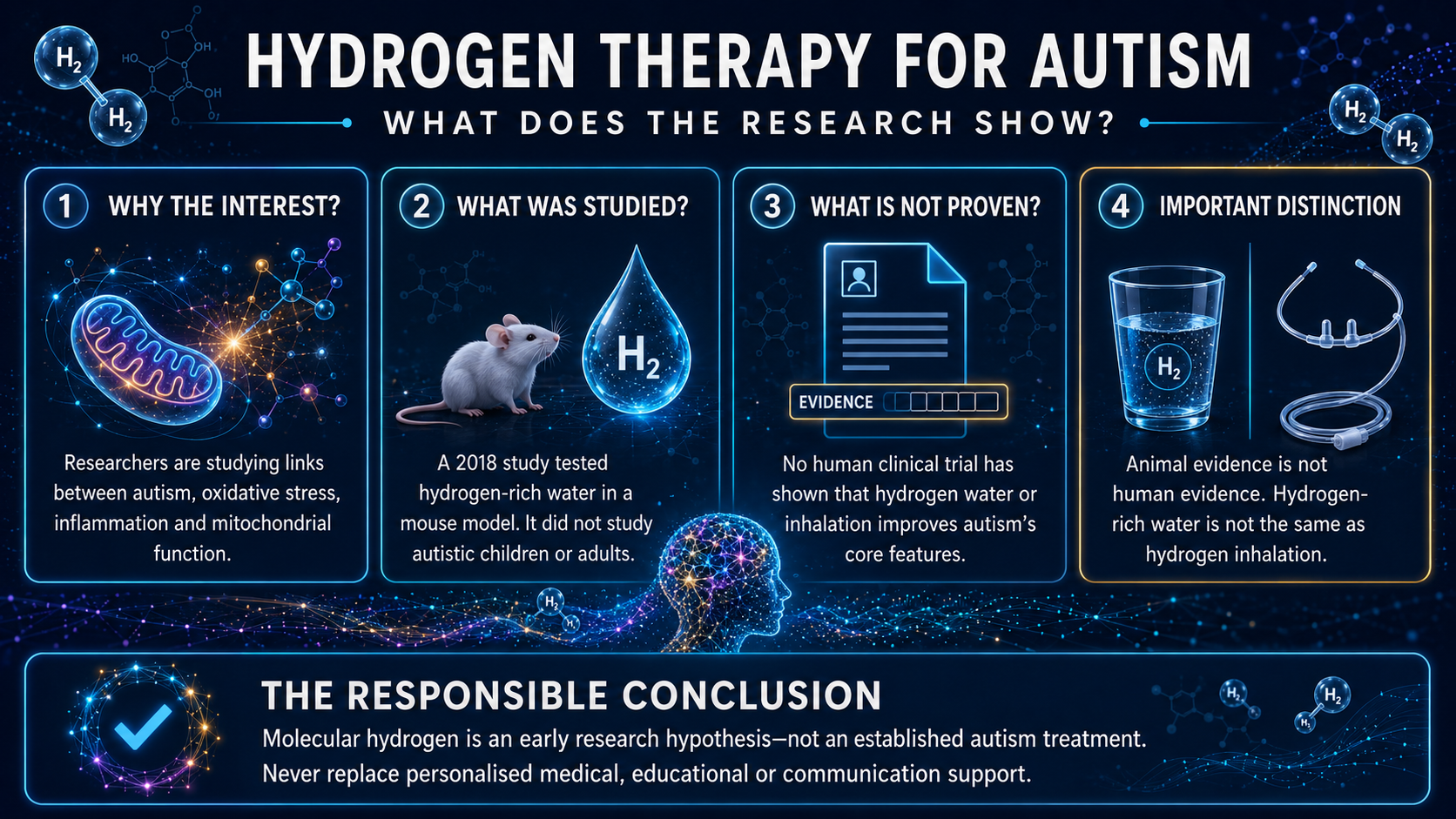
Why are researchers interested in molecular hydrogen and autism?
The proposed connection is largely based on three overlapping areas of research: oxidative stress, inflammation and mitochondrial function.
1. Oxidative stress
Reactive oxygen species are a normal part of metabolism and cell signalling. Oxidative stress occurs when their production and the body’s protective capacity become unbalanced, potentially damaging lipids, proteins or DNA.
Some studies and systematic reviews have reported differences in oxidative-stress biomarkers between autistic and non-autistic groups. These findings are averages across highly diverse populations. They do not show that oxidative stress causes autism, is present in every autistic person or should be treated in the same way.
Because molecular hydrogen is being investigated for possible effects on redox regulation, researchers have proposed it as a subject for further study. That is a biological hypothesis—not proof of a clinical benefit.
2. Neuroinflammation and immune signalling
Researchers have also observed altered inflammatory or immune markers in some autistic populations and experimental models. Autism is extremely heterogeneous, however, and biomarker associations do not establish a single underlying inflammatory cause.
Molecular hydrogen has influenced inflammatory signalling in a variety of animal and laboratory studies. Whether this would produce a meaningful, reproducible benefit for autistic people remains unknown.
3. Mitochondrial function
Mitochondria help cells generate energy and coordinate many cellular processes. Research suggests that a subgroup of autistic people may have mitochondrial abnormalities or altered markers of energy metabolism.
This does not mean that mitochondrial dysfunction explains autism generally. It also does not establish that molecular hydrogen can correct such differences or improve communication, sensory processing or quality of life. These questions require properly designed human trials.
What does the direct research show?
The study most often cited in discussions of molecular hydrogen and autism was published in 2018. Researchers exposed pregnant mice to valproic acid, producing offspring with behaviours used as an experimental model of autism. Different groups received hydrogen-rich water during selected prenatal or postnatal periods.
The researchers reported differences in several behavioural tests and in the inflammatory markers IL-6 and TNF-α. The findings were scientifically interesting, but they have major limitations:
The participants were mice, not people.
The model was produced through prenatal valproate exposure and cannot represent the full complexity or diversity of human autism.
Mouse behaviours described as “autistic-like” are not equivalent to an autism diagnosis or a person’s lived experience.
The intervention was hydrogen-rich water, not hydrogen inhalation.
Animal experiments cannot establish a safe or effective dose for children.
The study did not demonstrate improvements in human communication, daily functioning, wellbeing or quality of life.
As of August 2026, controlled human clinical evidence demonstrating that molecular hydrogen treats autism’s core features has not been established. There is no evidence-based autism protocol for hydrogen concentration, delivery method, session length, frequency or duration.
This means it would be inaccurate to claim that hydrogen therapy improves speech, reduces repetitive behaviour, increases eye contact, reduces hyperactivity or “reverses autism”. Testimonials cannot answer these questions because development, therapies, expectations and coexisting conditions can all influence perceived changes.
Hydrogen inhalation versus hydrogen-rich water
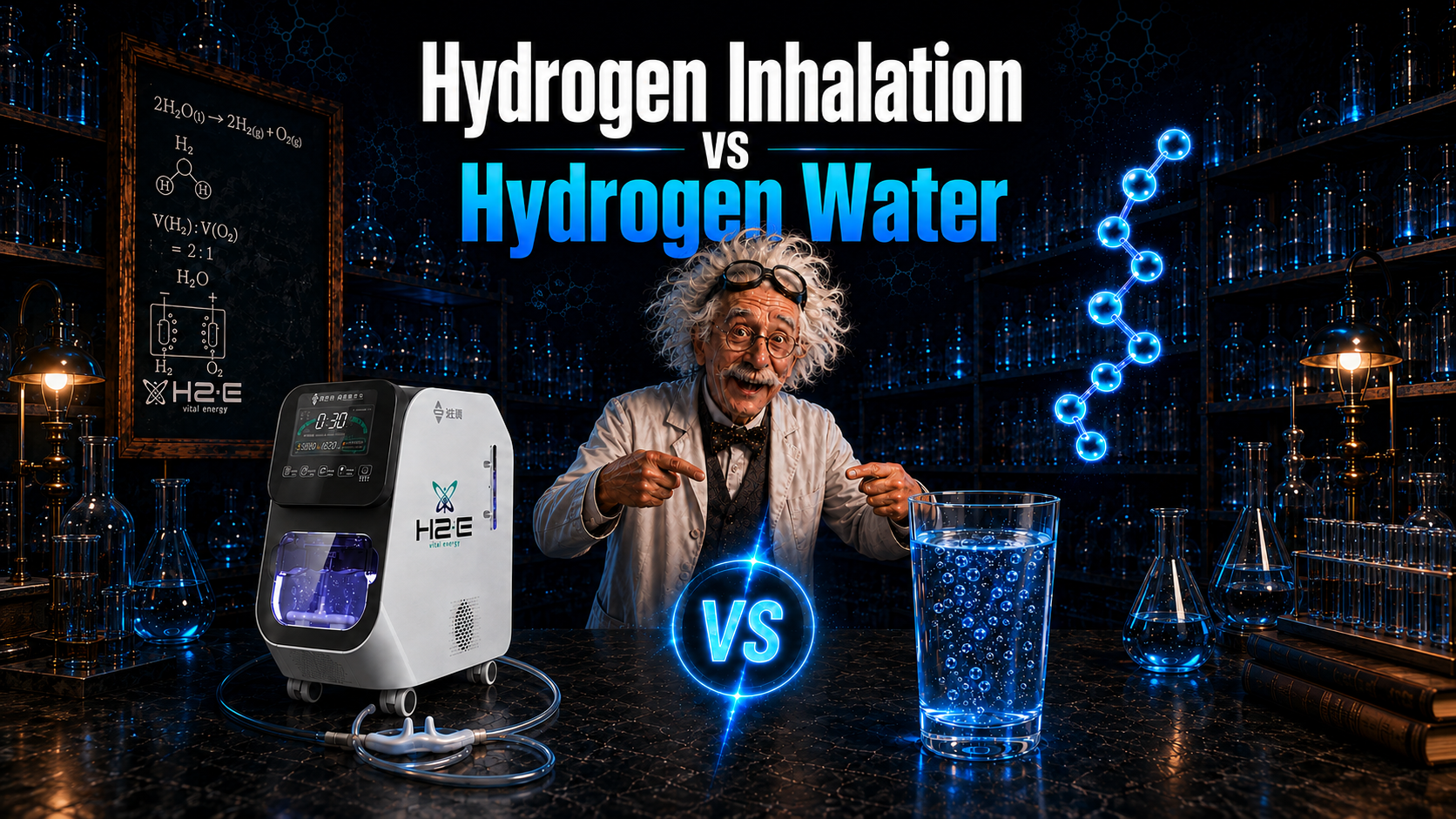
Hydrogen-rich water and hydrogen inhalation are not interchangeable interventions.
Hydrogen-rich water contains a limited quantity of dissolved H₂ that begins escaping after the container is opened. Inhalation can provide continuous exposure during a session, but the delivered concentration and total volume depend on the equipment and protocol.
Most importantly, the autism-related mouse experiment used hydrogen-rich water. It does not provide evidence that inhaled hydrogen benefits autistic people. Each method needs its own safety data, dosing research and clinical trials.
Parents should be especially cautious when a seller uses an animal study of hydrogen water to promote an inhalation device for children. That crosses several scientific gaps at once.
Is hydrogen therapy safe for autistic children?
Molecular hydrogen has generally been well tolerated in a number of human studies involving other conditions, but this does not establish an autism-specific paediatric safety profile. Children are not simply smaller adults, and autistic children may have epilepsy, respiratory conditions, feeding difficulties or medications that require individual assessment.
Safety also depends on delivery. Hydrogen gas is flammable, so inhalation equipment must control concentration appropriately, keep the gas away from flames, cigarettes, sparks and heat sources, and be operated according to the manufacturer’s instructions. Oxygen-containing gas mixtures require additional fire awareness. A child should never use inhalation equipment without responsible adult supervision.
Our detailed overview of hydrogen therapy safety, side effects and essential precautions explains the general considerations, but it should not be interpreted as medical clearance for a particular child.
Before considering molecular hydrogen, discuss it with the child’s paediatrician or clinical team. Ask:
Is there a specific symptom or outcome we are trying to address?
Could an untreated medical problem be contributing to distress or behavioural change?
Could the intervention interfere with medication, routines or established support?
How would benefit and unwanted effects be recorded objectively?
What would make us stop?
Do not stop prescribed medication or delay a medical assessment in order to try hydrogen therapy.
What support is evidence based?
Support should be person-centred, respectful and based on the autistic person’s needs rather than an attempt to make them appear less autistic.
UK NICE guidance recommends considering structured social-communication support for children and young people, using play-based strategies involving parents, carers and teachers and adapted to the child’s developmental level. Coexisting concerns should be assessed and treated appropriately. Depending on individual needs, helpful support may include:
Speech and language therapy, including augmentative or alternative communication
Occupational therapy and practical sensory accommodations
Predictable routines and environmental adjustments
Support for sleep, anxiety, pain, constipation, reflux or feeding difficulties
Appropriate ADHD, epilepsy or mental-health care
Educational adjustments and family support
The goal should be better wellbeing, communication, autonomy, access and quality of life—not forcing eye contact, suppressing harmless self-regulation or training a person to hide autistic traits.
How to judge claims about hydrogen therapy for autism
When reading online claims, look for the following distinctions:
Human evidence or animal evidence?
A mouse study can identify a research direction, but it cannot prove that an intervention helps autistic people.
Autism itself or a coexisting concern?
Improving sleep or treating pain could improve wellbeing and outward behaviour without changing autism’s core features.
Controlled trial or testimonial?
A controlled study compares outcomes systematically. A testimonial cannot rule out placebo effects, natural development, concurrent support or selective reporting.
Relevant delivery method?
Evidence involving hydrogen-rich water should not be presented as proof for hydrogen inhalation, and vice versa.
Measured benefit or biomarker change?
A change in an inflammatory marker does not automatically translate into better daily life, communication or comfort.
Marketing language such as “clinically proven”, “detoxifies the autistic brain” or “reverses autism” should be treated as a warning sign.
The responsible conclusion
Hydrogen therapy for autism is an early research hypothesis, not an established treatment. Interest comes from overlapping research into oxidative stress, inflammation and mitochondrial biology, together with one frequently cited mouse experiment using hydrogen-rich water.
That preclinical study is not evidence that molecular hydrogen improves autism in children or adults, and it does not validate hydrogen inhalation. Well-designed human trials would be needed to evaluate safety, appropriate dosing, clearly defined outcomes and whether any benefit is clinically meaningful.
Families deserve curiosity without hype. Molecular hydrogen may be worthy of further scientific study, but current evidence does not justify promises about communication, repetitive behaviour, social interaction, hyperactivity or developmental outcomes. Any consideration of it should be discussed with a qualified clinician and should never replace evidence-based, person-centred support.
Frequently asked questions
Can hydrogen therapy cure autism?
No. Autism is a lifelong neurodevelopmental difference, not an illness that molecular hydrogen has been shown to cure. Claims that hydrogen therapy cures or reverses autism are unsupported.
Does hydrogen water help autism?
There is no reliable human clinical evidence showing that hydrogen-rich water improves autism’s core features. A 2018 experiment reported changes in a mouse model, but animal findings cannot be assumed to apply to autistic children or adults.
Has hydrogen inhalation been studied for autism?
No controlled human evidence has established hydrogen inhalation as an autism treatment. The widely discussed autism-related animal study used hydrogen-rich water, not inhaled hydrogen.
Could molecular hydrogen reduce oxidative stress in autistic people?
Molecular hydrogen is being studied for possible effects on redox and inflammatory pathways in other contexts. Some autistic groups show differences in oxidative-stress markers, but it is unknown whether hydrogen would alter these markers or produce meaningful clinical benefits in autistic people.
Is hydrogen therapy safe for children with autism?
An autism-specific paediatric safety profile and dosing protocol have not been established. A child’s clinician should assess any proposed intervention, particularly when epilepsy, respiratory illness, medication or other coexisting needs are present.
Should hydrogen replace established autism support?
No. It should not replace medical care, educational adjustments, communication support, occupational therapy or other individualised services. Coexisting pain, sleep, gastrointestinal, mental-health or neurological concerns should receive appropriate assessment.
References
Guo Q, Yin X, Qiao M, et al. Hydrogen-Rich Water Ameliorates Autistic-Like Behavioral Abnormalities in Valproic Acid-Treated Adolescent Mice Offspring. Frontiers in Behavioral Neuroscience. 2018;12:170. https://doi.org/10.3389/fnbeh.2018.00170
Usui N, Kobayashi H, Shimada S. Neuroinflammation and Oxidative Stress in the Pathogenesis of Autism Spectrum Disorder. International Journal of Molecular Sciences. 2023;24(6):5487. https://doi.org/10.3390/ijms24065487
Frye RE, et al. Biomarkers of Mitochondrial Dysfunction in Autism Spectrum Disorder: A Systematic Review and Meta-Analysis. 2024. PubMed PMID: 38703861.
Frustaci A, Neri M, Cesario A, et al. Oxidative stress-related biomarkers in autism: systematic review and meta-analyses. Free Radical Biology and Medicine. 2012;52(10):2128–2141. https://doi.org/10.1016/j.freeradbiomed.2012.03.011
National Institute for Health and Care Excellence. Autism spectrum disorder in under 19s: support and management (CG170). Last updated 2021; reviewed 2025. https://www.nice.org.uk/guidance/cg170
National Autistic Society. What is autism? Autism and neurodiversity guidance. https://www.autism.org.uk/advice-and-guidance/what-is-autism