Ageing is unavoidable, but the way we age is not determined by time alone. Our genes matter, yet so do movement, nutrition, sleep, metabolic health, social connection, medical care and the accumulated effects of stress on our cells.
This is why modern longevity science focuses not only on lifespan—how long we live—but also on healthspan, the years we remain healthy, active and independent.
Molecular hydrogen (H₂) has attracted growing interest in this field because researchers are investigating its effects on oxidative stress, inflammatory signalling, mitochondrial function and cellular resilience. These processes overlap with several mechanisms associated with ageing.
But an important question remains: can molecular hydrogen therapy actually help us live longer, or does the science only suggest possible support for healthier ageing?
The honest answer is that molecular hydrogen is scientifically interesting, but it has not been proven to extend human lifespan. Most longevity-related evidence comes from laboratory research, animal studies, biological mechanisms and a small number of early human trials. H₂ should therefore be viewed as a possible addition to a healthy-ageing strategy—not as an anti-ageing cure or a replacement for established healthcare.
What Is Molecular Hydrogen Therapy?
Molecular hydrogen is a gas made from two hydrogen atoms, written chemically as H₂. It is different from hydrogen peroxide (H₂O₂), hydrogen ions and ordinary water (H₂O).
Hydrogen therapy introduces molecular hydrogen into the body in a controlled way. The two most common methods are:
-
Hydrogen inhalation, in which hydrogen-containing gas is breathed through a nasal cannula or suitable mask.
-
Hydrogen-rich water, in which dissolved H₂ gas is consumed before it escapes from the water.
Because H₂ is extremely small and non-polar, it can diffuse rapidly through biological membranes. Researchers have detected hydrogen in the blood and tissues after administration, although the amount delivered depends on the method, concentration, flow rate, session duration and breathing setup.
Hydrogen does not act like a vitamin that the body stores. It enters and leaves the body relatively quickly, with unused gas largely exhaled. Its scientific interest lies in the possibility that a brief exposure may influence signalling pathways connected with redox balance, inflammation and cellular protection.
Longevity, Lifespan and Healthspan Are Not the Same
These terms are often used as if they mean the same thing, but they describe different outcomes:
-
Lifespan is the total length of a person’s life.
-
Healthspan is the period lived in relatively good health and independence.
-
Biological age is an estimate based on biomarkers or physiological function rather than years since birth.
-
Ageing biomarkers are measurable features associated with ageing, but changing one does not automatically prove that a person will live longer.
This distinction is essential when discussing hydrogen. A study may report a change in inflammation, antioxidant capacity, cholesterol or a biological-age score. That can be worth investigating, but it is not the same as demonstrating fewer diseases, greater independence or longer survival.
No long-term human trial has shown that molecular hydrogen extends lifespan. The more defensible question is whether H₂ may support some biological processes relevant to healthspan.
Why Do We Age?
Ageing is not caused by one molecule or one pathway. Scientists describe a network of interconnected “hallmarks of ageing,” including:
-
genomic instability;
-
telomere attrition;
-
epigenetic alterations;
-
loss of protein quality control;
-
impaired autophagy;
-
altered nutrient sensing;
-
mitochondrial dysfunction;
-
cellular senescence;
-
stem-cell exhaustion;
-
disrupted communication between cells;
-
chronic inflammation;
-
changes in the gut microbiome.
These mechanisms interact. For example, damaged mitochondria may produce altered stress signals, which can affect inflammation and cellular repair. Chronic inflammation can in turn influence tissue function and metabolic health.
This complexity is why no responsible longevity strategy should depend on a single supplement, device or therapy.
How Might Molecular Hydrogen Relate to Healthy Ageing?
1. Redox balance and oxidative stress
Reactive oxygen species (ROS) are often described simply as harmful free radicals, but that is incomplete. At controlled levels, reactive species help cells communicate, adapt to exercise and defend against infection. Problems arise when their production overwhelms the body’s ability to regulate them, contributing to oxidative damage.
Early hydrogen research proposed that H₂ could selectively interact with particularly reactive species. Current research suggests a broader and more nuanced possibility: molecular hydrogen may also influence the body’s own redox-regulating and antioxidant-response pathways.
This does not mean hydrogen “removes all free radicals.” Eliminating every reactive species would be neither possible nor desirable. The scientifically credible idea is that H₂ may help influence redox balance under certain conditions.
2. Chronic low-grade inflammation
Ageing is often accompanied by persistent, low-grade inflammation, sometimes called inflammageing. It is associated with metabolic dysfunction, frailty and several age-related conditions.
Laboratory and animal studies have reported that molecular hydrogen can influence inflammatory signalling and markers such as selected cytokines. Some small human studies also report changes in inflammatory biomarkers. However, results vary by population, delivery method and protocol, and lower biomarkers do not by themselves prove longer life.
3. Mitochondrial function
Mitochondria generate much of the usable energy needed by cells. They also help regulate metabolism, stress responses and cell survival. Mitochondrial dysfunction is one recognised feature of ageing and interacts with several other ageing mechanisms.
Preclinical research suggests H₂ may affect mitochondrial signalling, membrane stability and pathways involved in cellular energy regulation. Human studies have explored fatigue, exercise recovery and metabolic markers, but they do not establish that hydrogen reverses mitochondrial ageing.
4. Cellular stress responses
Cells possess protective systems that respond to temporary stress and help restore balance. Molecular hydrogen has been associated in experimental research with pathways including Nrf2, which regulates numerous antioxidant and detoxification-related genes, and with mechanisms involved in cell survival and inflammation.
This signalling model may explain why hydrogen’s effects cannot be reduced to a simple claim that it donates electrons or directly neutralises every damaging molecule. It may act more like a biological signal modulator, although the precise mechanisms remain under investigation.
5. Cellular senescence and tissue resilience
Senescent cells have stopped dividing but remain biologically active. Their accumulation can alter surrounding tissue through inflammatory and other signals. Animal and cell studies have explored whether molecular hydrogen influences senescence-related pathways and resilience to cellular injury.
This is an emerging area. It is far too early to describe H₂ as a senolytic treatment or claim that it clears senescent cells in humans.
What Does Human Research Show?
The human evidence is intriguing but preliminary.
One frequently discussed randomised pilot trial studied adults aged 70 and over who drank hydrogen-rich water for six months. Researchers assessed several molecular and physical measures associated with ageing. The study reported favourable changes in some outcomes, including an increase in brain-derived neurotrophic factor and improvements in selected physical or biological-age measures.
However, this was a small pilot study. It was designed to generate hypotheses, not prove that hydrogen slows ageing or prolongs life. The findings require replication in larger, independent trials with pre-registered outcomes and longer follow-up.
Other human trials involving metabolic health, exercise, fatigue, mood and quality of life have reported a mixture of positive, neutral and inconsistent findings. These studies can help identify possible effects relevant to healthspan, but they differ in:
-
participant age and health;
-
hydrogen delivery method;
-
concentration and total exposure;
-
session frequency or water intake;
-
study duration;
-
comparison groups;
-
outcome measures.
The evidence therefore supports further research—not a promise of anti-ageing or life extension.
Has Molecular Hydrogen Been Proven to Slow Ageing?
No. At present, molecular hydrogen has not been proven to:
-
extend human lifespan;
-
reverse biological ageing;
-
prevent dementia, cancer or cardiovascular disease;
-
restore telomeres;
-
remove senescent cells;
-
replace exercise, medication or medical care.
Claims such as “turn back your biological clock” or “live decades longer” go beyond current evidence.
A more accurate conclusion is:
Molecular hydrogen is being investigated for possible effects on oxidative stress, inflammation, mitochondrial signalling and other processes relevant to healthy ageing. Early findings justify larger trials, but they do not yet demonstrate longer human life.
The Long Game: Why You May Not Feel an Immediate Effect
People sometimes ask why they do not feel dramatically different after beginning hydrogen therapy.
Hydrogen has no colour, smell or taste, and it is not a stimulant. A noticeable sensation is not a reliable measure of biological effect. Equally, feeling relaxed or energised after a session does not prove a long-term health outcome.
Longevity habits usually work quietly. Strength training, nutritious food, vaccination, blood-pressure control and adequate sleep do not always create an immediate sensation, yet their value accumulates over time.
Hydrogen therapy should be considered in the same measured way. If used, it is one optional part of a wider routine. It should not be judged by whether it produces a “buzz,” nor should unseen benefits be assumed without evidence.
The Foundations of Healthy Longevity
The strongest healthy-ageing plan begins with interventions supported by far more evidence than hydrogen therapy:
Move regularly and preserve muscle
Combine aerobic activity with resistance, balance and mobility training. Muscle strength, cardiorespiratory fitness and the ability to recover from illness are strongly connected with independence in later life.
Eat for long-term metabolic health
Prioritise vegetables, fruit, legumes, whole grains where tolerated, nuts, seeds, appropriate protein and mostly minimally processed foods. Individual needs differ, particularly with digestive disease, diabetes, kidney disease or frailty.
Protect sleep
Consistent, restorative sleep supports metabolic regulation, immune function, cognition and recovery. Persistent snoring, insomnia or daytime sleepiness deserves assessment rather than being treated only with wellness products.
Know and manage your health risks
Blood pressure, blood glucose, cholesterol, smoking, alcohol consumption, body composition and family history all influence long-term health. Screening, vaccinations and prescribed treatments remain central.
Maintain relationships and purpose
Social connection, meaningful activity and mental wellbeing are not optional extras. They are important parts of a healthy life and can influence behaviour, stress and resilience.
Use emerging therapies proportionately
Molecular hydrogen may be explored as a complementary wellness practice by suitable adults, but it should sit on top of these foundations—not replace them.
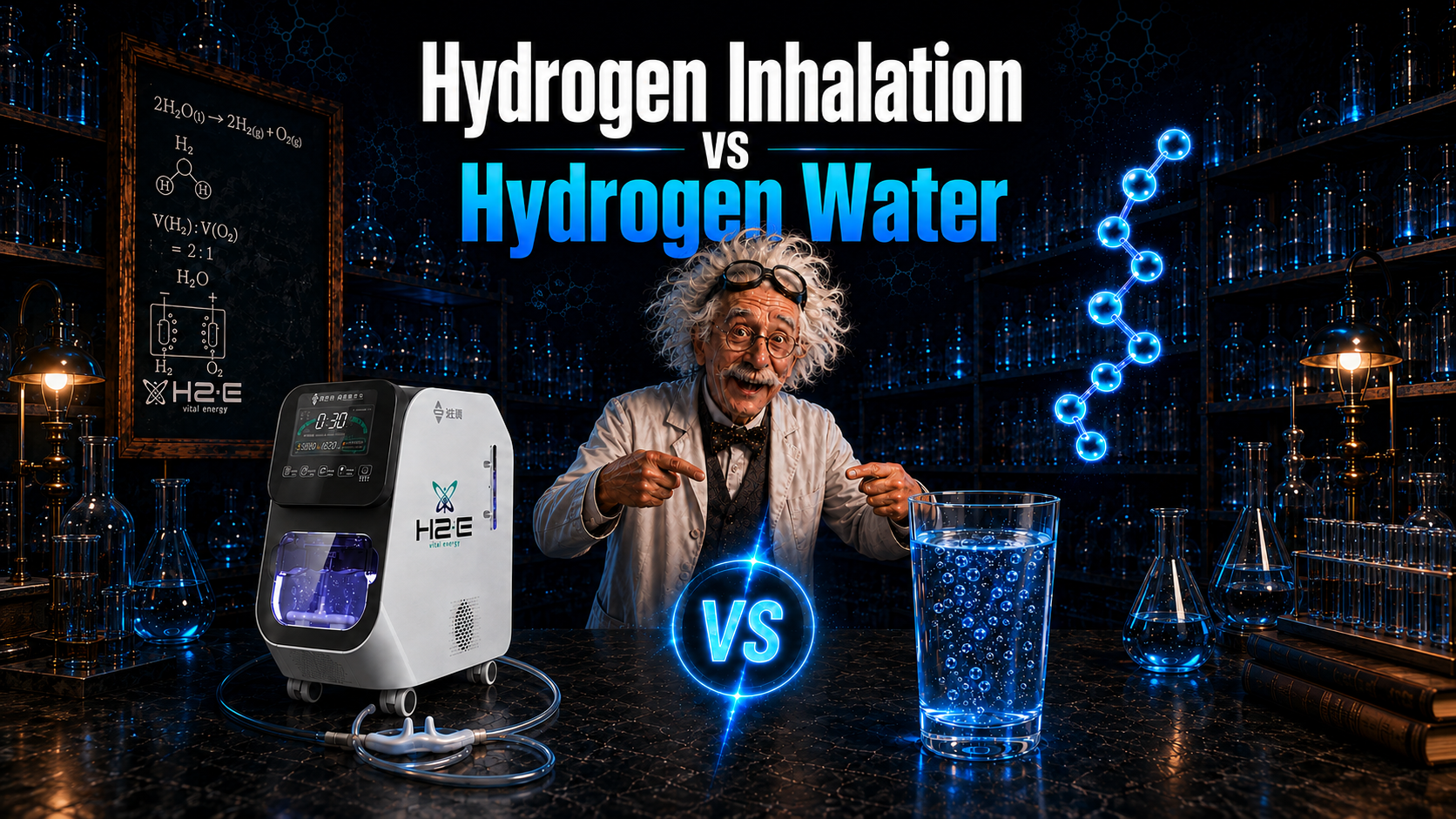
Hydrogen Inhalation or Hydrogen-Rich Water for Longevity?
Both methods deliver H₂, but they are not interchangeable.
Hydrogen-rich water is convenient and has been used in several human trials, including the six-month older-adult pilot study. Its limitations include the relatively small quantity of dissolved gas and the fact that hydrogen escapes quickly after a container is opened.
Hydrogen inhalation can provide continuous exposure during a session. Actual exposure depends on hydrogen concentration, gas output, duration, breathing pattern and delivery equipment. More gas is not automatically better, and no universally accepted longevity dose has been established.
Research using one method cannot automatically validate every machine, flow rate or session protocol. Anyone comparing the approaches can read our guide to hydrogen inhalation versus hydrogen water.
Is Molecular Hydrogen Therapy Safe?
Molecular hydrogen has generally been well tolerated in published human studies, but responsible use still matters.
For inhalation equipment:
-
follow the manufacturer’s instructions;
-
use only the specified water quality;
-
keep the machine away from flames, smoking, sparks and heat;
-
ensure suitable ventilation;
-
do not modify tubing, outlets or safety systems;
-
keep equipment away from unsupervised children;
-
stop if you feel unwell.
People who are pregnant, receiving cancer treatment, using respiratory equipment, recovering from a serious event or living with significant heart, lung, kidney, liver or neurological disease should discuss hydrogen therapy with an appropriately qualified healthcare professional.
Hydrogen therapy should never delay diagnosis or replace prescribed treatment. Read our full guide: Is Hydrogen Therapy Safe?
How to Evaluate Longevity Claims About Hydrogen
Before accepting a claim, ask:
-
Was the research performed in humans, animals or cells?
-
Did it measure symptoms and function, or only a laboratory marker?
-
Was it randomised and appropriately controlled?
-
How many people participated?
-
Was the study independently replicated?
-
Which hydrogen method and dose were used?
-
Did the study last long enough to support a longevity claim?
-
Is a seller turning “may influence a pathway” into “proven to prevent disease”?
Good science can be promising without being final. At H2=E, we believe customers deserve to see both sides: why molecular hydrogen is worth studying and where the evidence remains limited.
Frequently Asked Questions
Can molecular hydrogen make you live longer?
There is currently no reliable human evidence that molecular hydrogen extends lifespan. Laboratory, animal and early human studies suggest it may influence processes related to healthy ageing, but longer life has not been demonstrated.
Is hydrogen therapy anti-ageing?
“Anti-ageing” is a broad marketing term. Molecular hydrogen is better described as an emerging therapy being investigated for redox balance, inflammatory signalling, mitochondrial function and cellular stress responses. It has not been proven to reverse ageing.
Can hydrogen therapy reduce biological age?
A small pilot trial in older adults reported changes in selected ageing-related measures after hydrogen-rich water, but this does not establish that H₂ reliably reduces biological age. Biomarker clocks are evolving research tools and require careful interpretation.
Does molecular hydrogen protect mitochondria?
Laboratory and animal research suggests possible effects on mitochondrial stress and signalling. Some human studies have investigated energy, fatigue, metabolic health and exercise recovery, but hydrogen has not been proven to prevent or reverse mitochondrial ageing in humans.
How often should hydrogen be used for longevity?
There is no scientifically established universal longevity protocol. Studies use different forms, concentrations, durations and schedules. Follow the instructions for suitable equipment and seek professional guidance when medical conditions or treatments are involved.
Is hydrogen inhalation better than hydrogen water?
Neither method has been proven superior for extending life. Inhalation can provide continuous exposure during a session, while hydrogen-rich water is portable and has been used in several trials. The relevant dose, purpose, convenience and evidence should guide comparisons.
Final Thoughts: Promise Without the Hype
Molecular hydrogen sits in an interesting position within longevity science. Its small size, rapid diffusion and potential influence on redox and inflammatory signalling make it biologically plausible. Laboratory, animal and early human studies give researchers good reasons to continue investigating it.
But scientific credibility requires a clear boundary between supporting pathways associated with healthy ageing and proving longer life. We have not crossed that boundary yet.
The best current approach is to view molecular hydrogen as a possible complementary part of a long-term wellness strategy. The foundation remains regular movement, muscle strength, nutritious food, restorative sleep, relationships, preventive healthcare and appropriate treatment of known risks.
There is no single fountain of youth. Healthy longevity is the result of thousands of sensible choices, repeated over time.
If you would like to understand how hydrogen therapy works before deciding whether it belongs in your routine, read our complete guide to molecular hydrogen therapy or explore what scientific research really shows about its potential benefits.
Scientific References
-
López-Otín C, Blasco MA, Partridge L, Serrano M, Kroemer G. Hallmarks of Aging: An Expanding Universe. Cell. 2023;186(2):243–278. https://pubmed.ncbi.nlm.nih.gov/36599349/
-
Fu Z, Zhang J, Zhang Y. Role of Molecular Hydrogen in Ageing and Ageing-Related Diseases. Oxidative Medicine and Cellular Longevity. 2022;2022:2249749. https://pmc.ncbi.nlm.nih.gov/articles/PMC8956398/
-
Zanini D, Todorovic N, Korovljev D, et al. The Effects of 6-Month Hydrogen-Rich Water Intake on Molecular and Phenotypic Biomarkers of Aging in Older Adults Aged 70 Years and Over: A Randomized Controlled Pilot Trial. Experimental Gerontology. 2021;155:111574. https://pubmed.ncbi.nlm.nih.gov/34601077/
-
Brandi G, et al. Molecular Hydrogen Therapy: A “Democratic” Emerging Strategy Against Aging and Age-Related Diseases. Ageing Research Reviews. 2025;110:102802. https://pubmed.ncbi.nlm.nih.gov/40518021/
-
Johnsen HM, Hiorth M, Klaveness J. Molecular Hydrogen Therapy—A Review on Clinical Studies and Outcomes. Molecules. 2023;28(23):7785.
-
Ohsawa I, Ishikawa M, Takahashi K, et al. Hydrogen Acts as a Therapeutic Antioxidant by Selectively Reducing Cytotoxic Oxygen Radicals. Nature Medicine. 2007;13:688–694.
-
Sies H, Jones DP. Reactive Oxygen Species (ROS) as Pleiotropic Physiological Signalling Agents. Nature Reviews Molecular Cell Biology. 2020;21:363–383. https://pubmed.ncbi.nlm.nih.gov/32231263/
-
Li Y, Berliocchi L, Li Z, Rasmussen LJ. Interactions Between Mitochondrial Dysfunction and Other Hallmarks of Aging. Aging Cell. 2024;23(1). https://pubmed.ncbi.nlm.nih.gov/37497653/
Medical disclaimer
This article is for educational and informational purposes only and is not medical advice. H2=E does not claim that molecular hydrogen cures, treats or prevents disease, reverses ageing or extends lifespan. Research is developing, and evidence varies by outcome. Hydrogen therapy should not replace professional assessment, prescribed medication or conventional treatment. Speak with an appropriately qualified healthcare professional before use if you have a medical condition, are pregnant, use respiratory equipment or are receiving treatment.